Hands Down Animals · Printable fact sheet
Alligator
Alligator
Quick facts
| Scientific name | Alligator |
|---|---|
| Size | 2.5–4 m (average adult), large males may reach up to 4.5 m (American); 1.4–2.1… |
| Weight | 27–230 kg (average adult American), up to 450 kg (large males); 36–45 kg… |
| Lifespan | Average 35–50 years; up to 70 years in captivity |
| Diet | Carnivorous: they eat fish, amphibians, birds, mammals, and occasionally invertebrates. Older, larger… |
| Habitat | Freshwater swamps, Marshes, Slow-moving rivers |
| Where it lives | Florida, Louisiana, Georgia, Alabama |
| IUCN status | Varies by species: Least Concern (American alligator), Critically Endangered (Chinese alligator) |
| Population | Over 5 million (wild and captive combined; majority are… |
| Top speed | 18 km/h |
| Family | Alligatoridae |
About the alligator
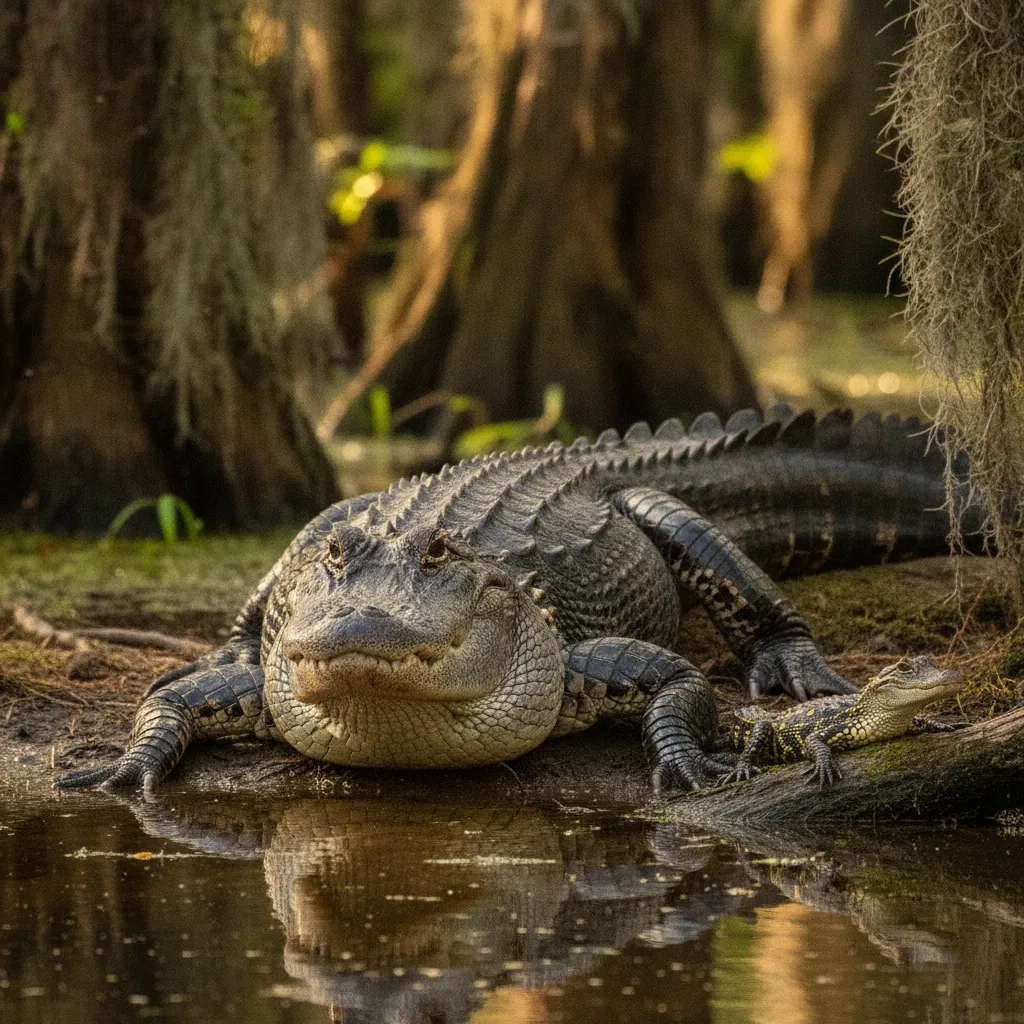
Alligators live in the freshwater rivers, swamps and marshes of the southeastern United States and, in the case of the much rarer Chinese alligator, a small area of the lower Yangtze. They are told from crocodiles by a broad, rounded snout and teeth that stay hidden when the mouth is closed, and they dig 'gator holes' that hold water for other wildlife through dry spells. The American alligator recovered from near-extinction to several million animals and is Least Concern; the Chinese alligator is Critically Endangered with only a few hundred in the wild.
Five things to know
- Alligators belong to only two known living species: the American and Chinese alligators.
- The American alligator was once nearly extinct but has made a dramatic comeback due to legal protection.
- Chinese alligators are among the world's most critically endangered reptiles, with fewer than 150 individuals in the wild.
- Alligators can survive in colder climates than most crocodilians, with the American alligator found as far north as North Carolina.
- They are apex predators in their habitats and play a crucial role in wetland ecosystems.
Homeschool unit: Dinosaurs homeschool guide — The alligator is the closest thing to a living dinosaur; this unit connects fossils to today's reptiles.