Hands Down Animals · Printable fact sheet
Bison
Bison
Quick facts
| Scientific name | Bison |
|---|---|
| Size | 2.1 to 3.5 meters in length; 1.5 to 2 meters high at the shoulder |
| Weight | 450 to 1270 kg (varies by species and sex) |
| Lifespan | 15-20 years in the wild, up to 25 years in captivity |
| Diet | Grazers feeding mainly on grasses, sedges, and forbs; occasionally eat twigs, leaves, and bark, especially… |
| Habitat | Prairies, Open grasslands, Wooded meadows |
| Where it lives | Great Plains, Yellowstone region, Canadian Prairies, Northern Alberta |
| IUCN status | Near Threatened |
| Population | 550,000-600,000 |
| Top speed | 56 km/h |
| Family | Bovidae |
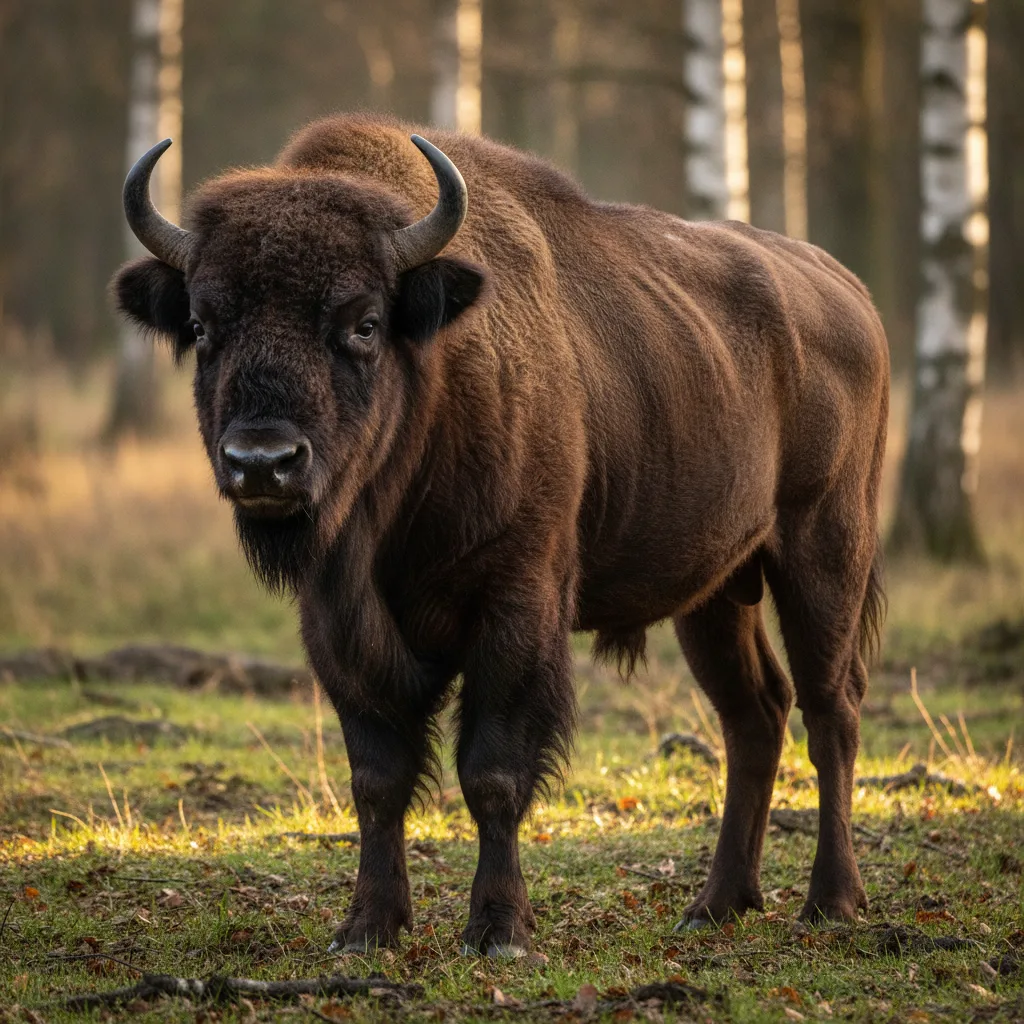
About the bison
The American bison is the heaviest land animal in North America, with bulls weighing up to about a tonne, and tens of millions once grazed the Great Plains before market hunting cut the population to a few hundred by the 1880s. Today around 30,000 live in conservation herds, and Yellowstone holds the only population that has roamed continuously since prehistoric times. Its European relative, the wisent, was extinct in the wild by 1927 and has since been rebuilt from a dozen captive animals.
Five things to know
- Bison are the heaviest land animals in both North America and Europe.
- The American bison population rebounded from fewer than 600 individuals in 1900 to over half a million today.
- Both American and European bison once ranged from the United States to the far reaches of Eurasia.
- Bison can run at speeds up to 56 km/h (35 mph).
- European bison, or wisent, went extinct in the wild after World War I and have been reintroduced entirely from captive populations.
Homeschool unit: Animals homeschool guide — Habitats, adaptations and food chains as a graded unit, with the bison as one of its worked examples.