Hands Down Animals · Printable fact sheet
Deer
Cervidae
Quick facts
| Scientific name | Cervidae |
|---|---|
| Size | Ranges from 30 cm (pudus) to 2.3 m at the shoulder (moose) |
| Weight | Ranges from 7 kg (pudus) to 820 kg (moose) |
| Lifespan | Typically 8–12 years in the wild, up to 25 years in… |
| Diet | Primarily browsers and grazers on leaves, shoots, grasses, forbs, fruits, and occasionally mushrooms. |
| Habitat | Deciduous forests, Coniferous forests, Grasslands |
| Where it lives | North America, South America, Europe, East Asia |
| IUCN status | Varies—many species Least Concern, but some Endangered or Near Threatened |
| Population | Approximately 40,000,000–60,000,000 (wild and captive… |
| Top speed | 80 km/h |
| Family | Cervidae |
About the deer
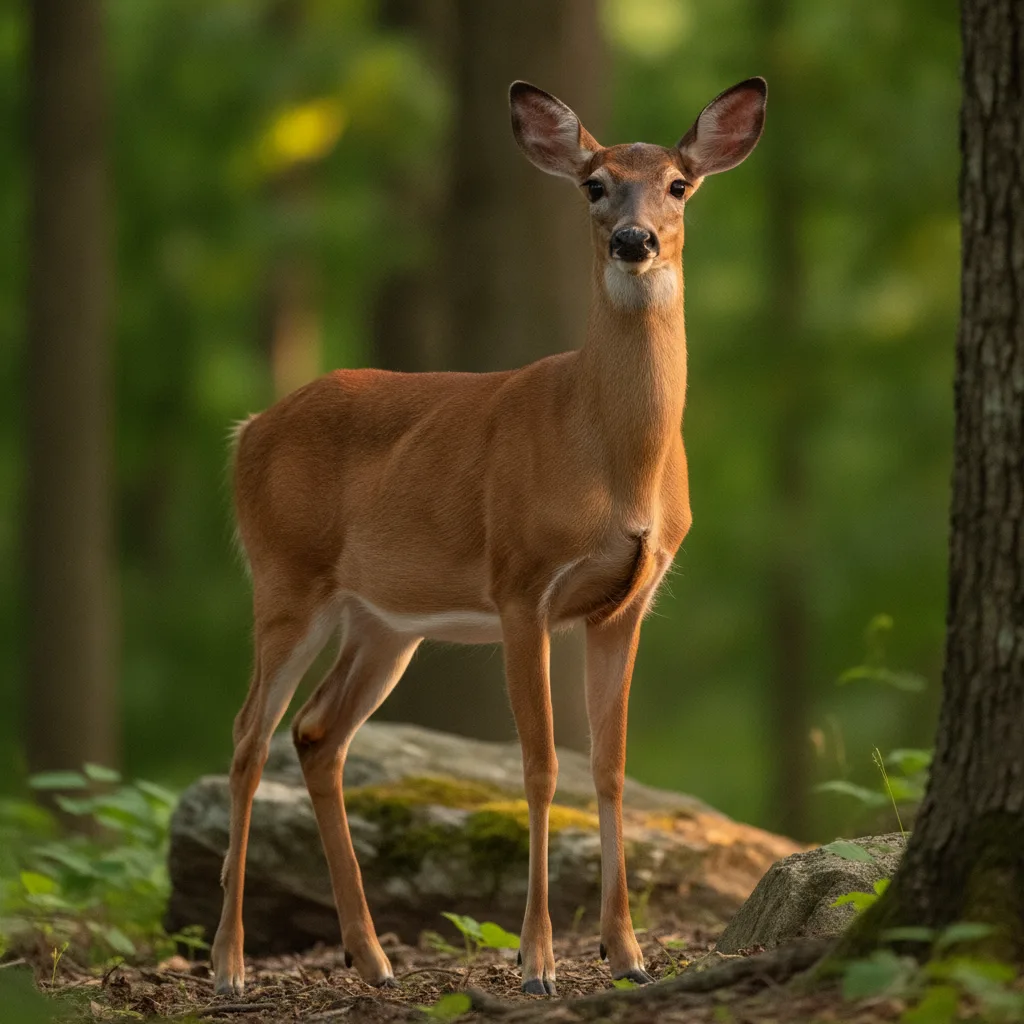
Deer are hoofed mammals found on every continent except Antarctica and Australia, and the roughly 55 species range from the 10-kilogram pudu to the 700-kilogram moose. Males of most species grow and shed a new set of antlers every year — the fastest-growing bone in the animal kingdom. Widespread species are thriving, with around 30 million white-tailed deer in North America, but several island and tropical species are Endangered.
Five things to know
- Deer are even-toed ungulates in the family Cervidae, unlike antelopes (Bovidae).
- All male deer (except for the Chinese water deer) grow and shed antlers annually.
- The moose (Alces alces) is the largest living deer species and can weigh over 700 kg.
- Deer communicate through vocalizations, scent marking, and body language.
- Many deer species are crepuscular, being most active at dawn and dusk.
Homeschool unit: Animals homeschool guide — Habitats, adaptations and food chains as a graded unit, with the deer as one of its worked examples.