Hands Down Animals · Printable fact sheet
Emperor Penguin
Aptenodytes forsteri
Quick facts
| Scientific name | Aptenodytes forsteri |
|---|---|
| Size | Typically 100–122 cm in height |
| Weight | Typically 22–46 kg |
| Lifespan | Average 15–20 years; max recorded ~40 years |
| Diet | Emperor penguins primarily eat fish (especially Antarctic silverfish), squid, and krill. |
| Habitat | Pack ice and fast ice near open water, Edges of continental and shelf ice, Sheltered… |
| Where it lives | Weddell Sea, Ross Sea, Amundsen Sea, King Haakon Bay |
| IUCN status | Near Threatened |
| Population | approximately 250,000 - 278,500 mature individuals |
| Top speed | 9 km/h |
| Family | Spheniscidae |
About the emperor penguin
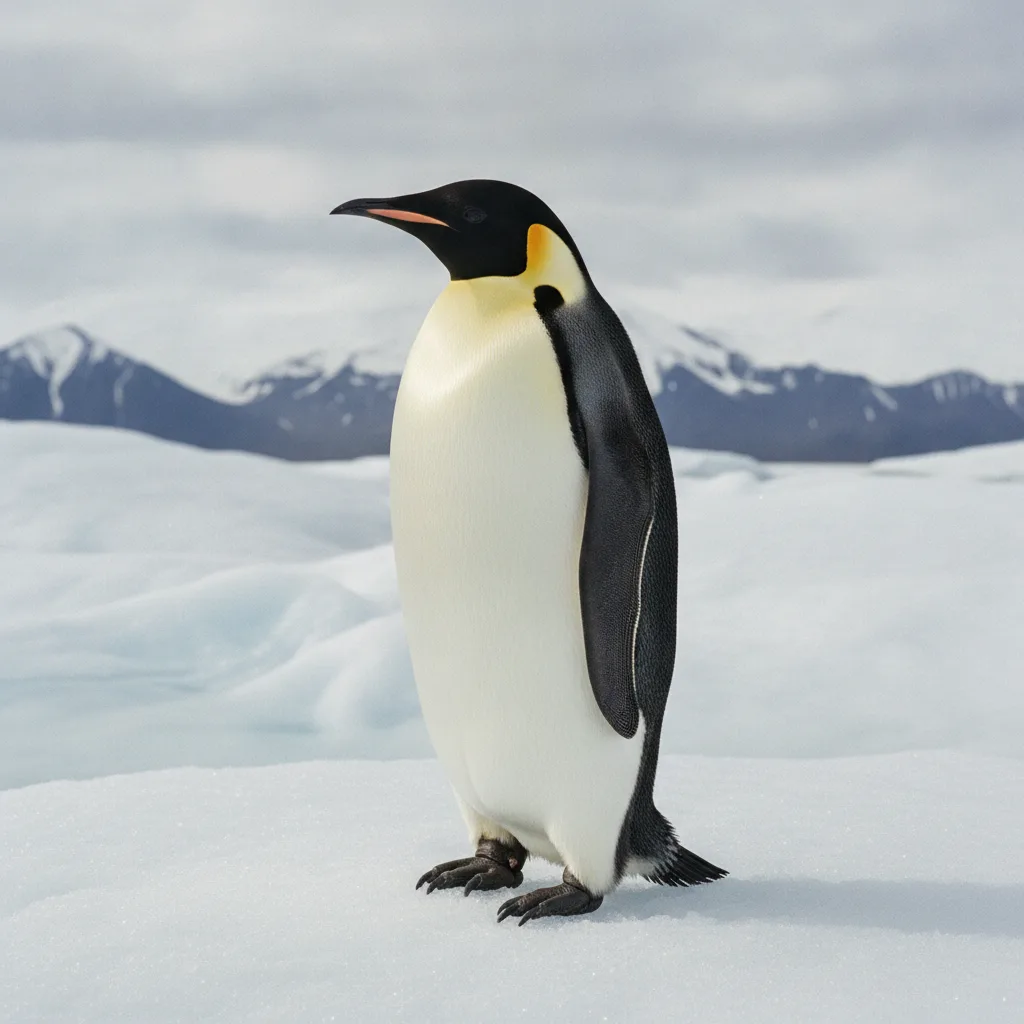
Standing over a metre tall, the emperor penguin is the largest penguin and the only animal that breeds through the Antarctic winter, when males incubate a single egg on their feet for about two months in temperatures below −40 °C and winds above 100 km/h. It is also the deepest-diving bird, recorded beyond 500 metres and holding its breath for more than 20 minutes. Because the colonies depend on stable sea ice, the IUCN lists the species as Near Threatened.
Five things to know
- The Emperor Penguin is the largest penguin species, standing up to 1.2 meters and weighing up to 46 kg.
- It is the only penguin to breed during the Antarctic winter, enduring temperatures below -50°C.
- Males incubate eggs on their feet for about 65 days without eating.
- Their colonies can number in the tens of thousands on the Antarctic pack ice.
- Most dives last 3-6 minutes, but emperors can dive over 550 meters deep in search of fish.
Homeschool unit: Birds homeschool guide — Flight, feathers and migration: a bird unit that uses species like the emperor penguin as its worked examples.