Hands Down Animals · Printable fact sheet
Hammerhead Shark
Sphyrnidae
Quick facts
| Scientific name | Sphyrnidae |
|---|---|
| Size | 1.5 to 6.1 meters long, depending on species |
| Weight | 18 to 450 kilograms |
| Lifespan | 25 to 40 years, species-dependent |
| Diet | Mainly bony fishes, stingrays, other sharks, cephalopods (octopus, squid), and crustaceans; bonnetheads also… |
| Habitat | Continental shelves, Coastal shallows, Coral reefs |
| Where it lives | Western Atlantic Ocean, Eastern Atlantic Ocean, Indian Ocean, Pacific Ocean |
| IUCN status | Most species: Critically Endangered or Endangered (Great and Scalloped Hammerhead); others Vulnerable or Least Concern (Bonnethead) |
| Population | Unknown (all species combined, but many populations in… |
| Top speed | 32 km/h |
| Family | Sphyrnidae |
About the hammerhead shark
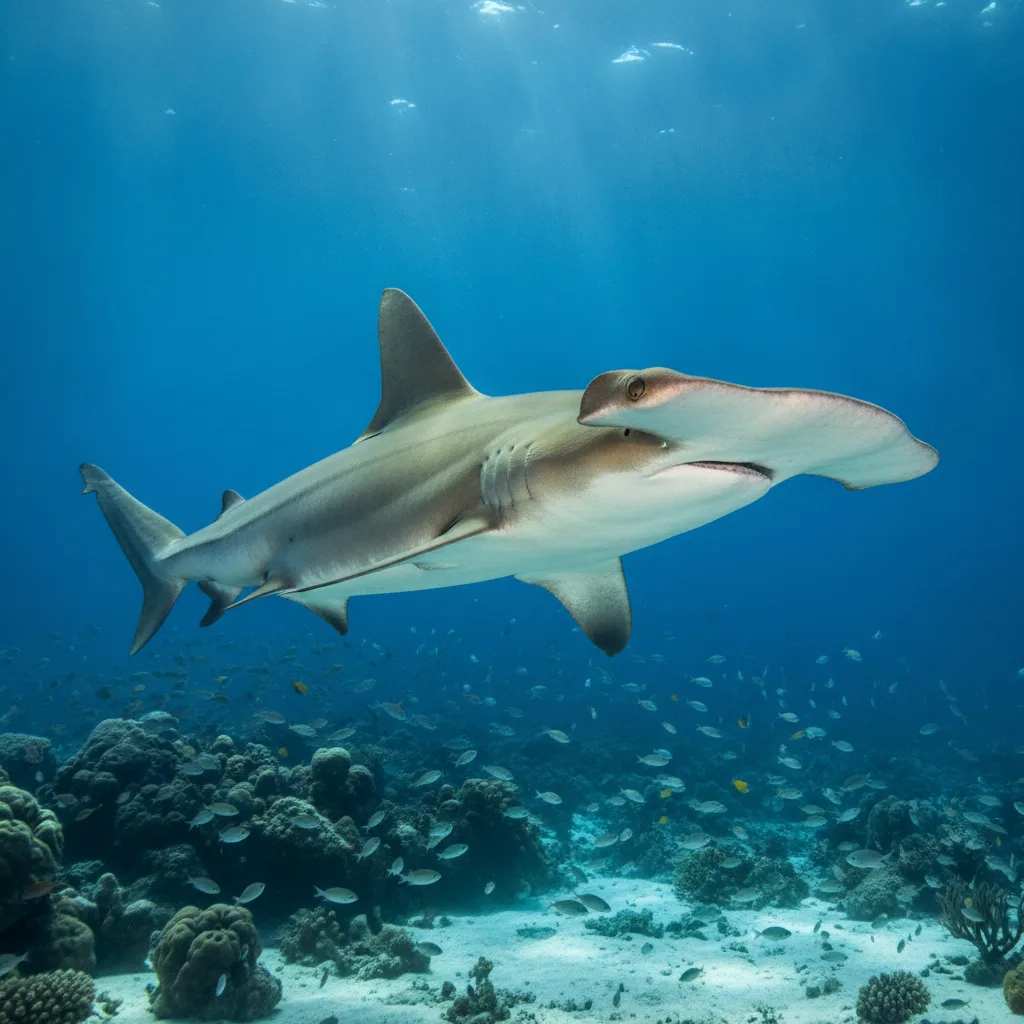
Hammerhead sharks are named for the flattened, wing-shaped head that spreads their eyes and nostrils far apart, giving them a wider field of view and a better fix on the electrical signals of buried prey such as stingrays. The nine or so species live in warm coastal and offshore waters worldwide, and scalloped hammerheads gather in schools of hundreds around seamounts. Heavy fishing for the fin trade has left the great and scalloped hammerheads Critically Endangered.
Five things to know
- Hammerhead sharks are easily identified by the unique T-shaped hammer (cephalofoil) of their heads, which gives them superior sensory perception.
- Some hammerhead species form huge migratory schools during the day, especially around seamounts and islands.
- They use their wide heads to pin down stingrays, one of their favorite prey items.
- Many hammerhead species have suffered steep population declines due to demand for their fins and bycatch.
- The great hammerhead is the world's largest hammerhead species and can grow over 6 meters long.
Homeschool unit: Sharks homeschool guide — A full shark unit: how hammerhead shark senses, hunts and why sharks matter to the ocean, with activities by grade.