Hands Down Animals · Printable fact sheet
Hedgehog
Erinaceidae
Quick facts
| Scientific name | Erinaceidae |
|---|---|
| Size | 14–30 cm in length (depending on species) |
| Weight | 300 g to 1,300 g (0.3–1.3 kg) |
| Lifespan | 2–5 years in the wild, up to 10 years in captivity |
| Diet | Primarily invertebrates: beetles, caterpillars, earthworms, slugs, and snails; will also eat eggs, fruit… |
| Habitat | Deciduous woodland, Meadows, Grasslands |
| Where it lives | Britain, Western Europe, Eastern Europe, Scandinavia |
| IUCN status | Vulnerable (European populations); most species Least Concern |
| Population | Unknown (European Hedgehog estimated at 1-1.5 million in… |
| Top speed | 6 km/h |
| Family | Erinaceidae |
About the hedgehog
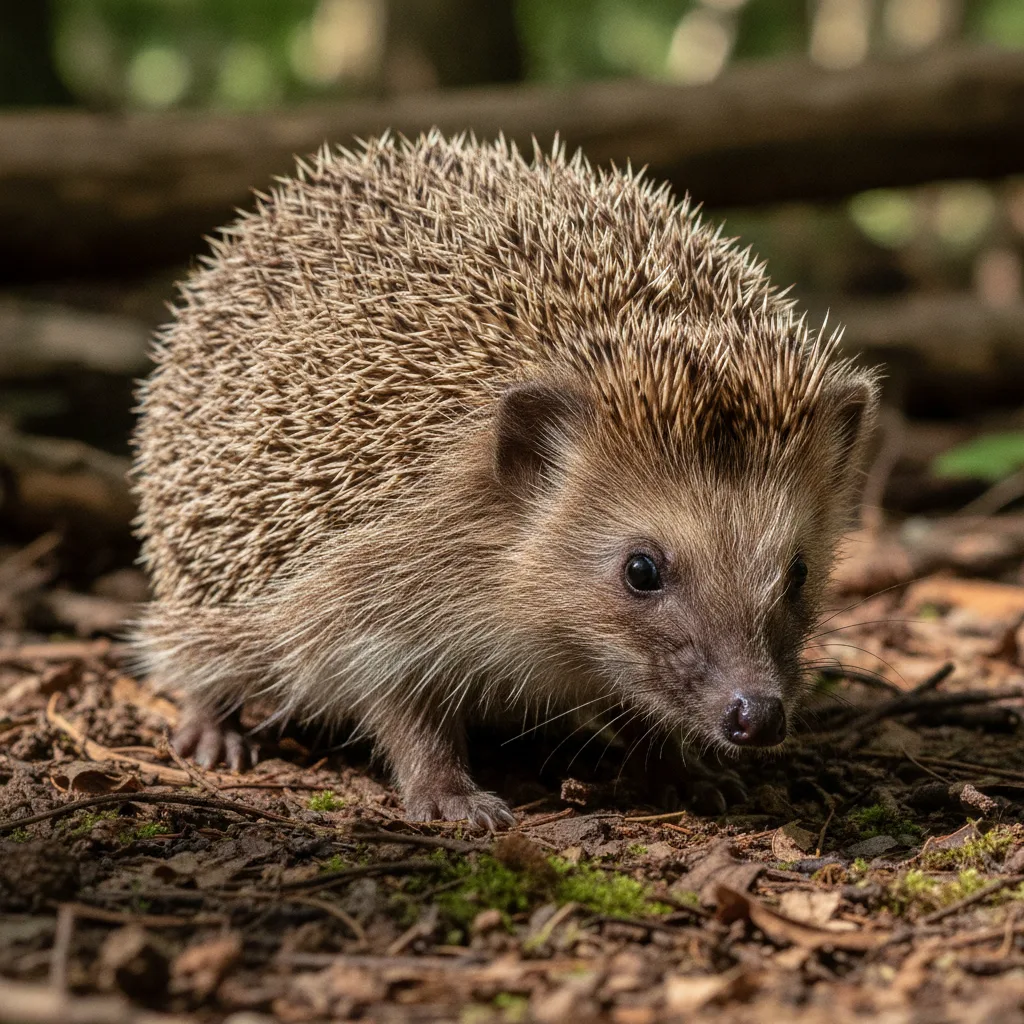
Hedgehogs carry around 5,000 to 7,000 hollow spines and roll into a tight ball when threatened, a ring of muscle pulling the spiny skin closed over the head and belly. The 17 species live across Europe, Asia and Africa, and the European hedgehog is a familiar garden visitor that eats beetles, worms and slugs at night. Populations in Britain have fallen steeply since 2000, and in 2024 the IUCN moved the western European hedgehog to Near Threatened.
Five things to know
- Hedgehogs have around 5,000–7,000 spines, each replaced every year.
- They can roll into a tight ball for protection, exposing only their sharp spines to predators.
- Hedgehogs are nocturnal and have excellent hearing but poor eyesight.
- They are one of the few mammals known to exhibit 'anointing' behavior, covering their spines with frothy saliva.
- Hedgehogs hibernate in colder regions during winter but remain active year-round in warmer climates.
Homeschool unit: Animals homeschool guide — Habitats, adaptations and food chains as a graded unit, with the hedgehog as one of its worked examples.