Hands Down Animals · Printable fact sheet
Hippopotamus
Hippopotamidae
Quick facts
| Scientific name | Hippopotamidae |
|---|---|
| Size | Common hippo: 3.3–5.2 m long; Pygmy hippo: 1.5–1.75 m long |
| Weight | Common hippo: 1,200–2,000 kg (males up to 4,000 kg); Pygmy hippo: 180–275 kg |
| Lifespan | Average 40 years, up to 55 years (in captivity/exceptional… |
| Diet | Mainly grasses and, occasionally, fallen fruit (for common hippo). Pygmy hippos feed on ferns, broad-leaved… |
| Habitat | Permanent rivers, Lakes and wetlands, Floodplains |
| Where it lives | East Africa, Central Africa, South Africa, West Africa |
| IUCN status | Vulnerable |
| Population | 128,000-148,000 |
| Top speed | 30 km/h |
| Family | Hippopotamidae |
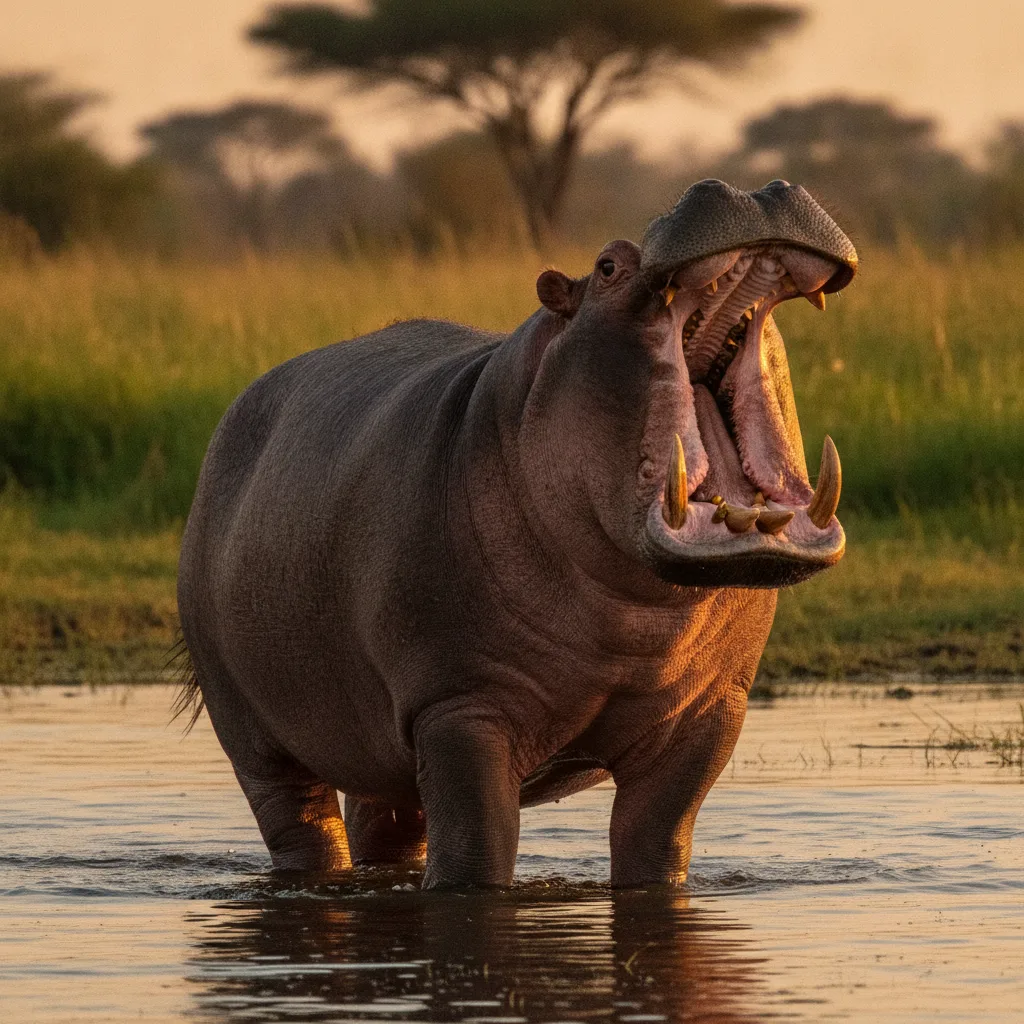
About the hippopotamus
Hippos live in the rivers, lakes and swamps of sub-Saharan Africa, spending the day submerged to keep cool and emerging at night to graze on grass. Despite weighing 1.5 tonnes or more they can outrun a person on land, and they kill more people in Africa each year than any other large mammal. The common hippo is listed as Vulnerable, and the pygmy hippo of West Africa is Endangered with fewer than 2,500 left.
Five things to know
- Hippopotamuses are the third-largest land mammals on Earth, after elephants and rhinoceroses.
- Despite their bulky appearance, common hippos can run up to 30 km/h (19 mph) on land.
- Hippos are highly territorial in water but more solitary on land.
- Pygmy hippos are nocturnal, secretive, and less aquatic than their larger relatives.
- Hippos produce a unique reddish “sweat” that acts as a natural sunscreen and antiseptic.
Homeschool unit: Animals homeschool guide — Habitats, adaptations and food chains as a graded unit, with the hippopotamus as one of its worked examples.