Hands Down Animals · Printable fact sheet
Jellyfish
Scyphozoa
Quick facts
| Scientific name | Scyphozoa |
|---|---|
| Size | From less than 1 cm (Immortal Jellyfish) to over 2 m bell diameter (Lion's… |
| Weight | Typically 0.01–200 kg depending on species |
| Lifespan | Several months to a few years; some can theoretically… |
| Diet | Jellyfish are carnivores, feeding on plankton, small fish, fish eggs, larvae, crustaceans, and even other… |
| Habitat | Open ocean (pelagic zone), Coastal waters, Estuaries |
| Where it lives | Pacific Ocean, Atlantic Ocean, Indian Ocean, Arctic Ocean |
| IUCN status | Not Evaluated (most species); generally not threatened |
| Population | Unknown, potentially trillions globally |
| Top speed | 8 km/h |
| Family | Varies by species (e.g., Ulmaridae, Cyaneidae, Pelagiidae) |
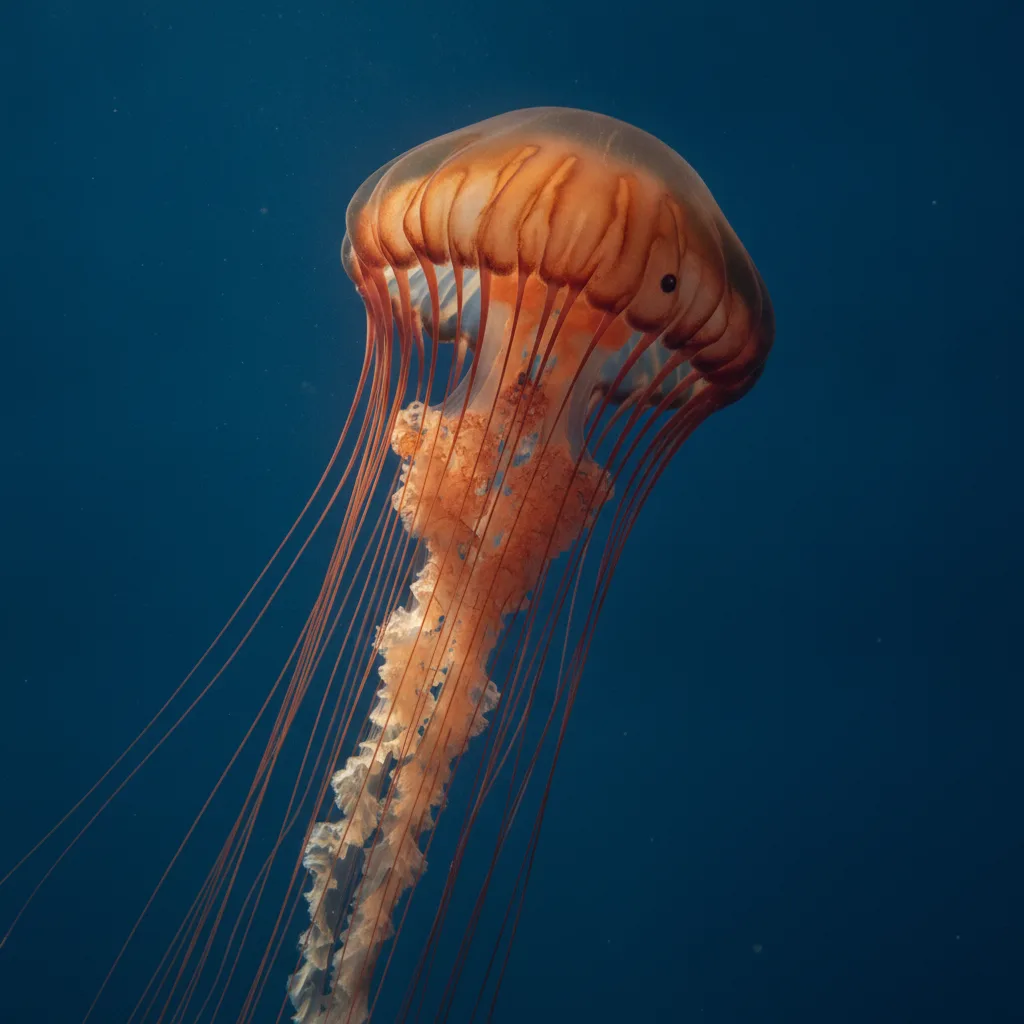
About the jellyfish
Jellyfish drift through every ocean from the surface to the deep sea, and they have done so for more than 500 million years, making them among the oldest animals on Earth. They have no brain, heart or blood; a simple nerve net coordinates the pulsing bell, and stinging cells fire microscopic harpoons in one of the fastest movements in nature. One species, Turritopsis dohrnii, can revert to its juvenile polyp stage after maturing, earning it the name 'immortal jellyfish'.
Five things to know
- Jellyfish are ancient animals that have lived in Earth's oceans for over 500 million years.
- Some jellyfish, like the box jellyfish, are among the most venomous animals on Earth.
- Jellyfish are 95% water and have no brains, hearts, or bones.
- Certain species, like the Immortal Jellyfish, can 'age in reverse' by reverting to their juvenile stage.
- Jellyfish play crucial roles in marine food webs and ecosystem balance.
Homeschool unit: Ocean homeschool guide — An ocean unit on marine food webs, tides and conservation, with the jellyfish as a case study.