Hands Down Animals · Printable fact sheet
Moose
Alces alces
Quick facts
| Scientific name | Alces alces |
|---|---|
| Size | 2.4–3.1 m in length; males stand 1.4–2.1 m at the shoulder |
| Weight | Adults weigh 360–820 kg (males largest) |
| Lifespan | Average 15 years in the wild, up to 27 years |
| Diet | Herbivorous: feeds on leaves, twigs, bark of willow, birch, and aspen, as well as aquatic plants such as… |
| Habitat | Boreal and mixed forests, Wetlands and swamps, Riverine woodlands |
| Where it lives | Alaska, Canada, New England, Scandinavia |
| IUCN status | Least Concern |
| Population | 1,500,000 - 2,000,000 |
| Top speed | 56 km/h |
| Family | Cervidae |
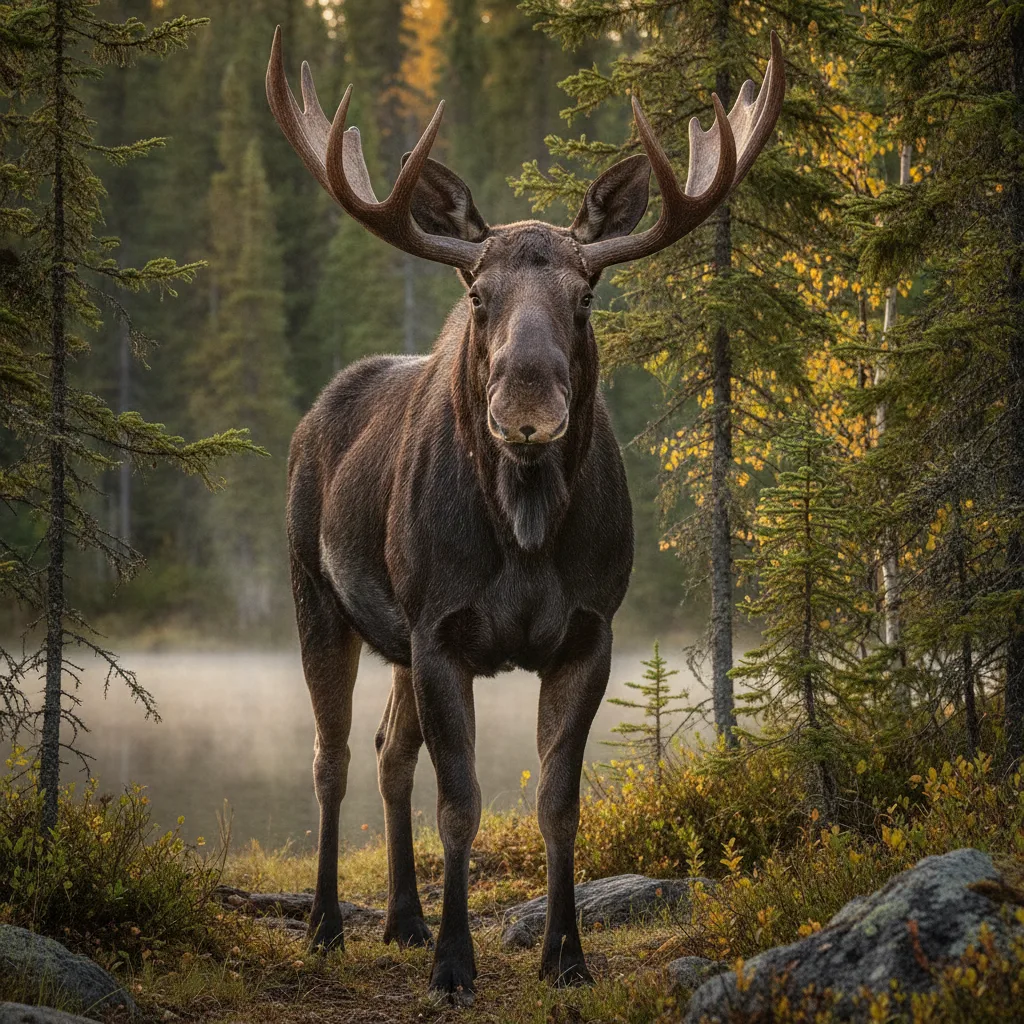
About the moose
The moose is the largest deer in the world, with Alaskan bulls standing over 2 metres at the shoulder and carrying antlers that can span 1.8 metres. It lives in the boreal forests of Canada, Alaska, the northern United States, Scandinavia and Russia — where it is called the elk — and it wades into lakes to feed on water plants, diving several metres to pull them from the bottom. A calf can outrun a person within days of birth.
Five things to know
- The moose is the largest living member of the deer family (Cervidae).
- A mature adult bull moose can weigh up to 820 kg and stand over 2 m at the shoulder.
- Moose are excellent swimmers and can swim several kilometers at a time, even submerging to feed on aquatic plants.
- Only male moose grow antlers, which can span up to 2 meters across in the largest individuals.
- Despite their size, moose can run up to 56 km/h for short distances.
Homeschool unit: Animals homeschool guide — Habitats, adaptations and food chains as a graded unit, with the moose as one of its worked examples.