Hands Down Animals · Printable fact sheet
Narwhal
Monodon monoceros
Quick facts
| Scientific name | Monodon monoceros |
|---|---|
| Size | 3.8–5.5 meters (12.5–18 feet) long |
| Weight | 800–1,600 kg (1,760–3,530 lbs) |
| Lifespan | Average 40 years, maximum up to 90 years |
| Diet | Narwhals primarily feed on Greenland halibut, Arctic cod, cuttlefish, shrimp, and squid. |
| Habitat | Deep offshore Arctic waters, Pack ice edges, Glacial fjords |
| Where it lives | Baffin Bay, Davis Strait, Labrador Sea, Greenland Sea |
| IUCN status | Near Threatened |
| Population | 123,000 - 170,000 |
| Top speed | 6 km/h |
| Family | Monodontidae |
About the narwhal
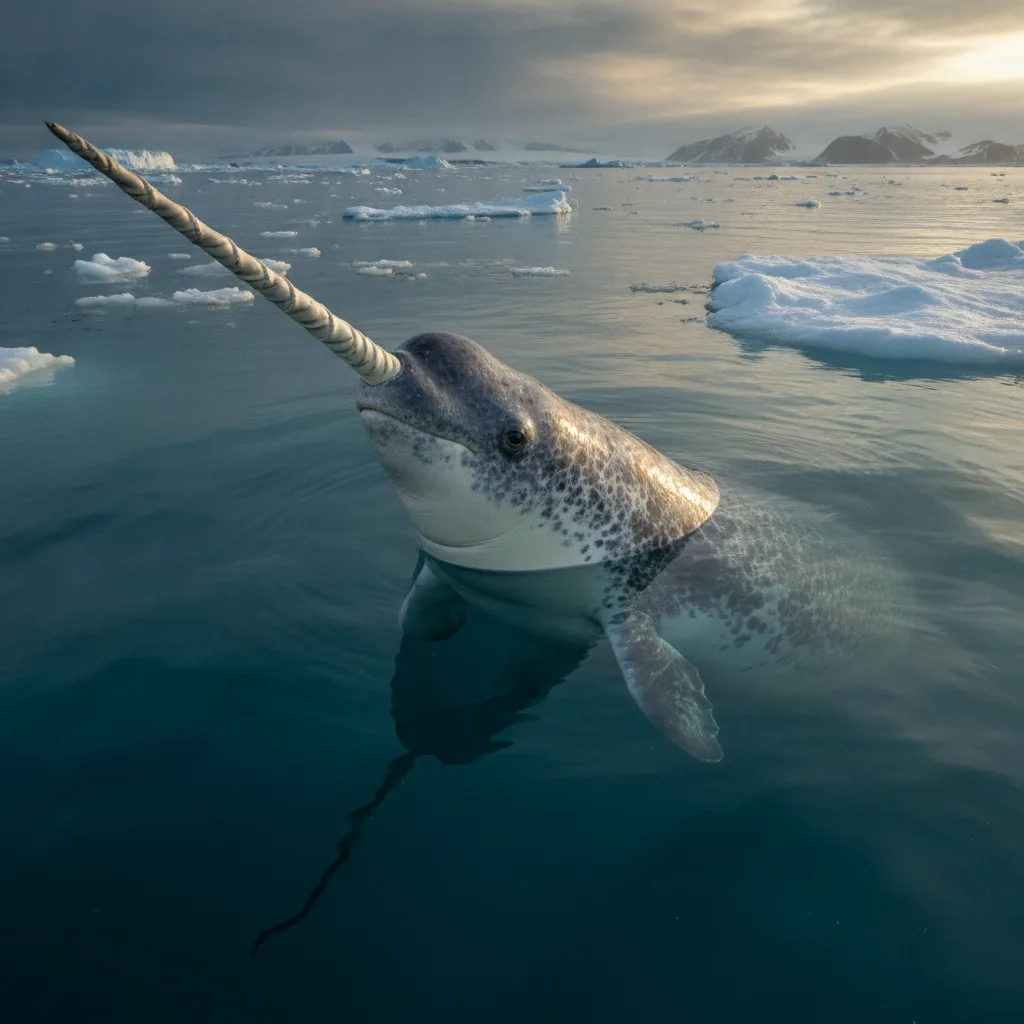
Narwhals live year-round in the Arctic waters of Canada, Greenland and Russia, spending the winter under dense pack ice and diving deeper than 1,500 metres for halibut and squid. The male's tusk is a single spiral tooth that grows through the upper lip to 2 or 3 metres; it is packed with nerve endings and seems to sense the water around it as well as serving in displays between males. Around 170,000 exist, but they depend on ice that is changing quickly.
Five things to know
- The narwhal’s spiral tusk is actually an elongated upper left canine tooth.
- Narwhals are exclusively found in Arctic marine waters and rarely venture south of the Arctic Circle.
- Their tusks can grow up to 3 meters (nearly 10 feet) long.
- Narwhals lack a dorsal fin, an adaptation for swimming under ice.
- They can dive to depths of over 1,800 meters (5,900 feet) in search of food.
Homeschool unit: Ocean homeschool guide — An ocean unit on marine food webs, tides and conservation, with the narwhal as a case study.