Hands Down Animals · Printable fact sheet
Orca
Orcinus
Quick facts
| Scientific name | Orcinus |
|---|---|
| Size | Average 6-8 meters, maximum up to 9.8 meters |
| Weight | Average 3,600–5,400 kg, up to 10,000 kg |
| Lifespan | Average 30 years, maximum over 90 years (females) |
| Diet | Varies by ecotype—can include fish (especially salmon, herring), squid, seals, sea lions, dolphins… |
| Habitat | Temperate coastal waters, Cold polar seas, Open ocean |
| Where it lives | Arctic Ocean, North Atlantic Ocean, South Atlantic Ocean, North Pacific Ocean |
| IUCN status | Data Deficient (IUCN) – some distinct populations Endangered or Threatened |
| Population | 50,000 |
| Top speed | 56 km/h |
| Family | Delphinidae |
About the orca
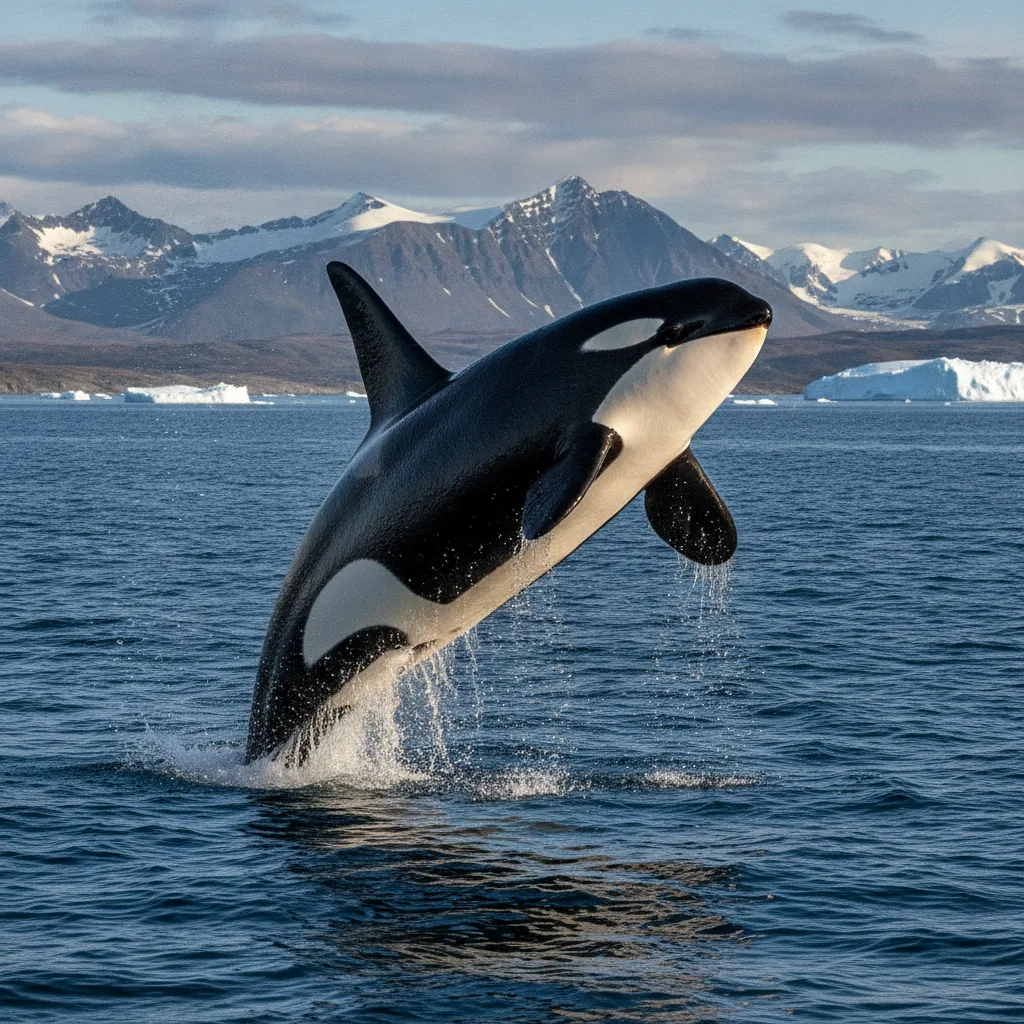
Orcas, or killer whales, are the largest dolphins and live in every ocean from the tropics to the pack ice, hunting in family pods that stay together for life. Different populations specialise — some eat only fish, others seals or even large whales — and each has its own calls and hunting techniques passed down through generations, such as washing seals off ice floes with a coordinated wave. A male's dorsal fin can stand 1.8 metres tall, and females may live past 80.
Five things to know
- Orcas are the largest members of the dolphin family (Delphinidae), not true whales.
- They are apex predators with no natural enemies and hunt a broad diet, from fish to large whales.
- Orcas have complex, unique cultures and dialects within their pods.
- They can communicate using elaborate vocalizations and even teach hunting techniques.
- Some populations are critically endangered, especially the salmon-eating Southern Residents.
Homeschool unit: Ocean homeschool guide — An ocean unit on marine food webs, tides and conservation, with the orca as a case study.