Hands Down Animals · Printable fact sheet
Platypus
Ornithorhynchus anatinus
Quick facts
| Scientific name | Ornithorhynchus anatinus |
|---|---|
| Size | 40–60 cm (adult length, bill to tail) |
| Weight | 0.7–2.4 kg (males are larger than females) |
| Lifespan | Average 10 years; up to 21 years in captivity |
| Diet | Aquatic invertebrates (insects, larvae, worms, small crustaceans), with occasional small fish and amphibians. |
| Habitat | Slow-moving rivers, Creeks and streams with stable banks, Lakes and freshwater pools |
| Where it lives | Eastern Australia, Tasmania, New South Wales, Victoria |
| IUCN status | Near Threatened |
| Population | 30,000 - 300,000 |
| Top speed | 8 km/h |
| Family | Ornithorhynchidae |
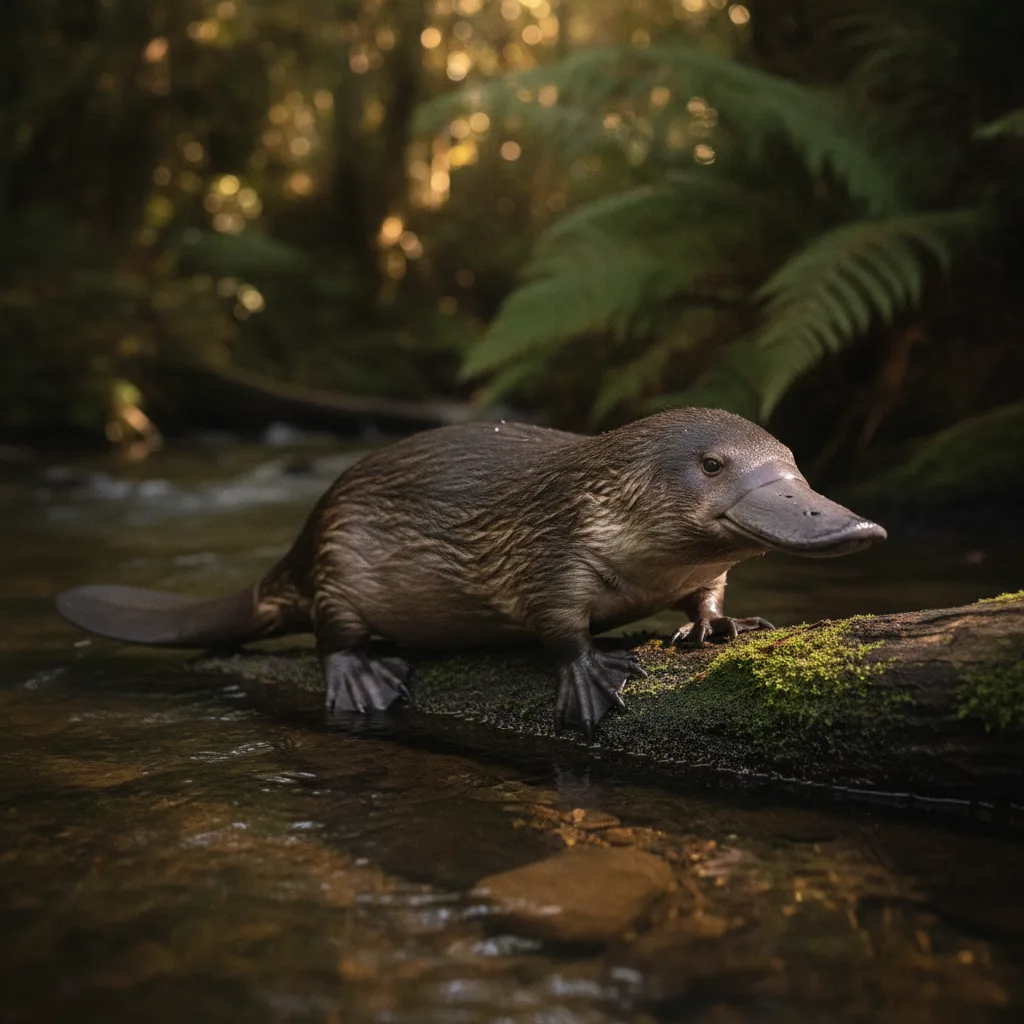
About the platypus
One of only five living mammals that lay eggs, the platypus inhabits the rivers and streams of eastern Australia and Tasmania. It hunts with its eyes, ears and nostrils closed, detecting the faint electric fields of shrimp and insect larvae with receptors in its rubbery bill, and the male carries a venomous spur on each hind ankle. When the first specimen reached London in 1799 several scientists suspected a hoax; today the IUCN lists the species as Near Threatened.
Five things to know
- The platypus is one of only five extant monotreme species (egg-laying mammals).
- Males have venomous spurs on their hind legs—rare among mammals.
- Platypuses can detect electric fields produced by prey using receptors in their bill.
- They are one of the few mammals that lay eggs.
- First European scientists thought the platypus was a hoax due to its odd mix of features.
Homeschool unit: Animals homeschool guide — Habitats, adaptations and food chains as a graded unit, with the platypus as one of its worked examples.