Hands Down Animals · Printable fact sheet
Rhinoceros
Rhinocerotidae
Quick facts
| Scientific name | Rhinocerotidae |
|---|---|
| Size | Height at shoulder: 1.3–1.9 m; Body length: 2.5–4 m |
| Weight | 800–3,600 kg depending on species |
| Lifespan | 35–45 years in the wild; up to 50 years in captivity |
| Diet | Primarily herbivorous – feeding on grass, leaves, shoots, branches, and fruit (diet varies by species and… |
| Habitat | Savannah, Grassland, Floodplain |
| Where it lives | Southern Africa, Eastern Africa, South Africa, Namibia |
| IUCN status | Most species are Critically Endangered according to the IUCN Red List. |
| Population | Less than 27,000 |
| Top speed | 50 km/h |
| Family | Rhinocerotidae |
About the rhinoceros
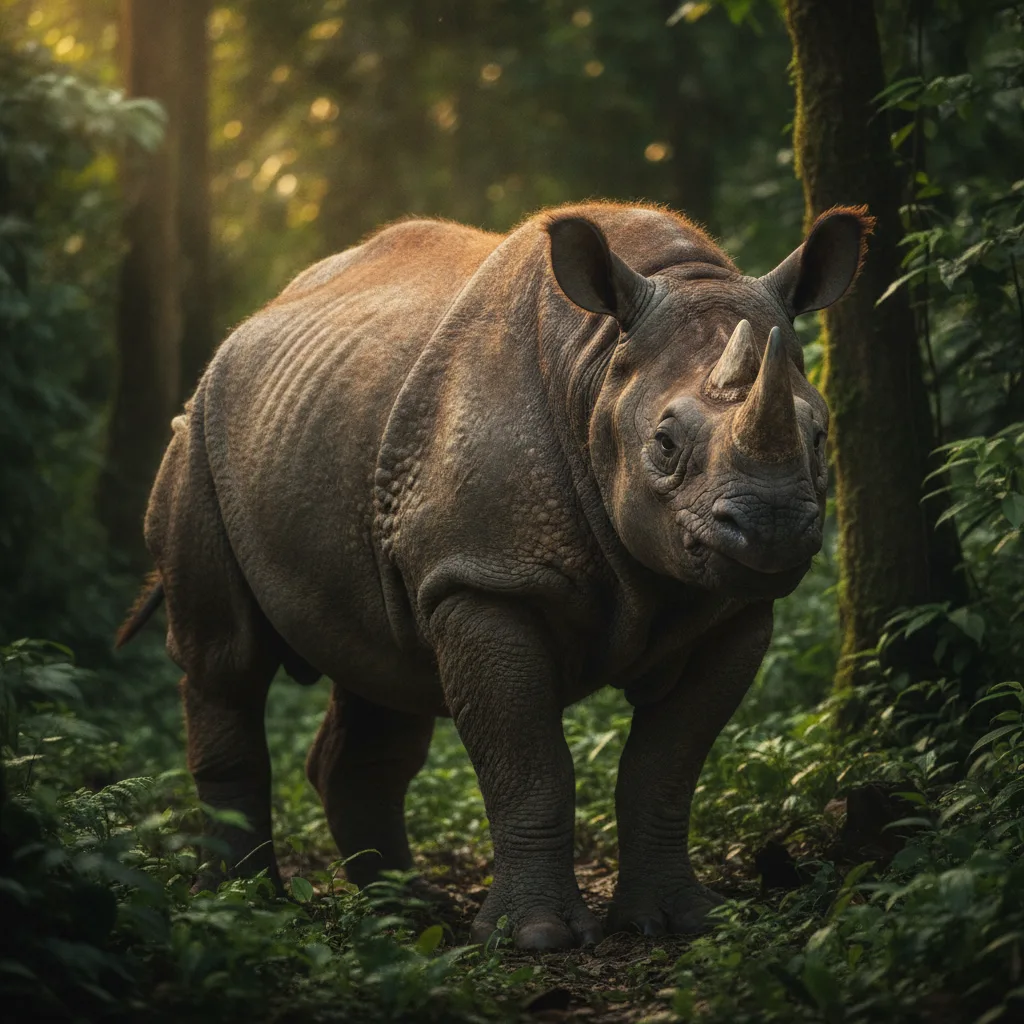
Rhinoceroses are heavy, thick-skinned grazers and browsers with one or two horns made of keratin, the same protein as fingernails, and the five living species divide between Africa (black and white) and Asia (Indian, Javan and Sumatran). A white rhino can weigh over 2 tonnes yet reach 50 km/h at a charge. Poaching for horn has pushed three of the five species to Critically Endangered status, and the Javan rhino is down to roughly 75 animals in a single Indonesian national park.
Five things to know
- Rhinoceroses are among the world’s largest land mammals.
- They are instantly recognized by their distinctive horns made of keratin.
- Rhinos have thick, protective skin that is surprisingly sensitive.
- All rhino species are threatened, mainly by poaching for their horns and habitat loss.
- Each rhino has a unique arrangement and number of horns: one for Indian and Javan, two for White, Black, and Sumatran.
Homeschool unit: Animals homeschool guide — Habitats, adaptations and food chains as a graded unit, with the rhinoceros as one of its worked examples.