Hands Down Animals · Printable fact sheet
Sea Otter
Enhydra
Quick facts
| Scientific name | Enhydra |
|---|---|
| Size | 1.1 to 1.5 meters in length |
| Weight | 14 to 45 kg (males larger than females) |
| Lifespan | average 12 years in the wild |
| Diet | Primarily marine invertebrates such as sea urchins, crabs, abalone, clams, and snails; occasionally fish. |
| Habitat | Coastal kelp forests, Rocky shorelines, Shallow, sheltered bays |
| Where it lives | North Pacific Ocean, Bering Sea, Sea of Okhotsk, Kuril Islands |
| IUCN status | Endangered in parts of its range; globally classified as Endangered (IUCN 2021) |
| Population | 120,000 - 150,000 |
| Top speed | 9 km/h |
| Family | Mustelidae |
About the sea otter
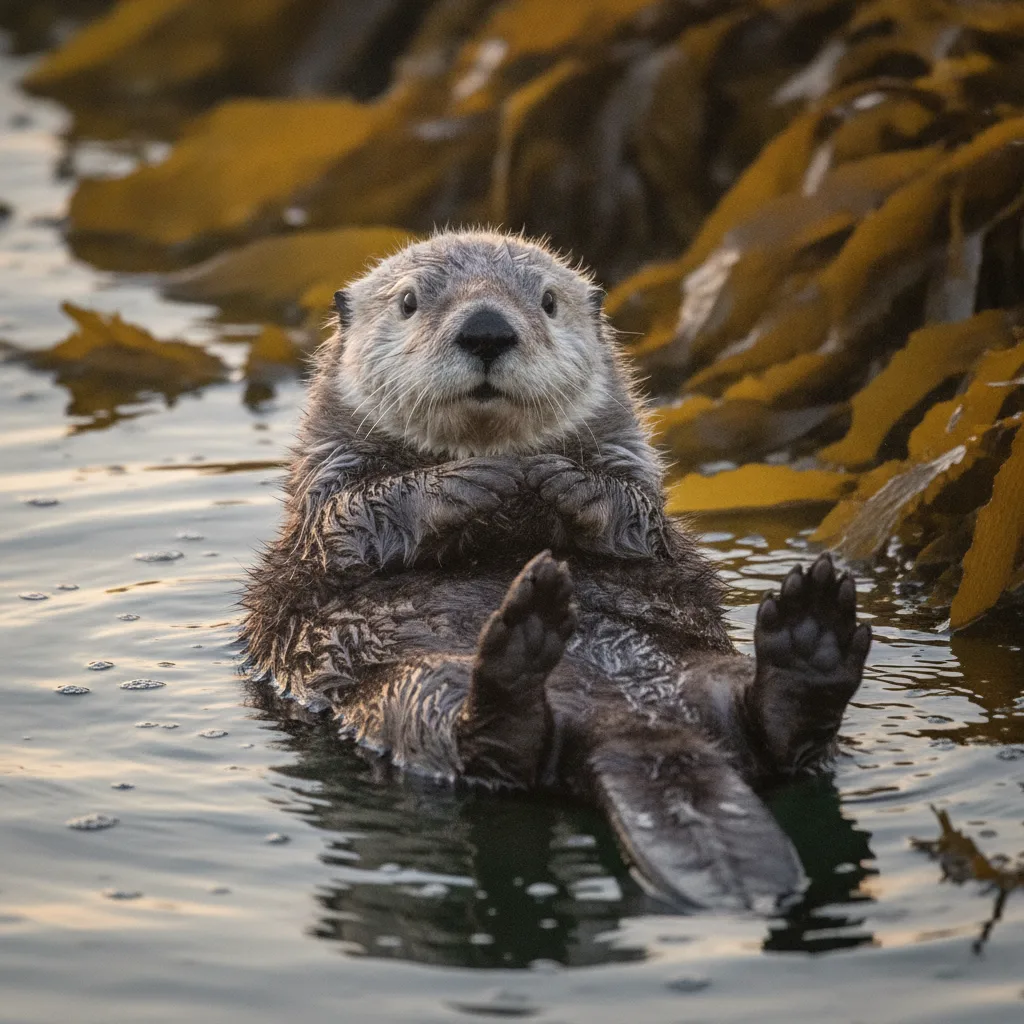
Sea otters live in the kelp forests and shallow coastal waters of the North Pacific, from Russia and Alaska down to central California. They have the densest fur of any animal, around 150,000 hairs per square centimetre, because unlike other marine mammals they carry no blubber, and they float on their backs cracking clams and urchins against a stone kept in a pouch of loose skin under the forelimb. Hunted almost to extinction for that fur, the species is still listed as Endangered.
Five things to know
- Sea otters have the densest fur of any animal, with up to 150,000 hairs per square centimeter.
- Unlike other marine mammals, sea otters lack blubber and rely on their thick fur for insulation.
- Sea otters are 'keystone species,' playing a major role in maintaining kelp forest ecosystems.
- They use stones as tools to crack open hard-shelled prey like sea urchins and clams.
- Sea otters are one of the few mammals known to hold hands while floating to avoid drifting apart.
Homeschool unit: Ocean homeschool guide — An ocean unit on marine food webs, tides and conservation, with the sea otter as a case study.