Hands Down Animals · Printable fact sheet
Walrus
Odobenus rosmarus
Quick facts
| Scientific name | Odobenus rosmarus |
|---|---|
| Size | 2.7 to 3.7 meters (males slightly larger than females) |
| Weight | 800 to 1,700 kg (males); 600 to 1,250 kg (females) |
| Lifespan | 25-30 years average; up to 40 years maximum |
| Diet | Mainly bivalve mollusks (clams), but also worms, snails, crustaceans, and occasionally fish or seal carcasses. |
| Habitat | Shallow continental shelf seas, Coastal ice floes and pack ice, Polynyas (areas of open… |
| Where it lives | Bering Sea, Chukchi Sea, Laptev Sea, East Siberian Sea |
| IUCN status | Vulnerable |
| Population | 230,000 - 250,000 |
| Top speed | 35 km/h |
| Family | Odobenidae |
About the walrus
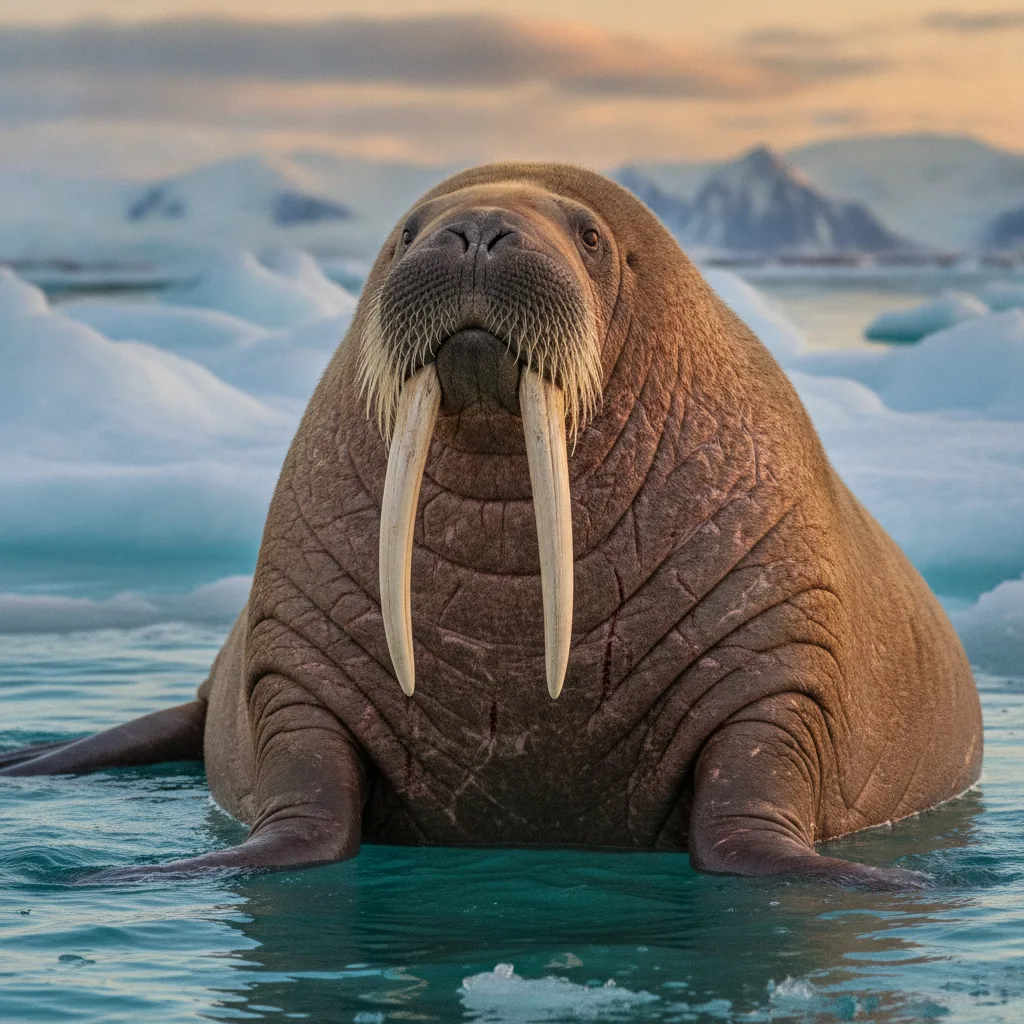
Walruses haul out in crowded herds on the sea ice and beaches of the Arctic, and both sexes grow tusks — elongated canine teeth that reach a metre in big males — used to heave themselves out of the water and to settle disputes over position. They feed mainly on clams, finding them on the seabed with a moustache of several hundred stiff, sensitive whiskers, and a large bull can weigh 1,500 kilograms. Retreating sea ice is pushing herds ashore in growing numbers, and the species is listed as Vulnerable.
Five things to know
- Walruses are the only living members of the family Odobenidae.
- Both males and females have large, elongated ivory tusks up to 1 meter long.
- They use suction created by their mouths to extract clams and other mollusks from the seafloor.
- Walruses can weigh up to 1,700 kg, making them among the largest pinnipeds.
- They rely on sea ice for resting, breeding, and protection from predators.
Homeschool unit: Ocean homeschool guide — An ocean unit on marine food webs, tides and conservation, with the walrus as a case study.