Hands Down Animals · Printable fact sheet
Whale Shark
Rhincodontidae
Quick facts
| Scientific name | Rhincodontidae |
|---|---|
| Size | Typically 8–12 meters as adults, with maximum confirmed around 18.8 meters. |
| Weight | Usually 15,000–21,000 kg, with extremely large individuals up to 34,000 kg. |
| Lifespan | Average lifespan is 70–100 years, with strong evidence for… |
| Diet | Primarily plankton, krill, copepods, fish eggs, and small schooling fish; filter-feeds by swimming with… |
| Habitat | Open ocean (pelagic), Coastal surface waters, Continental shelf edges |
| Where it lives | Indian Ocean, Western Pacific Ocean, Eastern Pacific Ocean, Atlantic Ocean |
| IUCN status | Endangered |
| Population | 100,000-238,000 |
| Top speed | 5 km/h |
| Family | Rhincodontidae |
About the whale shark
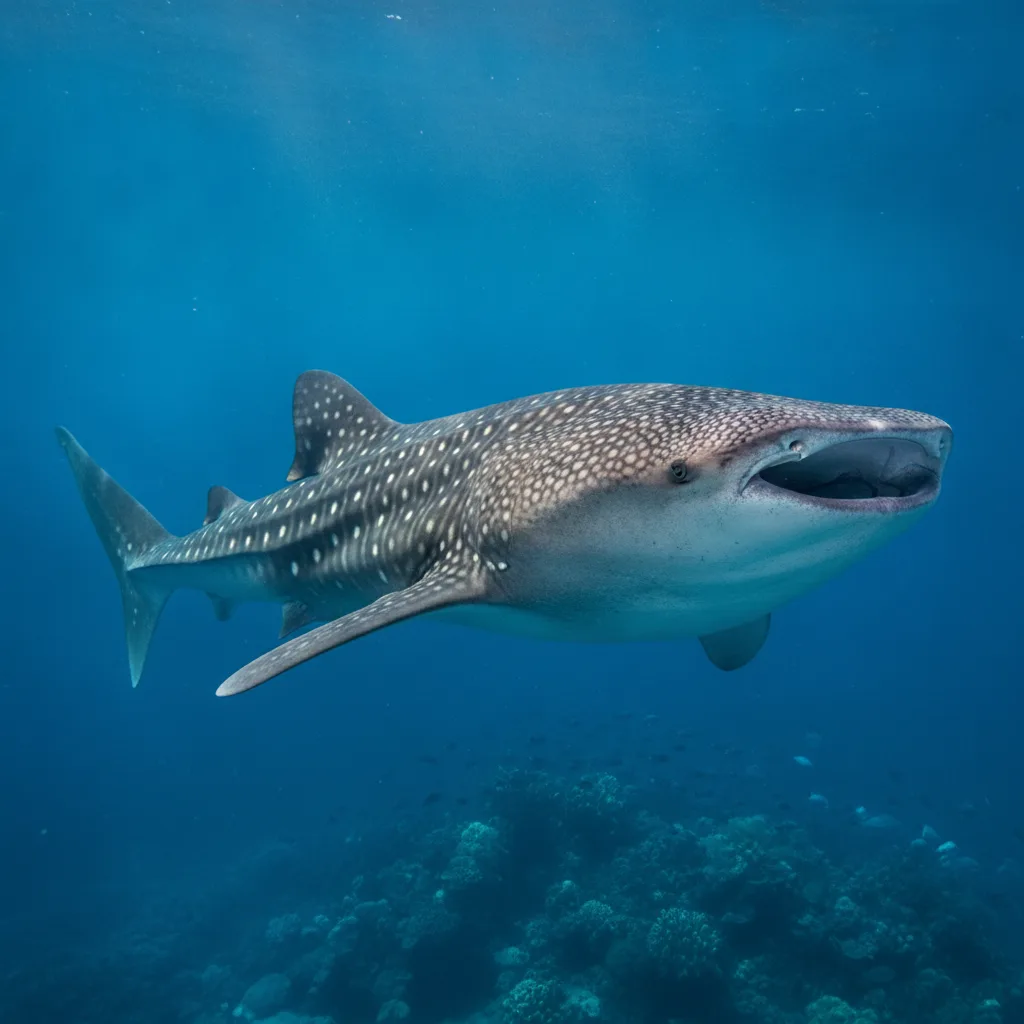
The whale shark is the largest fish alive, reaching 12 metres or more, yet it feeds by cruising slowly through plankton and small fish with its wide mouth open, straining the water through its gills. It roams tropical seas worldwide and gathers seasonally where food blooms — off Mexico's Yucatán, Western Australia's Ningaloo Reef and the Philippines. Each animal's pattern of pale spots is unique, letting researchers identify individuals from tourists' photographs, and the species is listed as Endangered.
Five things to know
- Whale sharks are the largest living fish, reaching lengths up to 18.8 meters.
- They are gentle filter feeders, mainly eating plankton, krill, and small fish.
- Each whale shark has a unique spot pattern, like a human fingerprint.
- Despite their size, whale sharks pose no threat to humans.
- Whale sharks can live for more than 100 years.
Homeschool unit: Sharks homeschool guide — A full shark unit: how whale shark senses, hunts and why sharks matter to the ocean, with activities by grade.