Hands Down Animals · Printable fact sheet
Zebra
Equus
Quick facts
| Scientific name | Equus |
|---|---|
| Size | 2.0–2.6 meters in length; up to 1.5 meters at the shoulder |
| Weight | 220–450 kg depending on species |
| Lifespan | Typically 20 years in the wild, up to 30 in captivity |
| Diet | Primarily grazing on grasses; occasionally browse on shrubs and herbs during dry periods. |
| Habitat | savannas, open woodlands, arid grasslands |
| Where it lives | East Africa, Southern Africa, Zimbabwe, Botswana |
| IUCN status | Near Threatened |
| Population | approximately 750,000 |
| Top speed | 65 km/h |
| Family | Equidae |
About the zebra
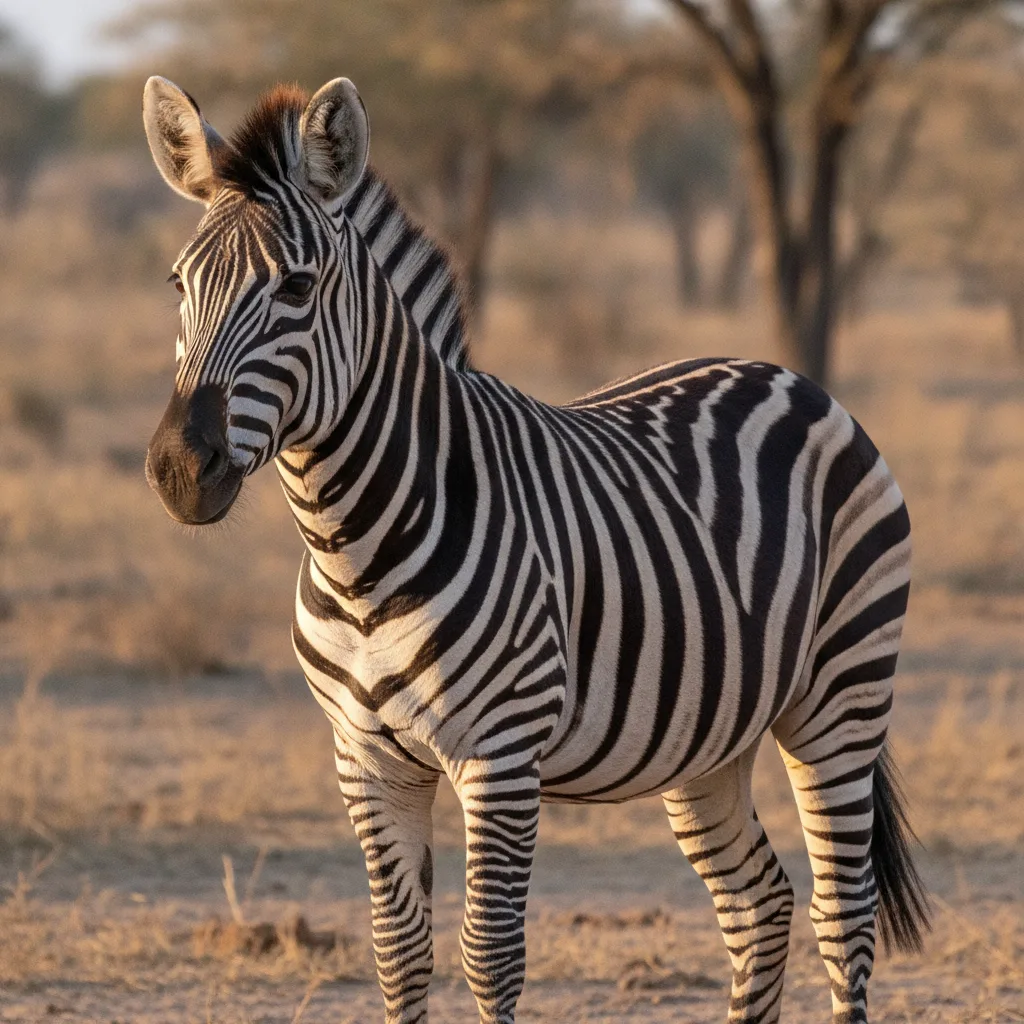
Zebras are wild African horses, and the three species — plains, mountain and Grevy's — graze the savannas and dry grasslands of eastern and southern Africa. Every zebra's stripe pattern is unique, and experiments suggest the stripes mainly deter biting flies rather than confusing predators. The plains zebra is Near Threatened, while Grevy's zebra is Endangered with only around 2,000 remaining, mostly in northern Kenya.
Five things to know
- Every zebra's stripe pattern is unique—like a fingerprint!
- Zebras can run at speeds up to 65 km/h (40 mph) to evade predators.
- They live in family groups called harems, dominated by a single stallion.
- Grevy's zebra is the largest wild member of the horse family.
- Zebras are crucial for grassland ecosystem health through their grazing.
Homeschool unit: Animals homeschool guide — Habitats, adaptations and food chains as a graded unit, with the zebra as one of its worked examples.