Hands Down Animals · Printable fact sheet
African Elephant
Loxodonta
Quick facts
| Scientific name | Loxodonta |
|---|---|
| Size | 2.7-4.0 m tall at the shoulder, 6-7.5 m body length for savanna; 2.0-2.6 m… |
| Weight | 3,000–6,000 kg for savanna, 2,000–4,000 kg for forest elephants; extremes up… |
| Lifespan | On average 60 years in the wild |
| Diet | Herbivorous: grasses, tree bark, leaves, roots, fruit, and occasionally crops. |
| Habitat | Savannas, Grassy plains, Open woodlands |
| Where it lives | East Africa, Southern Africa, Central Africa, West Africa |
| IUCN status | Endangered |
| Population | 415,000 - 500,000 |
| Top speed | 40 km/h |
| Family | Elephantidae |
About the african elephant
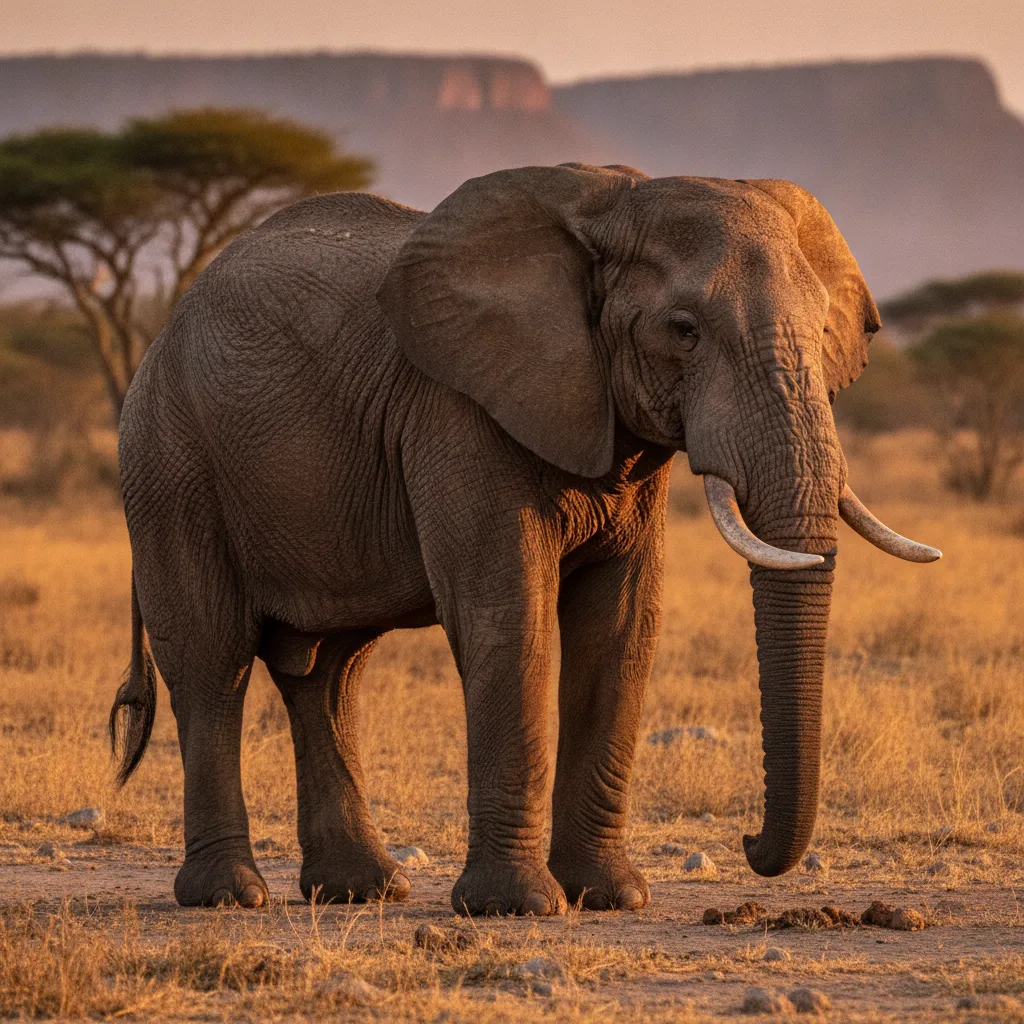
African elephants — the savanna species and the smaller forest species — range across 37 countries south of the Sahara and are the largest animals on land, with savanna bulls topping 6 tonnes. Their ears radiate heat, and family herds follow a matriarch whose memory of distant water sources can span decades. The savanna elephant is Endangered and the forest elephant Critically Endangered, with poaching for ivory the leading cause.
Five things to know
- African elephants are the largest land mammals alive today.
- Their large ears help them dissipate heat in the African sun.
- Each elephant’s tusks are unique and grow continuously throughout life.
- Elephants communicate with low-frequency sounds undetectable to humans.
- Females live in matriarchal herds led by an older matriarch.
Homeschool unit: Animals homeschool guide — Habitats, adaptations and food chains as a graded unit, with the african elephant as one of its worked examples.