Hands Down Animals · Printable fact sheet
African Wild Dog
Lycaon pictus
Quick facts
| Scientific name | Lycaon pictus |
|---|---|
| Size | 75–112 cm in body length, with a tail of 30–41 cm |
| Weight | 18–36 kg |
| Lifespan | 8–10 years in the wild |
| Diet | Primarily hunt medium-sized ungulates (especially impala and gazelles), but will also eat hares, birds, and… |
| Habitat | Open savannah, Dry woodland, Semi-arid plains |
| Where it lives | East Africa, Southern Africa, Central Africa, West Africa |
| IUCN status | Endangered |
| Population | 6,000 - 6,600 |
| Top speed | 60 km/h |
| Family | Canidae |
About the african wild dog
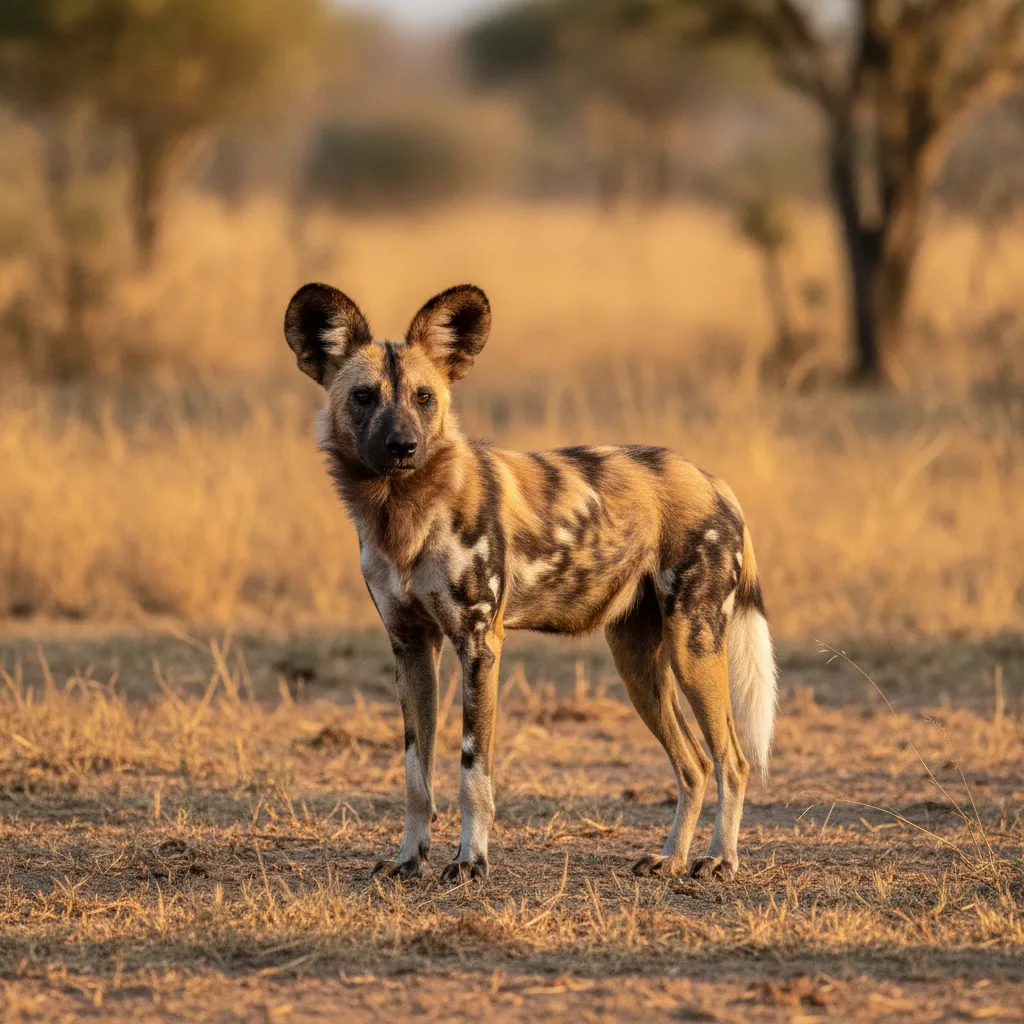
African wild dogs live in packs across the savannas and woodlands of sub-Saharan Africa, each animal marked with its own blotched coat of black, tan and white. They are among the most successful hunters on the continent, with a higher share of chases ending in a kill than lions manage, and the whole pack feeds pups and injured members. Around 6,600 remain, fragmented across a few strongholds, and the species is Endangered.
Five things to know
- The African wild dog is the only extant species in the genus Lycaon, distinct from all other canids.
- They have the highest hunting success rate (over 70%) of any African carnivore.
- African wild dogs live in highly social packs with strong cooperative bonds.
- Each dog’s coat pattern is unique, much like a human fingerprint.
- Major threats include habitat fragmentation, diseases like canine distemper, and persecution by humans.
Homeschool unit: Animals homeschool guide — Habitats, adaptations and food chains as a graded unit, with the african wild dog as one of its worked examples.