Hands Down Animals · Printable fact sheet
Amur Leopard
Panthera pardus orientalis
Quick facts
| Scientific name | Panthera pardus orientalis |
|---|---|
| Size | Body length 107-136 cm, shoulder height ~64-78 cm |
| Weight | Females 25-42 kg, males 32-48 kg |
| Lifespan | Typically around 10-15 years in the wild |
| Diet | Primarily roe deer, sika deer, hares, badgers, and small mammals; will scavenge if food is scarce. |
| Habitat | Temperate forests, Mixed deciduous-coniferous woodland, Rugged mountainous terrain |
| Where it lives | Primorye region (Russian Far East), Sikhote-Alin Mountains, Jilin Province (northeast… |
| IUCN status | Critically Endangered |
| Population | 110 |
| Top speed | 60 km/h |
| Family | Felidae |
About the amur leopard
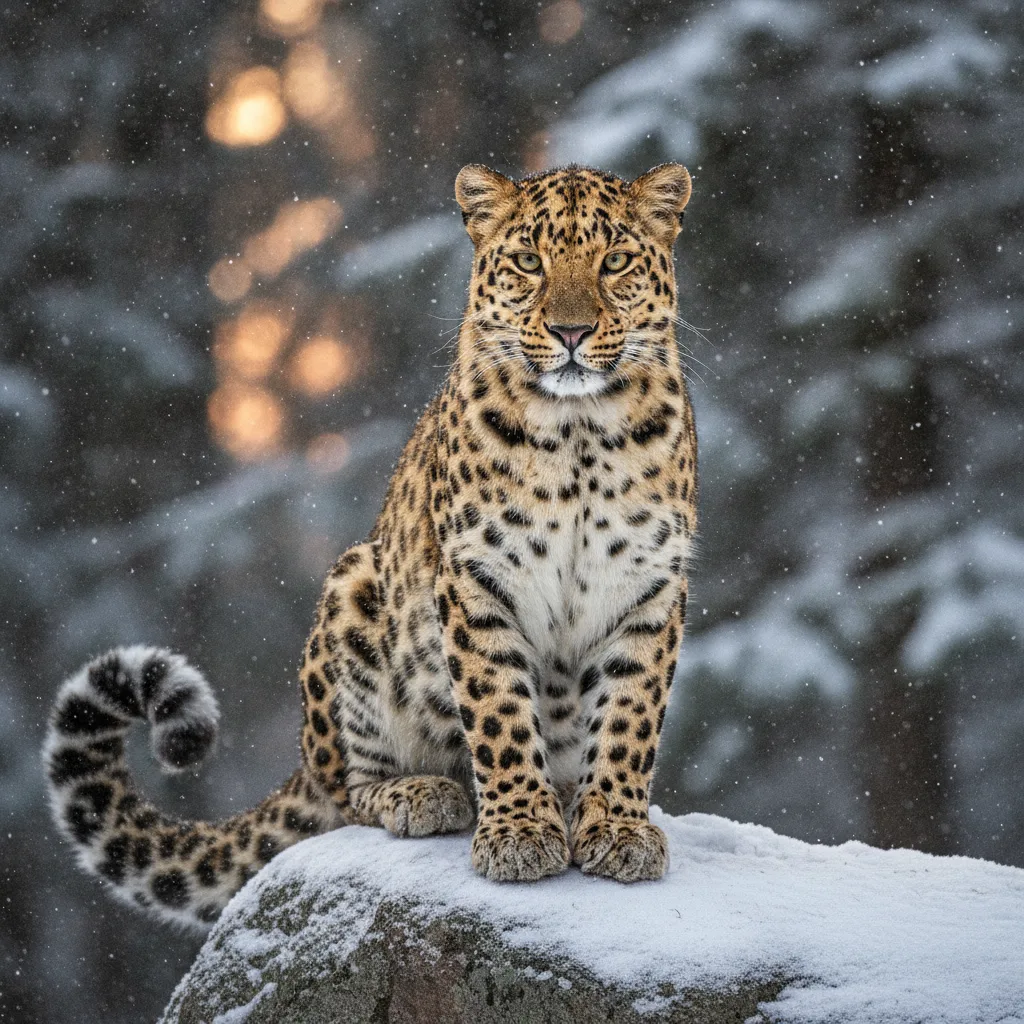
The Amur leopard survives in a narrow strip of temperate forest along the Russia–China border in the Russian Far East, farther north than any other leopard. A thick, pale winter coat with widely spaced rosettes and hair up to 7 cm long suits winters that drop below −30 °C. It is the rarest big cat on Earth, Critically Endangered, with numbers having climbed from around 30 in 2007 to roughly 100 today.
Five things to know
- Amur leopards are the world's rarest big cats, with around 110 individuals remaining in the wild.
- They have longer, paler fur than other leopards, suited for life in snowy forests.
- These leopards can leap over 6 meters (20 feet) horizontally in a single bound.
- The Amur leopard is the only leopard subspecies adapted to temperate and cold climates.
- Conservation programs in Russia have helped the population rise from just 30 individuals in the 1970s.
Homeschool unit: Animals homeschool guide — Habitats, adaptations and food chains as a graded unit, with the amur leopard as one of its worked examples.