Hands Down Animals · Printable fact sheet
Arctic Fox
Vulpes lagopus
Quick facts
| Scientific name | Vulpes lagopus |
|---|---|
| Size | body length 45–68 cm; tail length 30–35 cm; height 25–30 cm at shoulder |
| Weight | 2.5–9 kg, typically 3–5.5 kg |
| Lifespan | 3–6 years in the wild (up to 11 years recorded) |
| Diet | Lemmings and voles (mainly), birds, eggs, berries, fish, carrion (including polar bear leftovers) |
| Habitat | Coastal tundra, Inland tundra, Rocky slopes |
| Where it lives | Northern Alaska, Canadian Arctic Archipelago, Greenland, Iceland |
| IUCN status | Least Concern |
| Population | several hundred thousand |
| Top speed | 50 km/h |
| Family | Canidae |
About the arctic fox
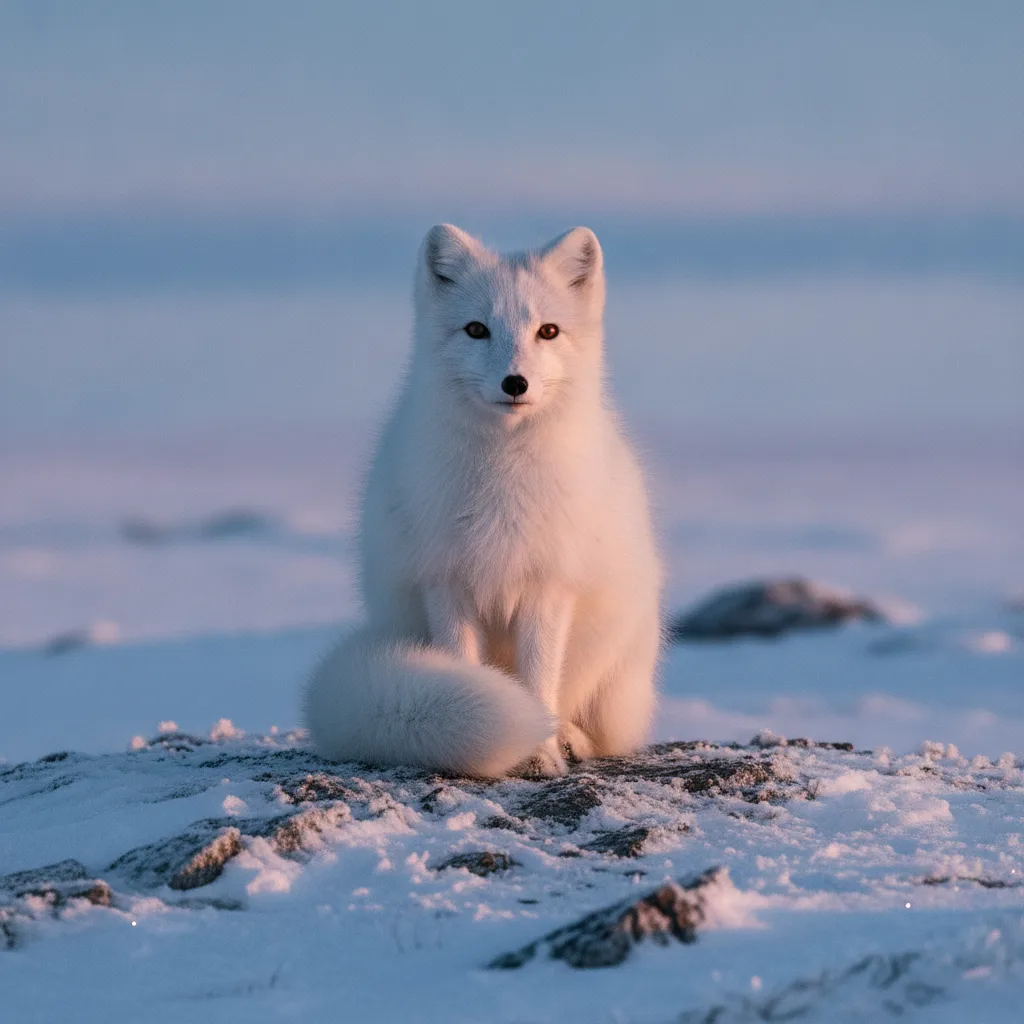
Arctic foxes live on the tundra and sea ice of the circumpolar north, where a dense winter coat lets them stay active at temperatures below −40 °C. Their fur changes from white in winter to brown or grey in summer, and in lean years they follow polar bears to scavenge seal kills. The species is Least Concern overall, though the Scandinavian population remains small after fur trapping and competition from spreading red foxes.
Five things to know
- The Arctic fox is supremely adapted to survive Arctic temperatures as low as -50°C with its dense, insulating fur.
- Its fur changes color with the seasons: white in winter and brown or gray in summer for camouflage.
- Arctic foxes can smell and locate prey beneath up to 1 meter of snow.
- This species is known for following polar bears to scavenge on leftovers after a big kill.
- In Iceland, the Arctic fox is the only native land mammal.
Homeschool unit: Animals homeschool guide — Habitats, adaptations and food chains as a graded unit, with the arctic fox as one of its worked examples.