Hands Down Animals · Printable fact sheet
Asian Elephant
Elephas maximus
Quick facts
| Scientific name | Elephas maximus |
|---|---|
| Size | 5.5 - 6.4 meters long, 2 - 3.5 meters tall |
| Weight | 2,500 - 5,400 kg |
| Lifespan | up to 60 years in the wild |
| Diet | Asian elephants are herbivores, feeding on grasses, leaves, bark, roots, fruits, and cultivated crops. |
| Habitat | Tropical moist forests, Dry deciduous forests, Grasslands |
| Where it lives | India, Nepal, Bangladesh, Sri Lanka |
| IUCN status | Endangered |
| Population | 40,000 - 50,000 |
| Top speed | 25 km/h |
| Family | Elephantidae |
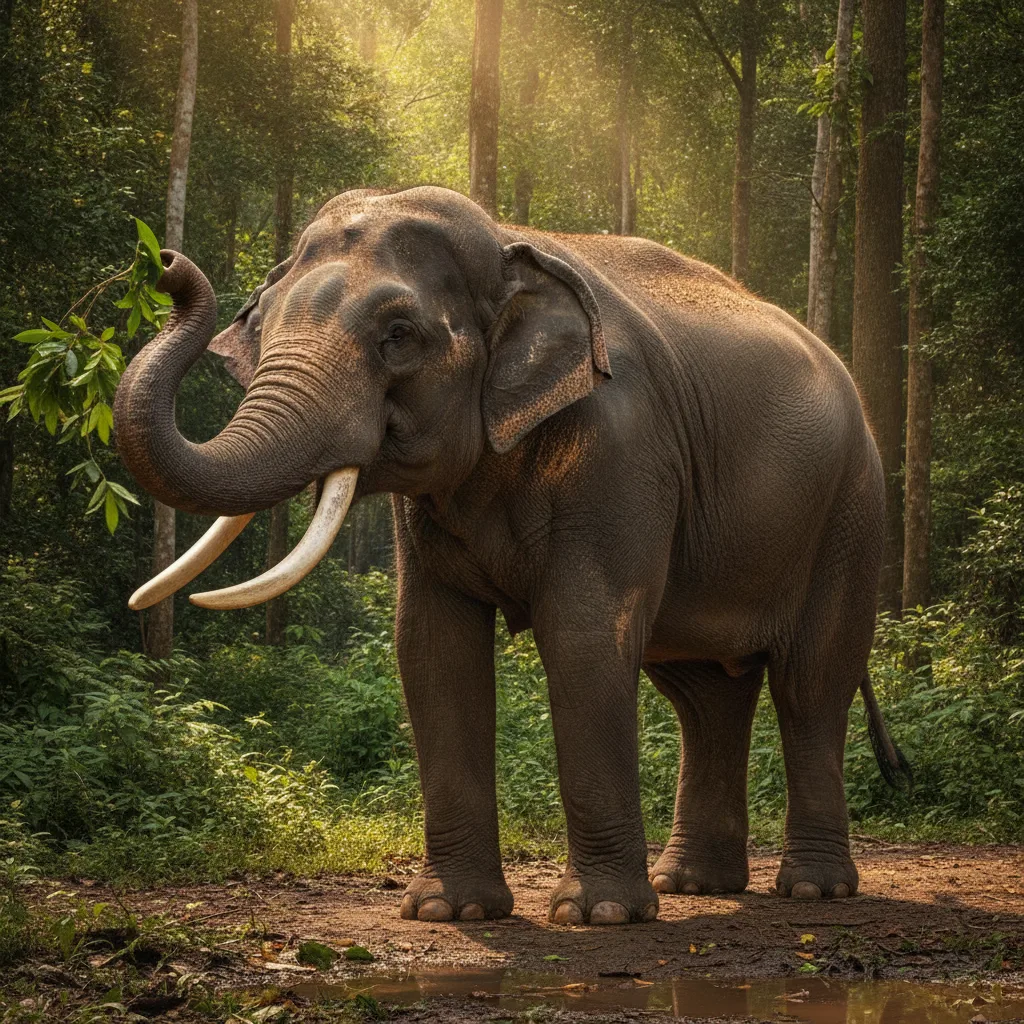
About the asian elephant
Asian elephants live in the forests and grasslands of 13 countries from India to Borneo, and they are smaller than their African cousins, with smaller, rounded ears and a single finger-like tip on the trunk. Only some males grow tusks, and females have none or very small ones. Fewer than 50,000 remain in the wild across a shrinking, fragmented range, and the species is Endangered.
Five things to know
- The Asian elephant is the largest land mammal in Asia.
- Unlike African elephants, only some male Asian elephants have large visible tusks.
- They have finger-like dexterity at the end of their trunk, but only one ‘finger’ tip on each side.
- Asian elephants form complex, matriarch-led social groups called herds.
- Their populations are severely threatened by habitat loss, fragmentation, and human-elephant conflict.
Homeschool unit: Animals homeschool guide — Habitats, adaptations and food chains as a graded unit, with the asian elephant as one of its worked examples.