Hands Down Animals · Printable fact sheet
Axolotl
Ambystoma mexicanum
Quick facts
| Scientific name | Ambystoma mexicanum |
|---|---|
| Size | 23–30 cm in length |
| Weight | 60–250 grams (adults) |
| Lifespan | 10–15 years (captivity), 5–10 years (wild) |
| Diet | Carnivorous; feeds on small fish, worms, insects, crustaceans, and mollusks. |
| Habitat | high-altitude freshwater lakes, canals with abundant aquatic vegetation, shallow, cool… |
| Where it lives | Lake Xochimilco, Lake Chalco, canals of Xochimilco |
| IUCN status | Critically Endangered |
| Population | 700 - 1,200 mature individuals |
| Family | Ambystomatidae |
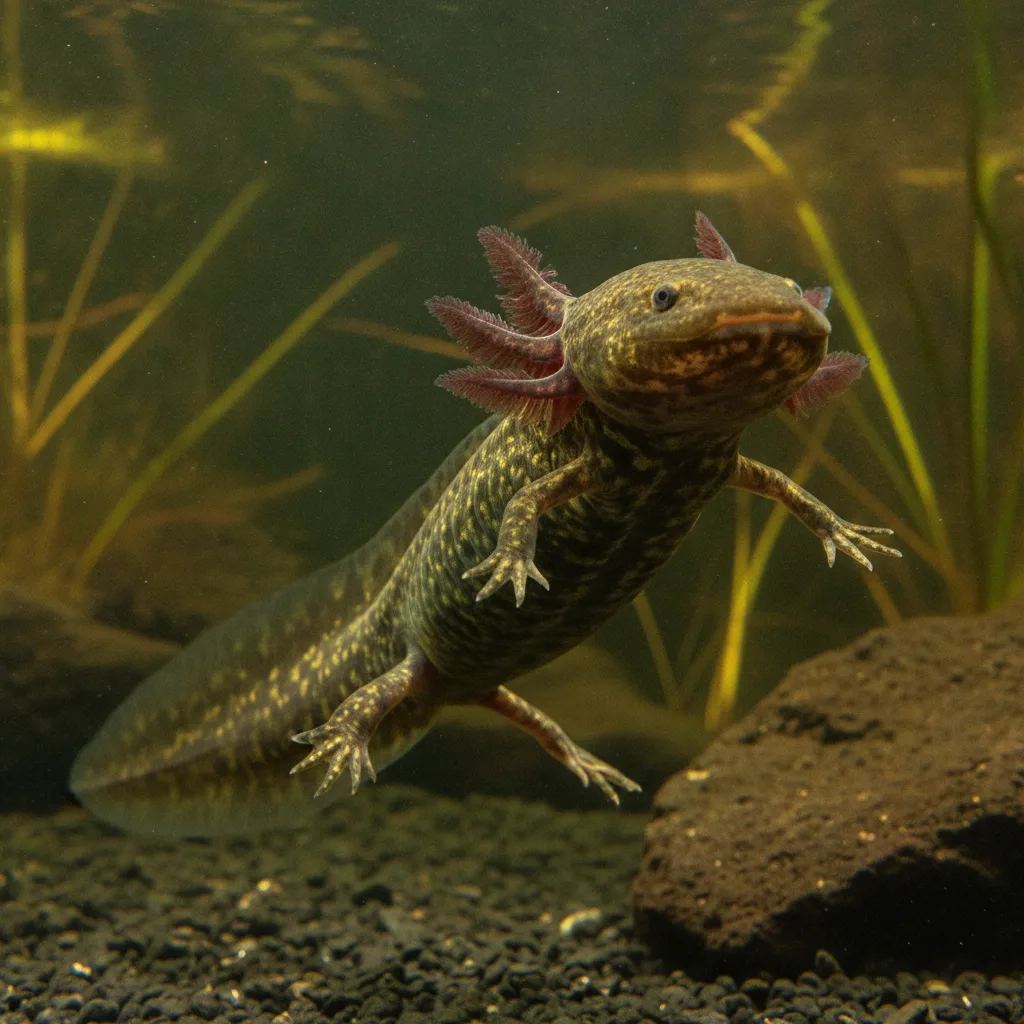
About the axolotl
The axolotl is a salamander found naturally in just one place: the canals and wetlands of Lake Xochimilco on the southern edge of Mexico City. It keeps its feathery external gills and aquatic form for life instead of metamorphosing, and it can regrow lost limbs, its tail and parts of its heart and brain, making it a mainstay of regeneration research. Millions live in laboratories and aquariums, but the wild population may be under a thousand and the species is Critically Endangered.
Five things to know
- Axolotls can regrow lost limbs, parts of their brain, and even parts of their heart—remarkable regenerative powers unique in vertebrates.
- Unlike most salamanders, axolotls remain aquatic and retain their larval features (external feathery gills) throughout their lives.
- They are only found natively in the remnants of Lake Xochimilco near Mexico City.
- Axolotls are critically endangered in the wild due to invasive species, habitat loss, and pollution, though millions exist in captivity.
- Their genomes are massive—over 10 times the size of the human genome!
Homeschool unit: Animals homeschool guide — Habitats, adaptations and food chains as a graded unit, with the axolotl as one of its worked examples.