Hands Down Animals · Printable fact sheet
Bald Eagle
Haliaeetus leucocephalus
Quick facts
| Scientific name | Haliaeetus leucocephalus |
|---|---|
| Size | 70–102 cm (28–40 inches) in length; wingspan 1.8–2.3 m (6–7.5 ft) |
| Weight | 3–6.3 kg (6.6–14 lbs), females larger than males |
| Lifespan | typically 20–30 years in the wild |
| Diet | Primarily fish, but also waterfowl, small mammals, carrion, and occasionally reptiles and amphibians. |
| Habitat | Large freshwater lakes, Rivers with abundant fish, Coastal estuaries |
| Where it lives | Alaska, Canada, United States (excluding Hawaii), Northern Mexico |
| IUCN status | Least Concern |
| Population | 316,700 |
| Top speed | 56 km/h |
| Family | Accipitridae |
About the bald eagle
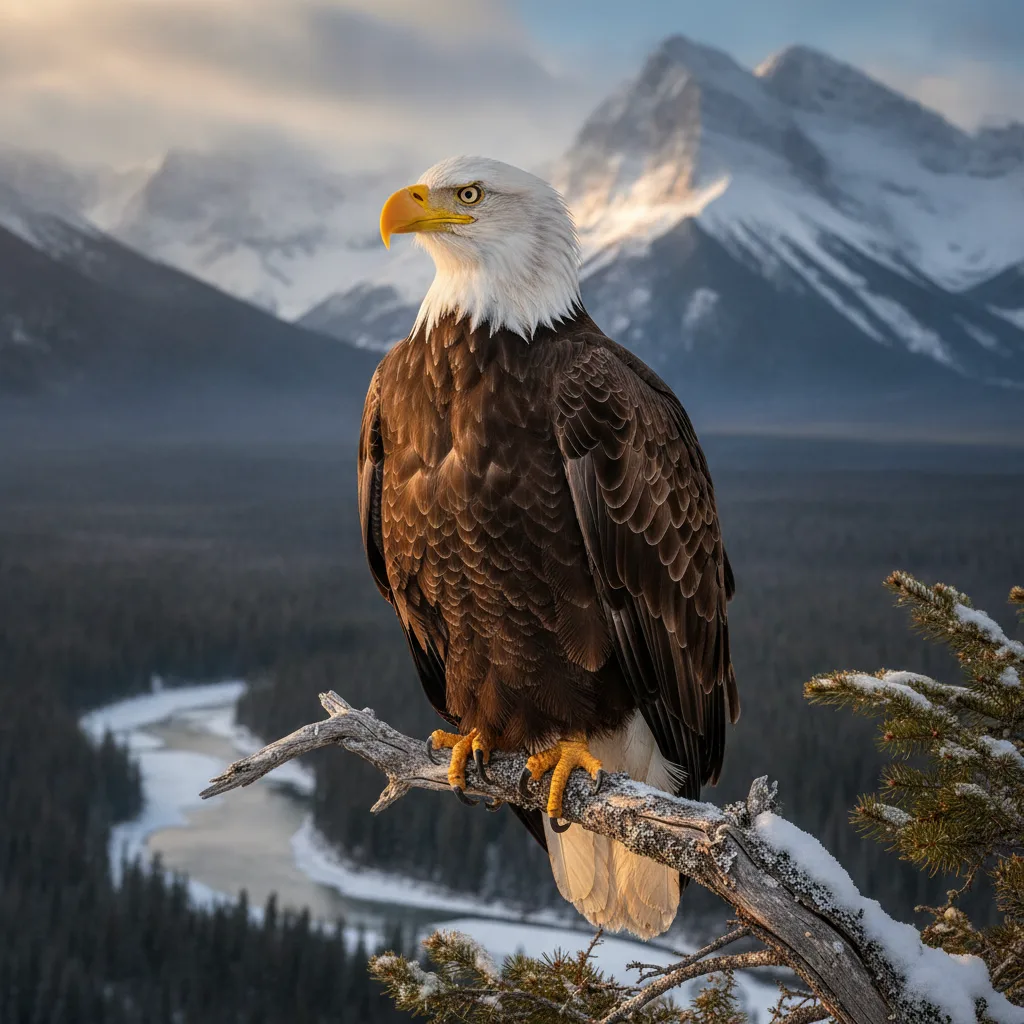
The bald eagle is the national bird of the United States, found from Alaska and Canada to Mexico near coasts, rivers and large lakes where it can take fish. Pairs build the largest tree nests of any bird, reusing and adding to them for years until some weigh over a tonne. Once reduced to about 400 nesting pairs in the lower 48 states by DDT, it recovered to more than 70,000 pairs and was removed from the US endangered species list in 2007.
Five things to know
- Bald Eagles can spot fish from over a mile (1.6 km) away with their exceptional vision.
- They were removed from the U.S. Endangered Species List in 2007 due to a remarkable recovery.
- Bald Eagles build the largest tree nests of any bird in North America—up to 4 meters deep and 2.5 meters wide.
- The name 'bald' comes from an old English word meaning 'white-headed', not hairless.
- Juvenile Bald Eagles are brown with white mottling and acquire their white head and tail at 4–5 years old.
Homeschool unit: Birds homeschool guide — Flight, feathers and migration: a bird unit that uses raptors like the bald eagle as its worked examples.