Hands Down Animals · Printable fact sheet
Blue Whale
Balaenoptera
Quick facts
| Scientific name | Balaenoptera |
|---|---|
| Size | 20–33 m (65–108 ft) in length |
| Weight | 70,000–150,000 kg (max up to 180,000 kg) |
| Lifespan | average 70–90 years, with some reaching 100+ years |
| Diet | Blue whales feed almost exclusively on krill, occasionally supplementing with other zooplankton such as… |
| Habitat | Open ocean (pelagic zone), Cold and temperate shelf waters near krill blooms, Polar to… |
| Where it lives | North Atlantic Ocean, North Pacific Ocean, Indian Ocean, Southern Ocean |
| IUCN status | Endangered |
| Population | 10,000 - 25,000 |
| Top speed | 48 km/h |
| Family | Balaenopteridae |
About the blue whale
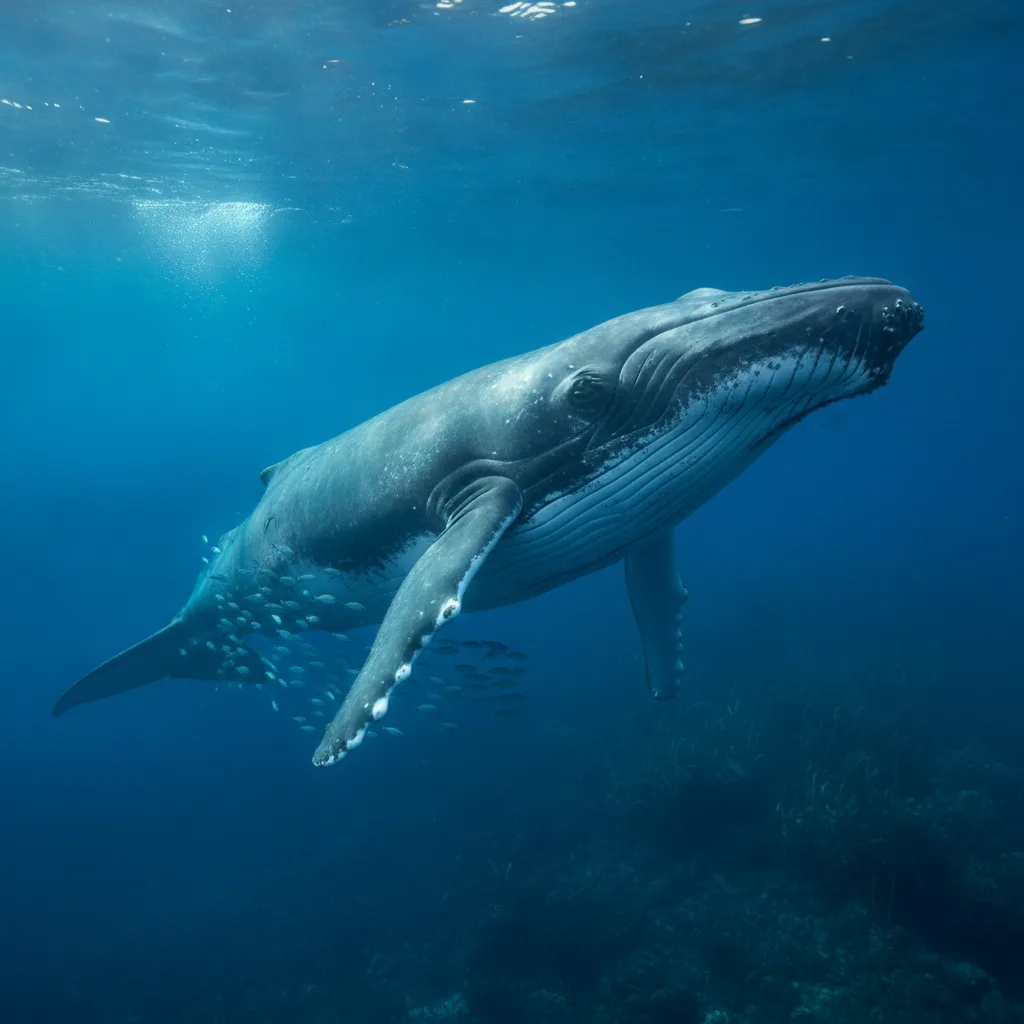
The blue whale is the largest animal known to have ever lived, reaching around 30 metres and 150 tonnes or more, yet it feeds almost entirely on krill, straining several tonnes a day through its baleen. Its heart is about the size of a small car and its low-frequency calls travel hundreds of kilometres underwater. Twentieth-century whaling removed roughly 99% of the Antarctic population, and the species remains Endangered.
Five things to know
- The blue whale is the largest animal ever known, reaching lengths up to 33 meters (108 feet).
- A blue whale's heart alone can weigh as much as an automobile (over 180 kg).
- Blue whales produce the loudest animal vocalizations on Earth, heard hundreds of kilometers away underwater.
- They primarily feed on tiny krill, consuming up to 4 tons per day during peak feeding.
- Blue whales were driven nearly to extinction by commercial whaling, with only a fraction of their former population left today.
Homeschool unit: Ocean homeschool guide — An ocean unit on marine food webs, tides and conservation, with the blue whale as a case study.