Hands Down Animals · Printable fact sheet
Butterfly
Papilionoidea
Quick facts
| Scientific name | Papilionoidea |
|---|---|
| Size | Wingspan typically 2–12cm, extremes up to 30cm |
| Weight | 0.2–3g, most species under 1g |
| Lifespan | On average 2–4 weeks as adults, though some overwintering… |
| Diet | Adult butterflies typically sip nectar from flowers using their proboscis. Caterpillars feed on leaves of… |
| Habitat | Meadows and grasslands, Tropical rainforests, Woodlands and temperate forests |
| Where it lives | North America, South America, Europe, Africa |
| IUCN status | Varies by species; many are Least Concern, but some are Endangered or Critically Endangered |
| Population | Unknown (estimated trillions globally, many species in… |
| Top speed | 20 km/h |
| Family | Varies (Nymphalidae, Papilionidae, Pieridae, others) |
About the butterfly
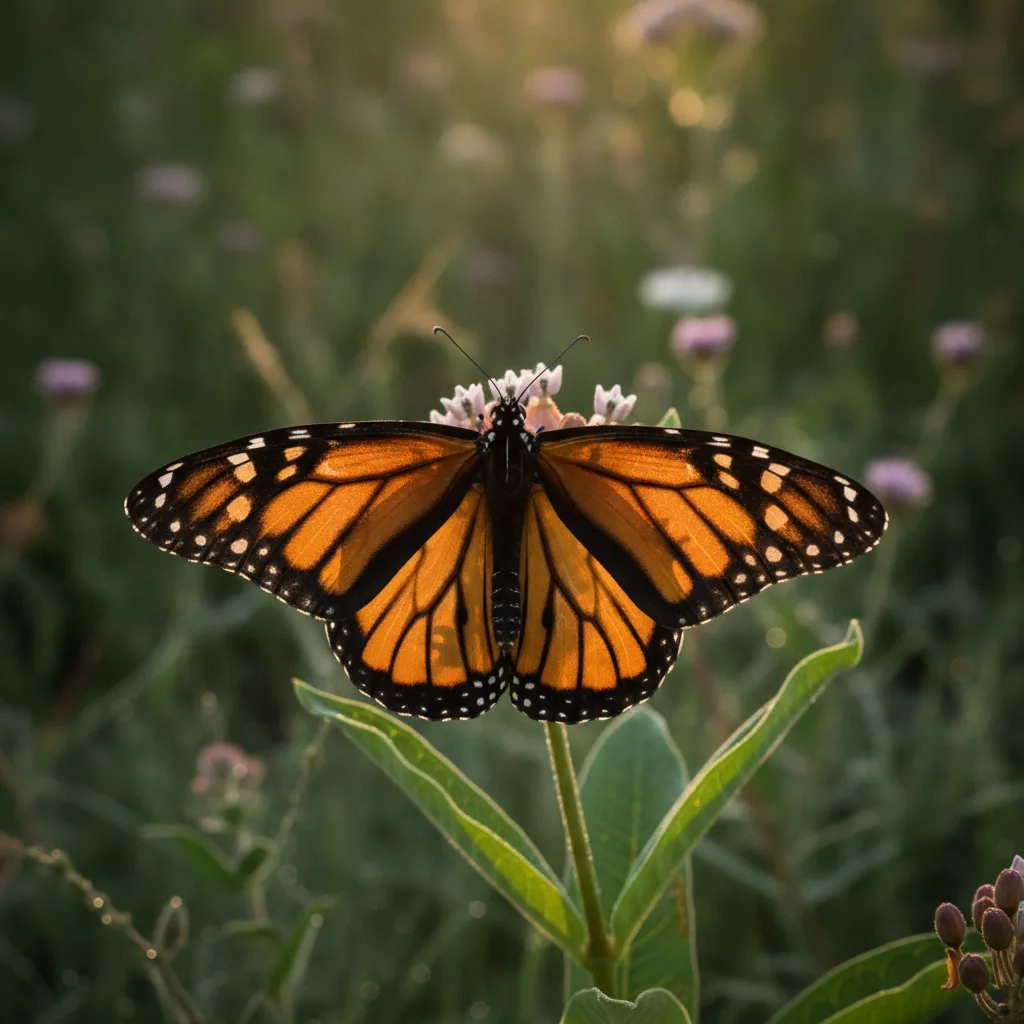
Butterflies are insects of the order Lepidoptera, and roughly 18,000 species are found everywhere except Antarctica, from alpine meadows to rainforest canopies. Each passes through four life stages — egg, caterpillar, chrysalis and adult — and monarchs migrate up to 4,800 km from Canada to a few mountain forests in central Mexico. Many species are declining with habitat loss and pesticides, and the migratory monarch was assessed as Vulnerable in 2023.
Five things to know
- Butterflies undergo complete metamorphosis: egg, larva (caterpillar), pupa (chrysalis), adult.
- Monarchs migrate up to 4,500 km between Canada and Mexico, a unique migration among insects.
- Many butterflies are important pollinators for wildflowers and crops.
- The largest butterfly, Queen Alexandra’s Birdwing, has a wingspan up to 30 cm.
- Butterflies taste with their feet, detecting chemicals in plants to find suitable food.
Homeschool unit: Animals homeschool guide — Habitats, adaptations and food chains as a graded unit, with the butterfly as one of its worked examples.