Butterfly
Papilionoidea
Butterflies are insects of the order Lepidoptera, and roughly 18,000 species are found everywhere except Antarctica, from alpine meadows to rainforest canopies. Each passes through four life stages — egg, caterpillar, chrysalis and adult — and monarchs migrate up to 4,800 km from Canada to a few mountain forests in central Mexico. Many species are declining with habitat loss and pesticides, and the migratory monarch was assessed as Vulnerable in 2023.
Quick facts: Size Wingspan typically 2–12cm, extremes up to 30cm · Lifespan On average 2–4 weeks as adults, though some overwintering species can live up to 12 months (all life stages). · IUCN status Varies by species; many are Least Concern, but some are Endangered or Critically Endangered
Print the fact sheet — a free one-page PDF for homeschool and classroom use
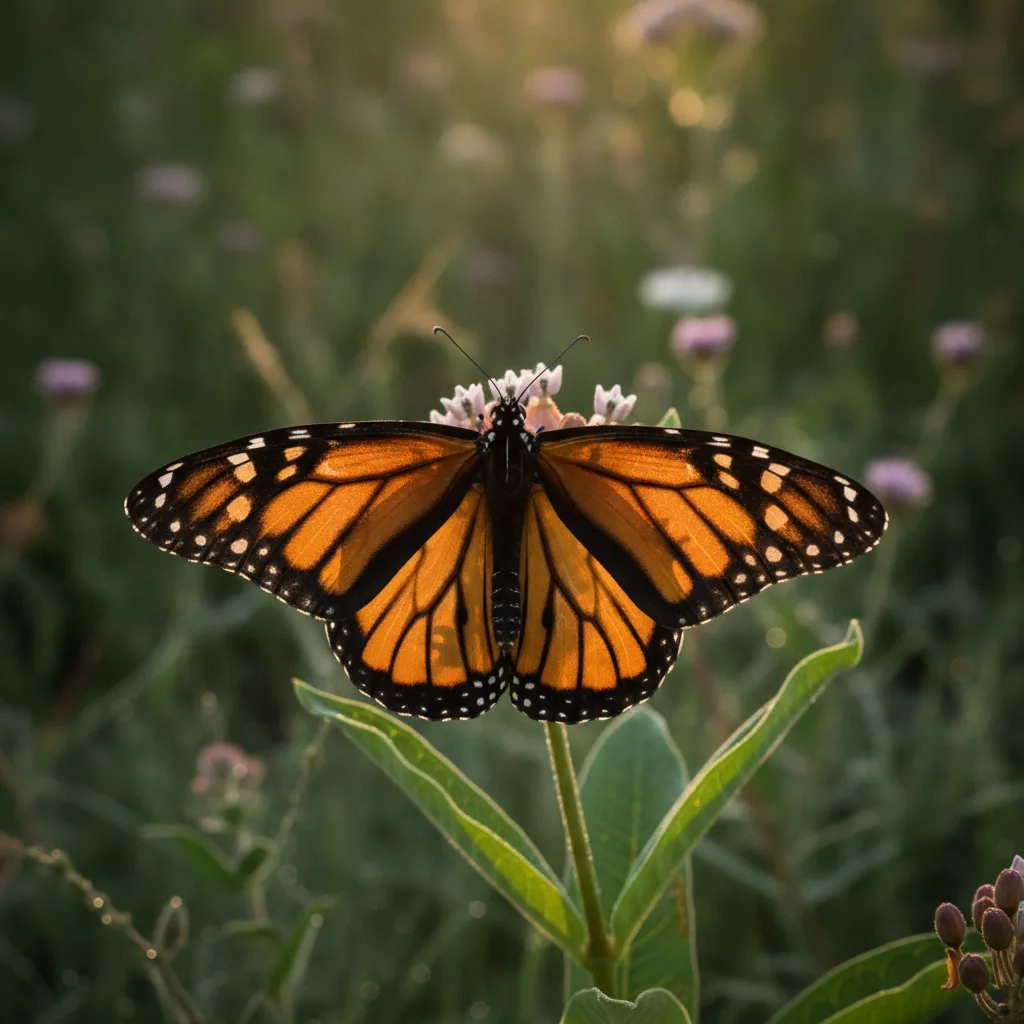
Butterflies at a glance
| Scientific name | Papilionoidea |
|---|---|
| IUCN status | Varies by species; many are Least Concern, but some are Endangered or Critically Endangered |
| Population | Unknown (estimated trillions globally, many species in decline) |
| Population trend | decreasing |
| Weight | 0.25–3 g |
| Length | 4–30 cm |
| Lifespan | 2–12 years |
| Top speed | 20 km/h |
| Class | Insecta |
| Order | Lepidoptera |
| Family | Varies (Nymphalidae, Papilionidae, Pieridae, others) |
| Known species | 19000 |
Need to know
- Butterflies undergo complete metamorphosis: egg, larva (caterpillar), pupa (chrysalis), adult.
- Monarchs migrate up to 4,500 km between Canada and Mexico, a unique migration among insects.
- Many butterflies are important pollinators for wildflowers and crops.
- The largest butterfly, Queen Alexandra’s Birdwing, has a wingspan up to 30 cm.
- Butterflies taste with their feet, detecting chemicals in plants to find suitable food.
- Some butterfly wings are brightly colored on top but camouflage underneath, helping to evade predators.
About the Butterflies
Butterflies are one of nature’s most celebrated insects, revered for their vivid colors, delicate appearance, and fascinating life cycle. Belonging to the order Lepidoptera, they are vital pollinators, indicators of environmental health, and featured subjects in ecological and evolutionary research. Their distribution spans nearly every continent except Antarctica, with extraordinary diversity in the tropics.
Butterflies exhibit complete metamorphosis—transforming from caterpillar to chrysalis to the iconic winged adult. Many species are migratory, notably the Monarch, which completes the longest annual insect migration known. Climate change, habitat loss, pesticides, and disease threaten butterfly populations globally, but many species remain abundant and resilient.
Physical characteristics
Size: Wingspan typically 2–12cm, extremes up to 30cm. Weight: 0.2–3g, most species under 1g. Lifespan: On average 2–4 weeks as adults, though some overwintering species can live up to 12 months (all life stages)..
- Four wings covered in microscopic scales, often brightly colored or patterned
- Elongate, coiled proboscis for feeding on nectar
- Antennae with distinct clubbed tips
- Slender, segmented bodies
Notable species
- Monarch Butterfly (Danaus plexippus) — Endangered (IUCN 2022). Meadows, grasslands, prairies with milkweed species Regions: North America, Central America, South America, Caribbean, Australia.
- Old World Swallowtail (Papilio machaon) — Least Concern. Open grasslands, alpine meadows, wetlands Regions: Europe, North Africa, Asia, United Kingdom, Japan.
- Blue Morpho (Morpho peleides) — Least Concern. Tropical rainforests near rivers and clearings Regions: Amazon Rainforest, Central America, South America, Rainforests of Colombia, Peru.
- Painted Lady Butterfly (Vanessa cardui) — Least Concern. Open fields, gardens, disturbed lands Regions: North America, Europe, Africa, Asia, Australia.
- Queen Alexandra's Birdwing (Ornithoptera alexandrae) — Endangered. Lowland rainforests with specific host plants Regions: Papua New Guinea, Oro Province, Lowland coastal forests.
- African Giant Swallowtail (Papilio antimachus) — Data Deficient. Primary lowland tropical forest Regions: Central Africa, Republic of the Congo, Democratic Republic of the Congo, Gabon.
Habitat and range
Original range: Butterflies evolved from moth-like ancestors in the Cretaceous, with origins traced to the supercontinent Gondwana (now South America/Africa/Australia/Antarctica).
Current distribution: Butterflies are found on every continent except Antarctica, thriving especially in tropical and temperate zones worldwide.
Preferred environments: Meadows and grasslands, Tropical rainforests, Woodlands and temperate forests, Wetlands and riparian zones, Urban gardens and parks
Regions: North America, South America, Europe, Africa, Asia, Southeast Asia, Australia, Central America, Caribbean, Rainforests of Congo, Amazon Rainforest
Where to see Butterflies
- Monarch Butterfly Biosphere Reserve, Mexico — November to March. Overwintering Monarchs cluster in huge numbers—plan your visit during warm sunny days for spectacular viewing.
- Papiliorama, Switzerland — Year-round (indoor butterfly house). See a variety of exotic butterfly species in a controlled environment.
- Amazon Rainforest, Peru — May to October (dry season). Take a guided rainforest walk for best chances to spot Blue Morphos and many tropical butterflies.
- Savannahs of East Africa — January to March (dry season). Rich diversity of butterflies visible sipping moisture on muddy roads and flowers.
Behavior and diet
Diet: Adult butterflies typically sip nectar from flowers using their proboscis. Caterpillars feed on leaves of specific host plants (often species-specific). Some adult butterflies may also feed on fruit, tree sap, animal dung, or carrion for nutrients.
Social structure: Primarily solitary, although many species aggregate at feeding or breeding sites, and some undertake mass migrations.
Communication: Butterflies communicate through visual displays (color, patterns, flight), pheromones (scents), and mechanical signals (wing vibrations in some species).
- Complete metamorphosis—distinct life stages including egg, larva, pupa, and adult.
- Mud-puddling behavior—adults congregate on wet soil to consume minerals.
- Long-distance migratory flights in some species (notably Monarchs, Painted Ladies).
- Territorial flight displays by males to attract females or defend feeding sites.
Interactions with other animals
- Milkweed (plant) (symbiotic): Caterpillar and adult Monarchs depend on milkweed for food and chemical defense; the plant benefits from pollination.
- Birds (various species) (predator): Many birds prey on butterflies, especially caterpillars; bright colors and toxins deter some predators.
- Ants (symbiotic/commensal): Some blue butterflies (Lycaenidae) larvae secrete nectar and are tended and protected by ants.
- Wasps and parasitic flies (predator): Butterfly eggs and caterpillars are targeted by parasitoids, affecting population dynamics.
Conservation
IUCN Red List status: Varies by species; many are Least Concern, but some are Endangered or Critically Endangered
Threats
- Habitat loss and fragmentation
- Pesticide and herbicide use
- Climate change affecting migration and breeding
- Invasive species
- Disease (particularly affecting Monarchs)
Conservation efforts
- Habitat restoration—planting native flowers and milkweeds
- Legal protection of critical habitats (e.g., Monarch Biosphere Reserve)
- Monitoring butterfly populations through citizen science
- Education and outreach programs promoting pollinator gardening
How to help
- Plant native nectar flowers and host plants (e.g., milkweed)
- Reduce or eliminate pesticide and herbicide use
- Participate in butterfly counts and citizen science monitoring
- Support local and international pollinator conservation organizations
- Advocate for protected natural areas
Butterflies facts for kids
Butterflies are colorful insects that start life as caterpillars and transform inside a chrysalis into beautiful flying adults. They help spread pollen, making them important for flowers and food plants. Butterflies are fun to watch in gardens and meadows all over the world!
- Some butterflies migrate thousands of kilometers every year.
- Butterflies can have wings as small as your fingernail or as big as a dinner plate!
- A butterfly’s tongue is like a long straw used to drink sweet nectar.
- Butterfly wings look like stained glass under a microscope—they’re covered in tiny scales.
- There are butterflies that look just like leaves or have clear wings!
Did you know? Did you know a group of butterflies together is called a 'kaleidoscope'?
Watch & learn
- The Incredible Journey of Monarch Butterflies — PBS Nature. This documentary explores the awe-inspiring migration of Monarch butterflies across North America, combining stunning visuals with scientific insights into their navigation and life cycle.
- Extraordinary Lives of Butterflies: Color and Survival — BBC Earth. BBC Earth's high-quality footage uncovers the secret lives of butterflies, their vibrant colors, mimicry tactics, and roles in the ecosystem, making it essential viewing for wildlife enthusiasts.
- Butterflies: Masters of Metamorphosis — Smithsonian Channel. Dive into the world of Papilionoidea as the Smithsonian Channel reveals the fascinating process of metamorphosis and the diverse survival strategies of butterflies from around the globe.
- Butterflies: Nature’s Shape Shifters — National Geographic. National Geographic provides a visually captivating narrative about butterfly diversity, focusing on the peculiar adaptations and ecological significance within the Lepidoptera order.
- Life Story: Butterfly Survival in the Wild — BBC Earth. Through breathtaking visuals, this segment from BBC Earth's 'Life Story' follows butterflies as they face predators and endure harsh environments, showcasing their survival instincts.
Sources
Facts on this page are checked against these references. Follow them for the primary data.
- IUCN Red List — Conservation status, population trend and range assessment for Papilionoidea
- Encyclopaedia Britannica — Reviewed encyclopaedia entry on the butterflies
- National Geographic — Articles, photographs and field reporting on the butterflies