Hands Down Animals · Printable fact sheet
Capybara
Hydrochoerus
Quick facts
| Scientific name | Hydrochoerus |
|---|---|
| Size | 1.0–1.35 m (length), up to 60 cm tall at the shoulder |
| Weight | 35–66 kg (can reach up to 79 kg) |
| Lifespan | 6–12 years (wild up to 8–10 years, captivity up to 12 years) |
| Diet | Mainly grasses and aquatic plants; will also eat fruit, bark, and reeds. |
| Habitat | Riverbanks, Marshes, Flooded grasslands |
| Where it lives | Amazon Basin, Pantanal, Orinoco Basin, Llanos of Venezuela |
| IUCN status | Least Concern |
| Population | Several million |
| Top speed | 35 km/h |
| Family | Caviidae |
About the capybara
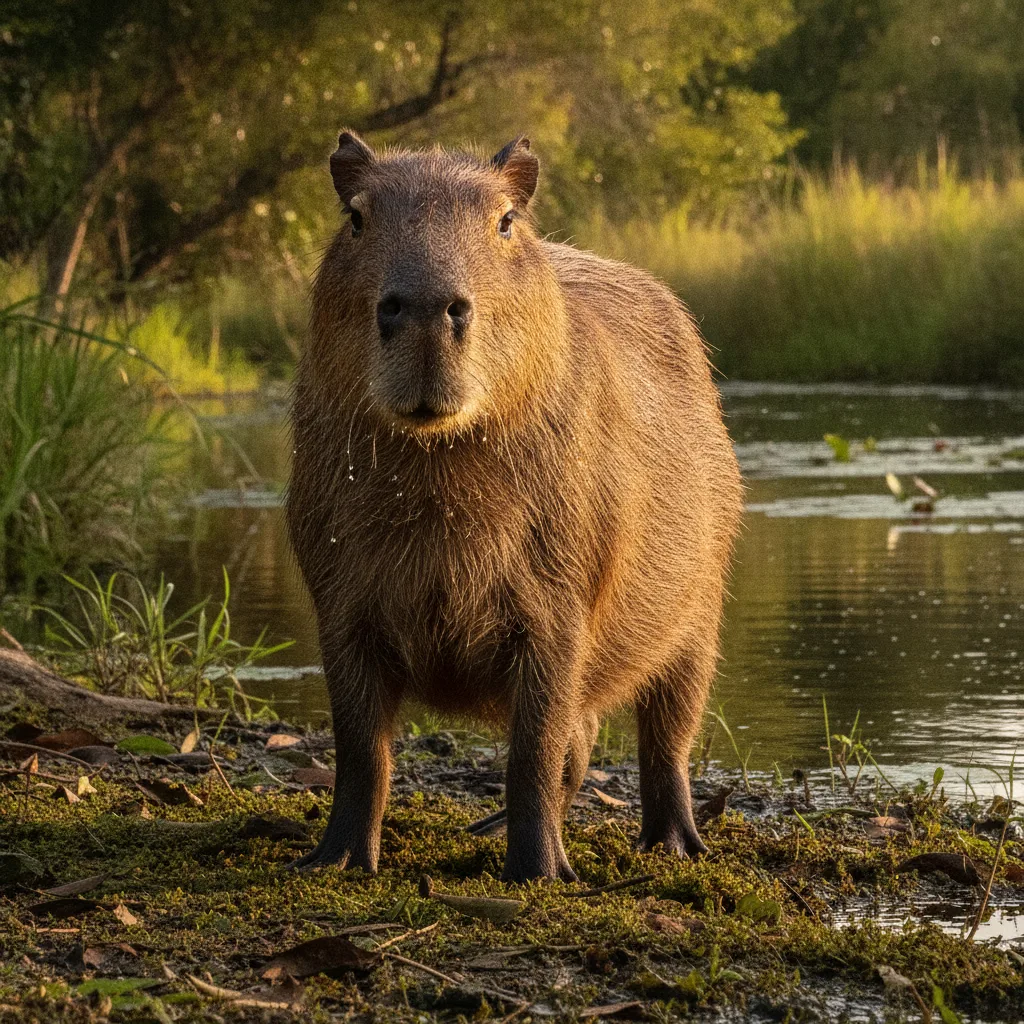
The capybara is the world's largest rodent, weighing up to 65 kilograms, and it lives in groups beside rivers, lakes and marshes across much of South America. Its eyes, ears and nostrils sit high on the head so it can watch for jaguars and caimans while almost fully submerged, and it can stay underwater for several minutes. The species is Least Concern and increasingly common in Brazilian cities and parks.
Five things to know
- Capybaras are the world’s largest rodents.
- They are excellent swimmers, capable of holding their breath for up to 5 minutes.
- Capybaras have partially webbed feet to aid in swimming.
- They live in highly social groups and can sometimes form herds of 50 or more.
- Their teeth continuously grow and require steady gnawing on vegetation.
Homeschool unit: Animals homeschool guide — Habitats, adaptations and food chains as a graded unit, with the capybara as one of its worked examples.