Hands Down Animals · Printable fact sheet
Chimpanzee
Pan
Quick facts
| Scientific name | Pan |
|---|---|
| Size | 1.0–1.7 m (head-body length) |
| Weight | 30–70 kg |
| Lifespan | Average 33 years in the wild, up to 50–60 years in captivity |
| Diet | Omnivorous, eating fruits, leaves, seeds, blossoms, insects, honey, termites, and occasionally hunting small… |
| Habitat | Tropical rainforests, Woodlands, Swamp forests |
| Where it lives | West Africa, Central Africa, Congo Basin, Gulf of Guinea forests |
| IUCN status | Endangered |
| Population | 172,700 - 299,700 |
| Top speed | 40 km/h |
| Family | Hominidae |
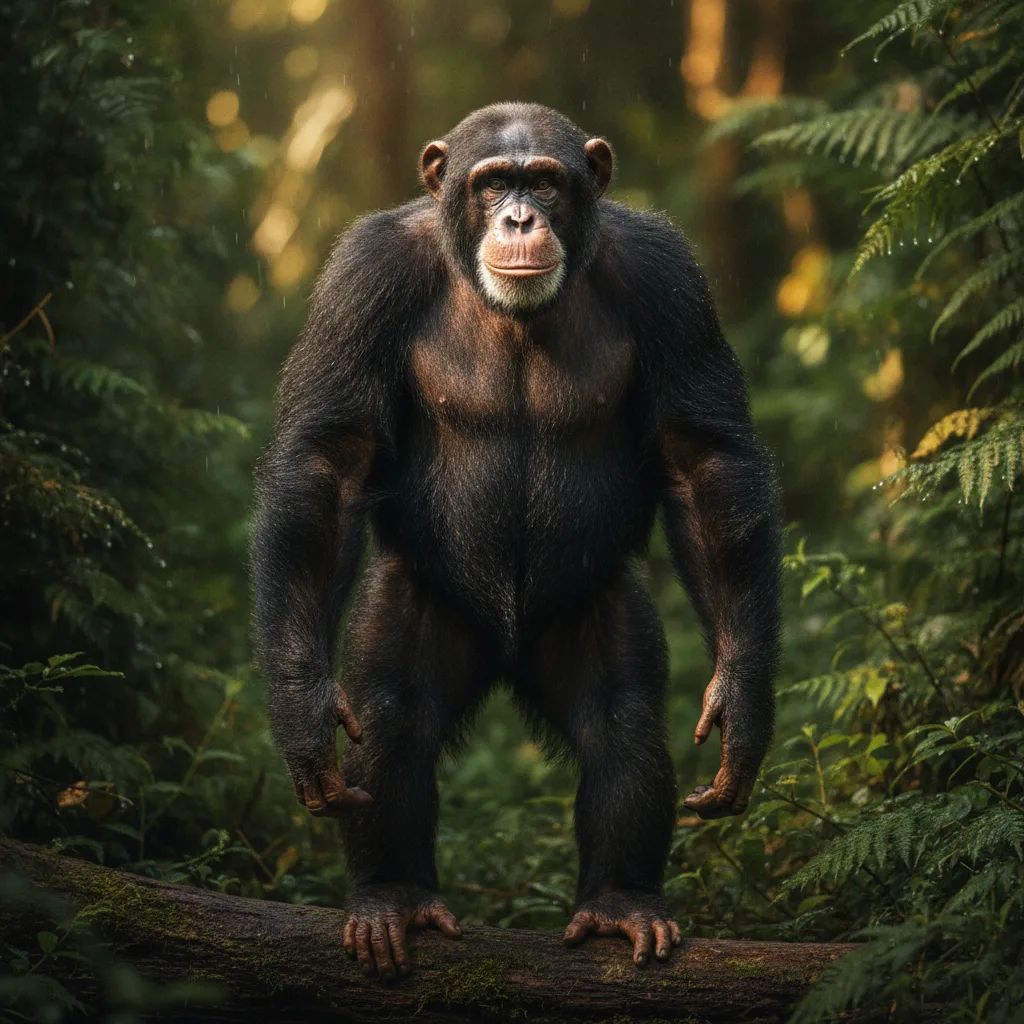
About the chimpanzee
Chimpanzees, together with bonobos, are our closest living relatives, sharing roughly 98–99% of their DNA with humans, and they live in fluid communities of up to 150 across the forests and woodlands of equatorial Africa. Different populations keep their own tool traditions: some crack nuts with stone hammers, others fish for termites with stripped twigs. The species is Endangered, with numbers falling through poaching, disease and forest clearance.
Five things to know
- Chimpanzees are humans’ closest living relatives, sharing about 98.7% of our DNA.
- They use advanced tools such as sticks for fishing termites and stones to crack nuts.
- Chimpanzee societies are highly complex, featuring politics, alliances, and social hierarchies.
- Bonobos, the other chimpanzee species, are unique for their peaceful matriarchal social structures.
- Chimpanzee numbers have dropped more than 70% in the last 60 years due to habitat loss and hunting.
Homeschool unit: Animals homeschool guide — Habitats, adaptations and food chains as a graded unit, with the chimpanzee as one of its worked examples.