Hands Down Animals · Printable fact sheet
Crocodile
Crocodylidae
Quick facts
| Scientific name | Crocodylidae |
|---|---|
| Size | 2–7 meters (depending on species) |
| Weight | 80–2,000 kg |
| Lifespan | Average 45 years, some individuals may reach 80–100 years |
| Diet | Carnivorous; eats fish, birds, reptiles, amphibians, and mammals, including large prey such as antelope or… |
| Habitat | Rivers, Lakes, Marshes |
| Where it lives | Nile River, Indian Subcontinent, East Africa, Southeast Asia |
| IUCN status | Varies by species; most are Least Concern or Vulnerable, with several Critically Endangered |
| Population | Approx. 200,000-300,000 (wild, all species combined) |
| Top speed | 24 km/h |
| Family | Crocodylidae |
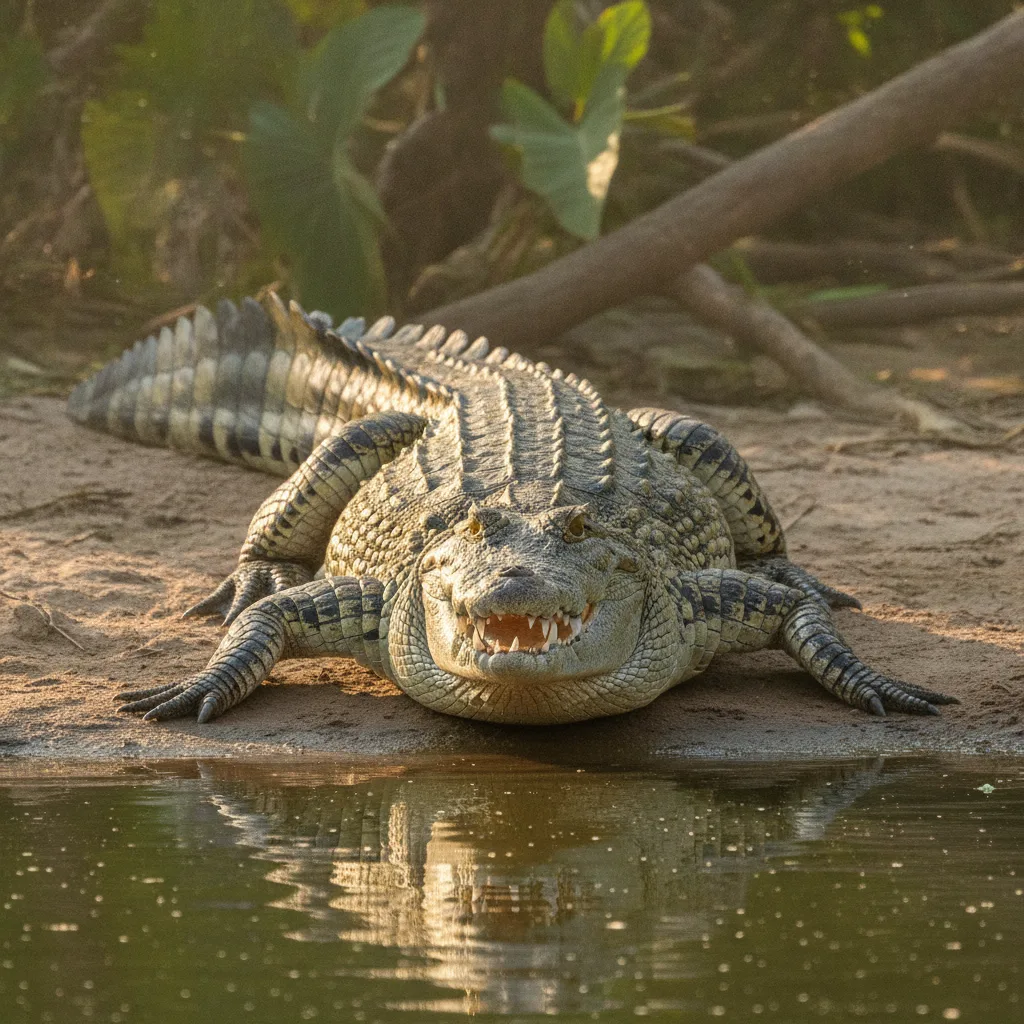
About the crocodile
Crocodiles belong to a lineage that dates back more than 200 million years and live in rivers, estuaries and coastal waters across the tropics of Africa, Asia, the Americas and Australia. The saltwater crocodile is the largest living reptile, with males exceeding 6 metres, and it has the strongest measured bite of any living animal. Most of the 18 or so species are stable, but the Philippine, Cuban, Siamese and Orinoco crocodiles are Critically Endangered.
Five things to know
- Crocodiles appeared about 83 million years ago and have changed little since.
- The Saltwater Crocodile is the largest living reptile, with individuals exceeding 6 meters.
- Crocodiles can gallop on land at short bursts up to 24 km/h.
- Crocodiles have the strongest bite recorded among animals—over 3,500 psi in large species.
- Crocodiles are known for their parental care, guarding nests and helping hatchlings to water.
Homeschool unit: Dinosaurs homeschool guide — The crocodile is the closest thing to a living dinosaur; this unit connects fossils to today's reptiles.