Hands Down Animals · Printable fact sheet
Dolphin
Delphinidae
Quick facts
| Scientific name | Delphinidae |
|---|---|
| Size | 1.5–4 m for most species (orca can reach 9.5 m) |
| Weight | 50–300 kg for most species; up to 9,000 kg for orca |
| Lifespan | 20–40 years for most, over 60 years for orca |
| Diet | Varies by species but commonly includes a range of fish, squid, cephalopods, and sometimes crustaceans… |
| Habitat | Shallow coastal waters, Open pelagic zones, Estuaries and bays |
| Where it lives | Atlantic Ocean, Pacific Ocean, Indian Ocean, Southern Ocean |
| IUCN status | Most species Least Concern, but several are Endangered or Data Deficient |
| Population | Several million (global, all species combined), but highly… |
| Top speed | 37 km/h |
| Family | Delphinidae |
About the dolphin
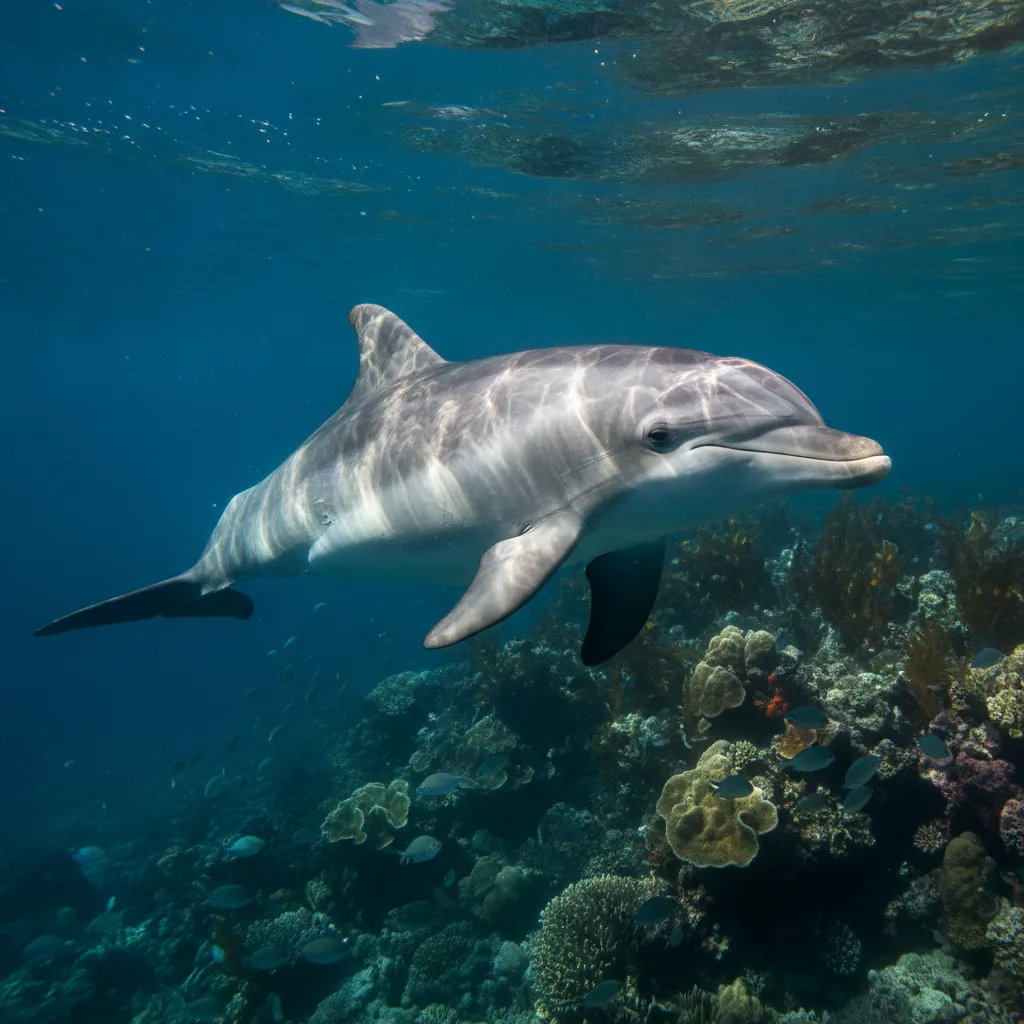
Dolphins are toothed whales, and the roughly 40 species range from the familiar bottlenose to the river dolphins of the Amazon and Ganges. They find fish in murky water by echolocation, sending out clicks and reading the returning echoes, and bottlenose dolphins address one another with individual signature whistles. Most ocean species are widespread, but several river dolphins are Endangered and the Yangtze's baiji is thought to be extinct.
Five things to know
- Dolphins are highly intelligent—capable of self-recognition, tool use, and complex communication.
- They use echolocation to hunt and navigate, emitting clicks and listening for echoes.
- Killer whales (orcas) are the largest dolphin species, not a whale!
- Some dolphin pods can include thousands of individuals, known as superpods.
- Dolphins sleep with one half of their brain at a time, allowing them to surface to breathe.
Homeschool unit: Ocean homeschool guide — An ocean unit on marine food webs, tides and conservation, with the dolphin as a case study.