Hands Down Animals · Printable fact sheet
Elephant
Elephantidae
Quick facts
| Scientific name | Elephantidae |
|---|---|
| Size | 2.0 to 4.0 meters tall at the shoulder |
| Weight | 2,000 to 12,000 kg |
| Lifespan | 50-60 years in the wild, up to 75 years in captivity |
| Diet | Herbivorous, consuming grasses, leaves, bark, roots, and fruit. May drink up to 200 liters of water daily. |
| Habitat | Savannas, Grasslands, Tropical forests |
| Where it lives | East Africa, Southern Africa, West Africa, Congo Basin |
| IUCN status | Vulnerable to Critically Endangered (species-specific) |
| Population | 450,000 - 500,000 |
| Top speed | 40 km/h |
| Family | Elephantidae |
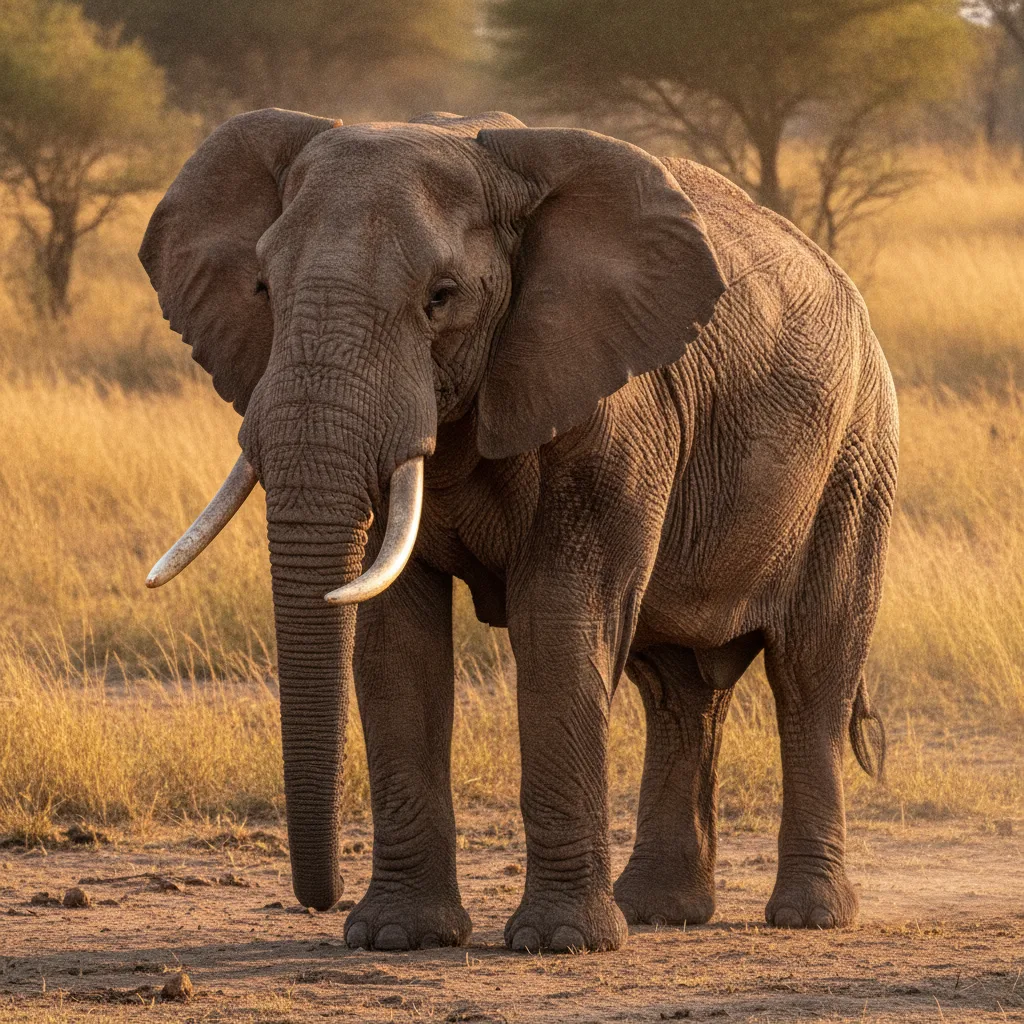
About the elephant
Elephants are the largest living land animals, and all three species — African savanna, African forest and Asian — live in family groups led by the oldest female. A trunk containing tens of thousands of muscle units lets an elephant lift a log or pick up a single seed, and low-frequency rumbles let herds keep in touch over kilometres. The savanna elephant is Endangered, the forest elephant Critically Endangered and the Asian elephant Endangered on the IUCN Red List.
Five things to know
- Elephants are the largest land mammals on Earth.
- They have complex social systems, forming matriarchal families.
- Their trunks have over 40,000 muscles and are used for a variety of tasks.
- Elephants are keystone species and shape their environment.
- They communicate via low-frequency infrasound over long distances.
Homeschool unit: Animals homeschool guide — Habitats, adaptations and food chains as a graded unit, with the elephant as one of its worked examples.