Hands Down Animals · Printable fact sheet
Giraffe
Giraffa
Quick facts
| Scientific name | Giraffa |
|---|---|
| Size | 4.6–6 meters (15–20 ft) tall; males are larger than females |
| Weight | 800–1,900 kg (1,760–4,200 lbs) |
| Lifespan | Average 25 years in the wild; up to 38 years in captivity |
| Diet | Primarily browsers—leaves, shoots, flowers, and fruits, especially from acacia and mimosa trees… |
| Habitat | Savannah, Acacia woodland, Open plains |
| Where it lives | East Africa, Central Africa, Southern Africa, West Africa |
| IUCN status | Vulnerable |
| Population | Approximately 117,000 (all species combined) |
| Top speed | 60 km/h |
| Family | Giraffidae |
About the giraffe
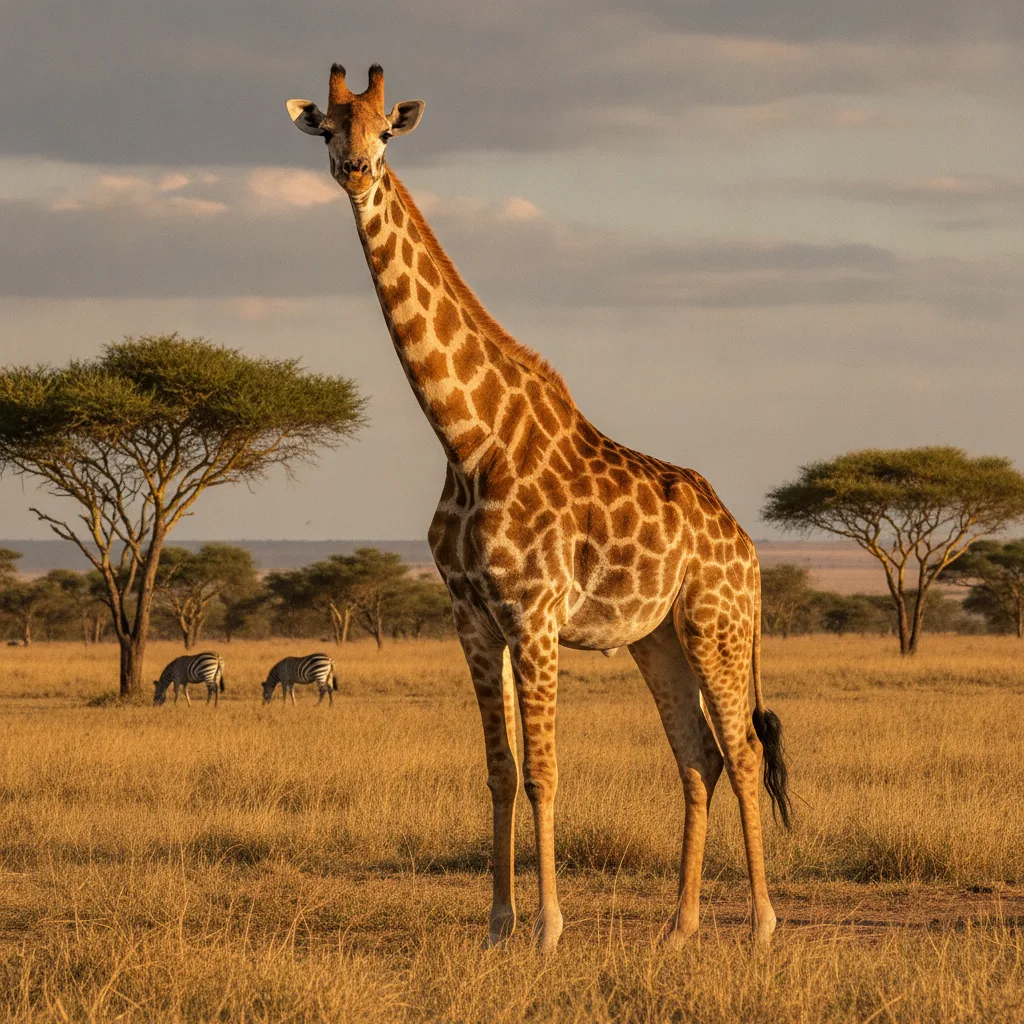
Giraffes are the tallest living animals, with adult males standing up to 5.5 metres, and they browse acacia and other trees across the savannas of sub-Saharan Africa. A 45-centimetre, bluish-black tongue lets them strip leaves from between long thorns, and their neck contains the same seven vertebrae as a human's, each greatly elongated. Giraffes are listed as Vulnerable after populations fell by roughly 40% in three decades.
Five things to know
- Giraffes are the tallest land animals on Earth, reaching up to 6 meters high.
- They can run at speeds up to 60 km/h in short bursts.
- Each giraffe's spot pattern is unique, much like a human fingerprint.
- Giraffes have prehensile tongues up to 45 cm long for grasping leaves.
- Despite their long necks, giraffes have only seven neck vertebrae—the same number as humans.
Homeschool unit: Animals homeschool guide — Habitats, adaptations and food chains as a graded unit, with the giraffe as one of its worked examples.