Giraffe
Giraffa
Giraffes are the tallest living animals, with adult males standing up to 5.5 metres, and they browse acacia and other trees across the savannas of sub-Saharan Africa. A 45-centimetre, bluish-black tongue lets them strip leaves from between long thorns, and their neck contains the same seven vertebrae as a human's, each greatly elongated. Giraffes are listed as Vulnerable after populations fell by roughly 40% in three decades.
Quick facts: Size 4.6–6 meters (15–20 ft) tall; males are larger than females · Lifespan Average 25 years in the wild; up to 38 years in captivity · IUCN status Vulnerable
Print the fact sheet — a free one-page PDF for homeschool and classroom use
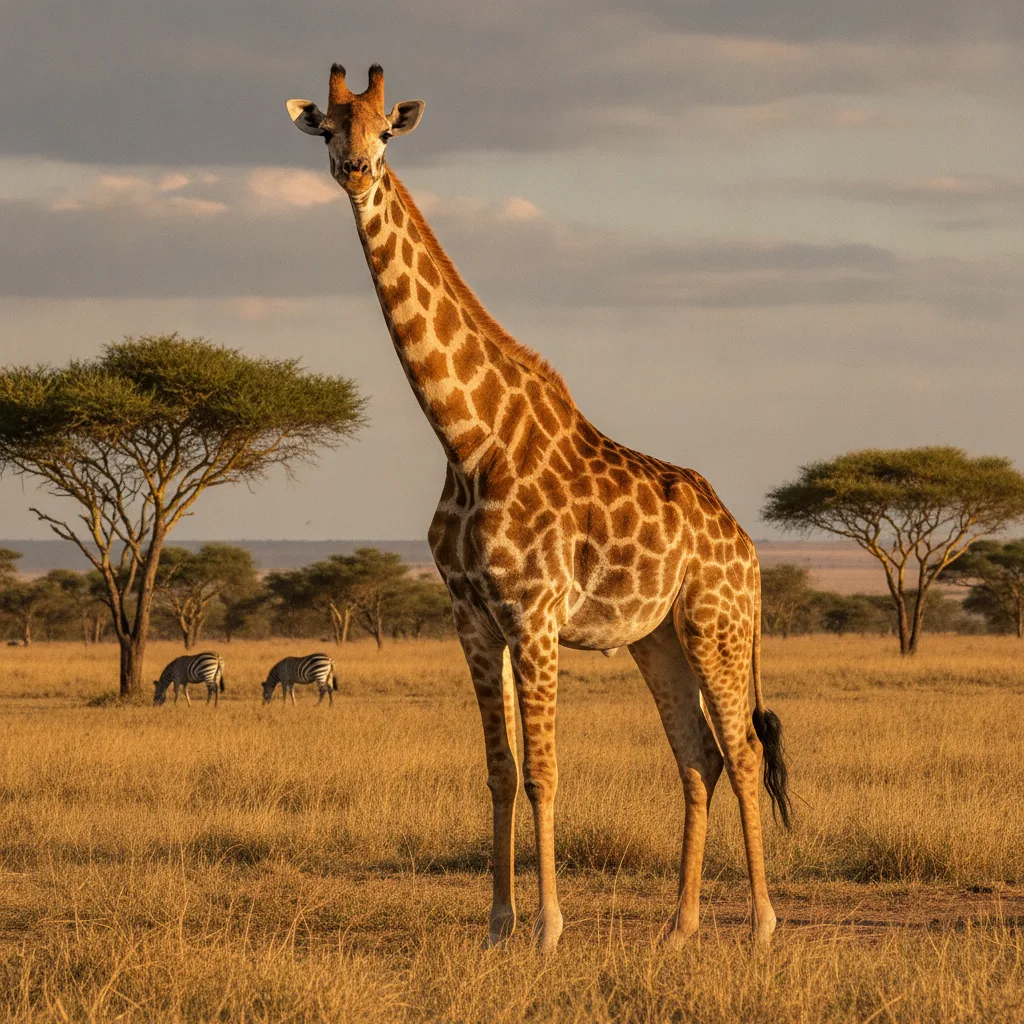
Giraffes at a glance
| Scientific name | Giraffa |
|---|---|
| IUCN status | Vulnerable |
| Population | Approximately 117,000 (all species combined) |
| Population trend | decreasing |
| Weight | 1200–1900 kg |
| Length | 5.5–6 m |
| Lifespan | 25–38 years |
| Top speed | 60 km/h |
| Class | Mammalia |
| Order | Artiodactyla |
| Family | Giraffidae |
| Known species | 4 |
Need to know
- Giraffes are the tallest land animals on Earth, reaching up to 6 meters high.
- They can run at speeds up to 60 km/h in short bursts.
- Each giraffe's spot pattern is unique, much like a human fingerprint.
- Giraffes have prehensile tongues up to 45 cm long for grasping leaves.
- Despite their long necks, giraffes have only seven neck vertebrae—the same number as humans.
- While silent much of the time, giraffes communicate with infrasonic sounds below the range of human hearing.
About the Giraffes
Giraffes are iconic African mammals renowned for their extraordinary height and long necks, adaptations that allow them to browse treetop leaves in savannahs where few competitors can reach. They inhabit a range of habitats from arid zones to lush woodlands, with their distribution dictated by the availability of their main food sources—acacia and other trees. Giraffes are highly social, often forming loose herds without strong social bonds.
There are four currently recognized giraffe species, each distinct in coat pattern, geographic range, and conservation status. Giraffe populations have plummeted in recent decades due to habitat loss, poaching, and fragmentation, making their conservation an urgent concern. These gentle giants are keystone herbivores, shaping their ecosystems by browsing trees and spreading seeds, and remain a favorite among safari-goers and biologists alike.
Physical characteristics
Size: 4.6–6 meters (15–20 ft) tall; males are larger than females. Weight: 800–1,900 kg (1,760–4,200 lbs). Lifespan: Average 25 years in the wild; up to 38 years in captivity.
- Exceptionally long neck with only seven vertebrae
- Long, prehensile, black or purple-blue tongue (up to 45 cm)
- Unique spotted coat—pattern varies by species
- Prominent ossicones (skin-covered bone-like structures) on the head
- Large, forward-facing eyes with long lashes
Notable species
- Northern Giraffe (Giraffa camelopardalis) — Critically Endangered. Savannahs, woodlands and open forests Regions: East Africa, West Africa, Central Africa, Ethiopia, South Sudan, Chad, Niger.
- Southern Giraffe (Giraffa giraffa) — Least Concern. Open woodlands and savannahs Regions: Botswana, South Africa, Namibia, Angola, Zambia, Zimbabwe, Mozambique.
- Masai Giraffe (Giraffa tippelskirchi) — Endangered. Savannah and woodland Regions: Central Kenya, Southern Kenya, Tanzania, Northern Tanzania, East Africa.
- Reticulated Giraffe (Giraffa reticulata) — Endangered. Dry savannahs and scrublands Regions: Northern Kenya, Southern Somalia, Ethiopia, Horn of Africa, Garissa region.
Habitat and range
Original range: Sub-Saharan Africa, from the arid Sahel to southern woodlands
Current distribution: Scattered populations throughout central, eastern, southern, and parts of western Africa in protected parks, reserves, and fragmented wild ranges
Preferred environments: Savannah, Acacia woodland, Open plains, Scrublands, Gallery forests
Regions: East Africa, Central Africa, Southern Africa, West Africa, Botswana, Namibia, South Africa, Tanzania, Kenya, Ethiopia, Niger
Where to see Giraffes
- Serengeti National Park, Tanzania — June to October. Vast open landscapes and abundance of giraffes make for excellent sightings; visit during the dry season for best wildlife concentrations.
- Etosha National Park, Namibia — May to October. Waterholes attract giraffes regularly, especially in the dry months.
- Kruger National Park, South Africa — May to September. Giraffes are common in woodland areas throughout the park.
Behavior and diet
Diet: Primarily browsers—leaves, shoots, flowers, and fruits, especially from acacia and mimosa trees; occasionally supplement with grass and herbs.
Social structure: Loose, open herds often comprising females and young; males are more solitary or travel between groups; no permanent herd structure.
Communication: Low-frequency vocalizations (infrasound), snorts, grunts, moans, hisses, and body language such as neck swaying; subtle signals via posture and tail.
- Males engage in 'necking'—swinging their necks during dominance contests.
- Females give birth standing up, so calves fall about 2 meters to the ground at birth.
- Use their long tongues and prehensile lips to strip leaves from thorny trees.
- Very little sleep: often nap standing or briefly lying down, for just minutes at a time.
Interactions with other animals
- Acacia tree (competitive): Giraffes browse extensively on acacia trees, sometimes impacting the shape and regeneration of these trees.
- Lions (predator): Lions are the primary natural predators of giraffes, especially targeting calves and sick adults.
- Oxpecker birds (symbiotic): Oxpeckers perch on giraffes, feeding on ticks and parasites from their skin and providing cleaning services.
- African wild dogs (predator): Occasionally prey on giraffe calves when opportunities arise.
Conservation
IUCN Red List status: Vulnerable
Threats
- Habitat loss and fragmentation
- Illegal hunting/poaching (mainly for bushmeat)
- Human-wildlife conflict
- Civil unrest in certain regions
- Ecological changes and drought
Conservation efforts
- Community conservation programs
- Anti-poaching patrols
- Habitat restoration initiatives
- Translocation and reintroduction projects
- Protected reserves and national parks
How to help
- Support reputable wildlife conservation organizations
- Promote ecotourism that benefits local communities
- Raise awareness about giraffe conservation status
- Advocate for habitat protection laws and wildlife corridors
- Reduce purchase and consumption of bushmeat
Giraffes facts for kids
Giraffes are the tallest animals in the world. They use their super long necks and tongues to eat leaves from tall trees, and every giraffe has a different spot pattern.
- A giraffe's tongue is so long it can lick its own ear!
- Baby giraffes are almost 2 meters tall when born.
- Giraffes only need a few minutes of sleep each day.
- Their neck has the same number of bones as a human's neck—seven!
- Giraffes can gallop faster than most people can run.
Did you know? Did you know giraffes spend most of their lives standing up—even sleeping and giving birth while standing?
Watch & learn
- Giraffes: The Tallest Mammal's Secret Life — BBC Earth. Explore the social interactions, feeding habits, and adaptation quirks of giraffes (Giraffa) with BBC Earth's exquisite cinematography and storytelling. A must-watch for insights into the behavior and environmental challenges of this iconic mammal.
- The Mysterious World of Giraffes — National Geographic Wild. National Geographic Wild showcases giraffes in their natural savanna habitat, focusing on their feeding strategies, social structures, and survival in the wild. Perfect for viewers interested in the biology and ecology of Artiodactyla mammals.
- Nature: Giraffes — Africa’s Gentle Giants — PBS Nature. PBS Nature presents a deep dive into the familial bonds, conservation status, and extraordinary sensory abilities of giraffes in sub-Saharan Africa. Rich visuals and expert commentary bring the world’s tallest animal to life.
- Giraffe Social Lives Uncovered — Smithsonian Channel. Smithsonian Channel explores the complex social behavior and communication cues of giraffes, revealing lesser-known scientific discoveries about this unique member of the family Giraffidae.
- Giraffe Conservation: A Race Against Time — Wildlife Conservation Society. Discover the urgent conservation work being done for the preservation of giraffes, focusing on anti-poaching efforts and ecological research with real field footage and interviews from giraffe experts.
Sources
Facts on this page are checked against these references. Follow them for the primary data.
- IUCN Red List — Conservation status, population trend and range assessment for Giraffa
- Encyclopaedia Britannica — Reviewed encyclopaedia entry on the giraffes
- National Geographic — Articles, photographs and field reporting on the giraffes