Hands Down Animals · Printable fact sheet
Gorilla
Gorilla
Quick facts
| Scientific name | Gorilla |
|---|---|
| Size | Height: 1.4 – 1.8 m (standing upright), Arm span: 2.3 – 2.6 m |
| Weight | Females: 70 – 120 kg, Males (silverbacks): 140 – 270 kg |
| Lifespan | About 35–40 years in the wild, up to 50 years in captivity |
| Diet | Primarily herbivorous: leaves, stems, fruit, shoots, roots, bark, and occasionally insects such as ants and… |
| Habitat | Lowland tropical rainforests, Swamp forests, Montane and submontane rainforests |
| Where it lives | Congo Basin, Gabon, Cameroon, Republic of the Congo |
| IUCN status | Critically Endangered |
| Population | about 210,000 (all species and subspecies combined; varies… |
| Top speed | 32 km/h |
| Family | Hominidae |
About the gorilla
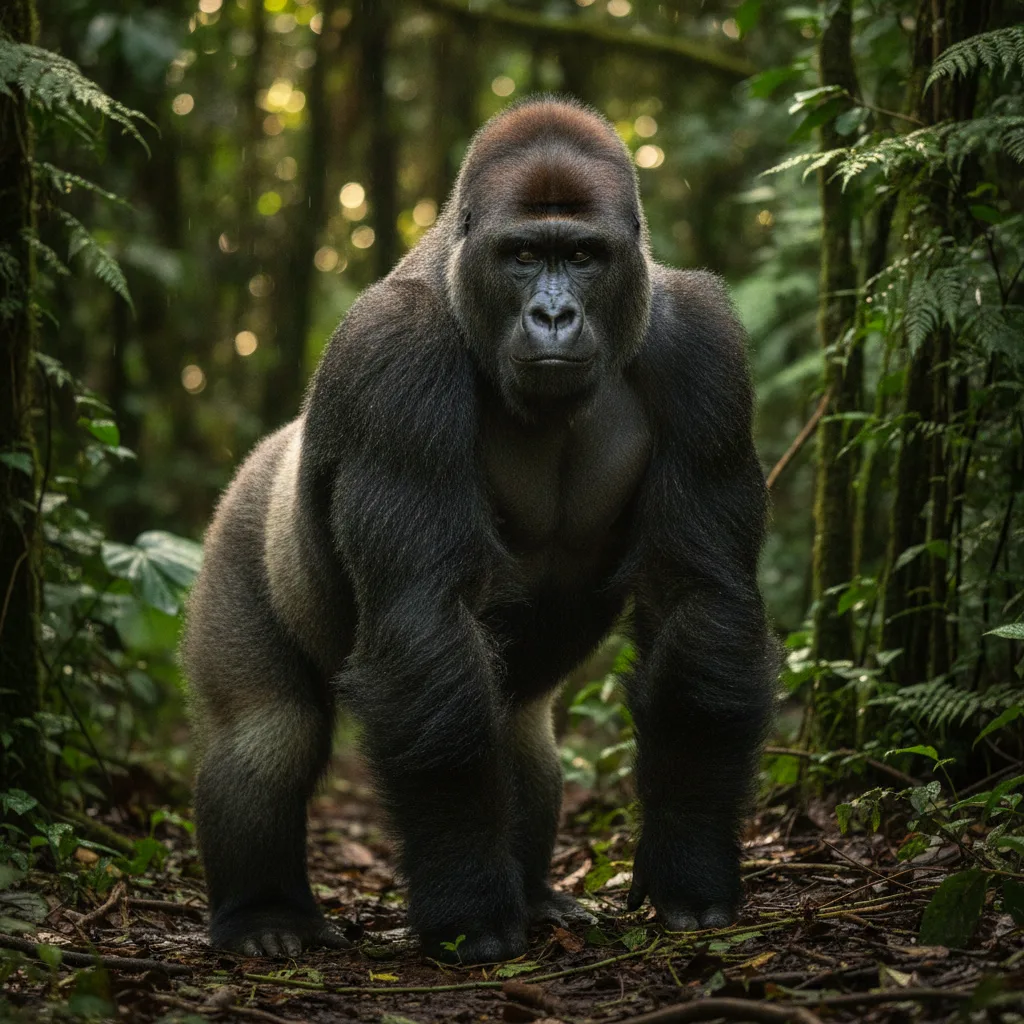
Gorillas are the largest living primates, and the two species — eastern and western — live in the forests of equatorial Africa in stable family groups led by a mature silverback male. For all their strength they are almost entirely vegetarian, spending much of each day eating leaves, stems and fruit. Both species are Critically Endangered, threatened by poaching, disease and habitat loss.
Five things to know
- Gorillas are the largest living primates, with adult males called 'silverbacks' because of the silver fur on their backs.
- They share about 98–99% of their DNA with humans, making them one of our closest relatives.
- Gorillas are mainly herbivorous, feeding on leaves, stems, fruit, and flowers.
- They live in close-knit family groups led by a dominant silverback male.
- Gorillas are critically endangered due to habitat loss, poaching, and disease—particularly Ebola and human diseases.
Homeschool unit: Animals homeschool guide — Habitats, adaptations and food chains as a graded unit, with the gorilla as one of its worked examples.