Gorilla
Gorilla
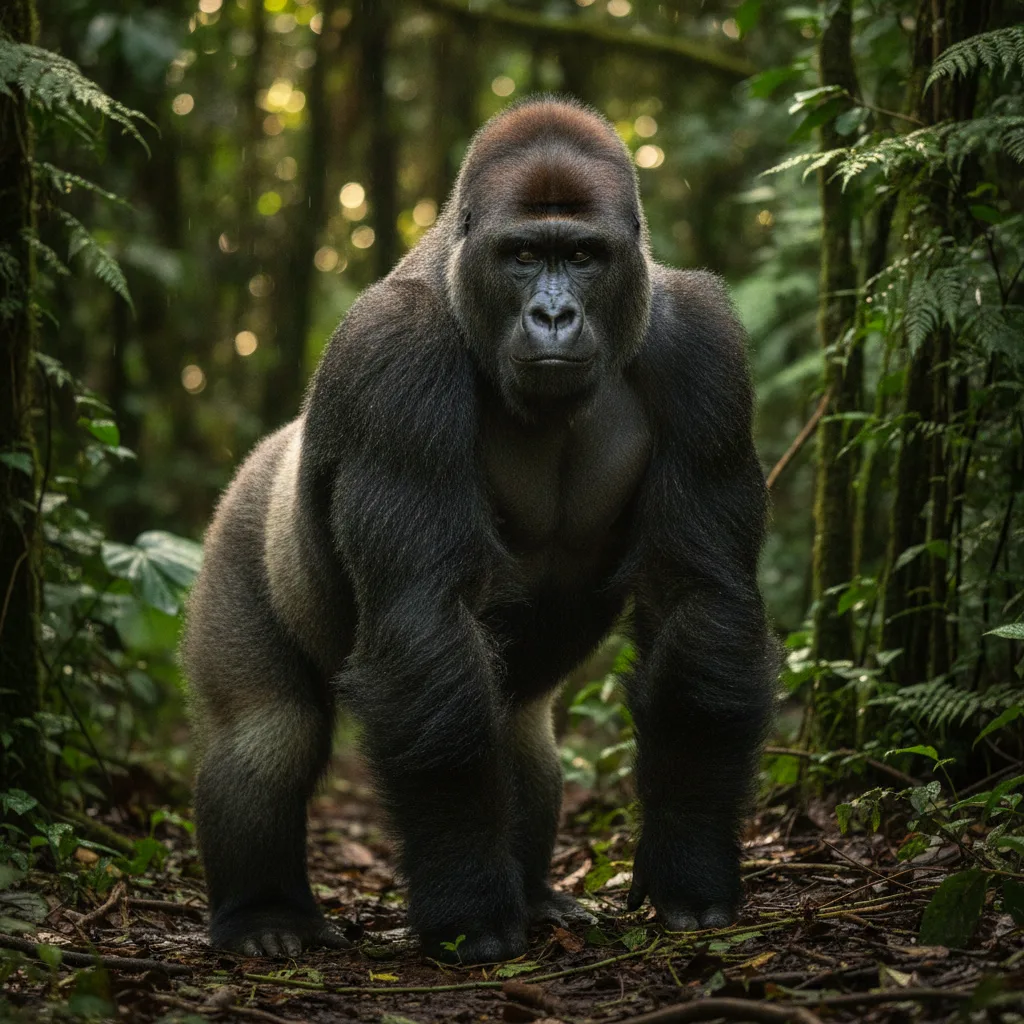
Gorillas are the largest living primates, and the two species — eastern and western — live in the forests of equatorial Africa in stable family groups led by a mature silverback male. For all their strength they are almost entirely vegetarian, spending much of each day eating leaves, stems and fruit. Both species are Critically Endangered, threatened by poaching, disease and habitat loss.
Quick facts: Size Height: 1.4 – 1.8 m (standing upright), Arm span: 2.3 – 2.6 m · Lifespan About 35–40 years in the wild, up to 50 years in captivity · IUCN status Critically Endangered
Print the fact sheet — a free one-page PDF for homeschool and classroom use
Gorillas at a glance
| Scientific name | Gorilla |
|---|---|
| IUCN status | Critically Endangered |
| Population | about 210,000 (all species and subspecies combined; varies widely by subspecies) |
| Population trend | decreasing |
| Weight | 160–270 kg |
| Length | 1.6–1.8 m |
| Lifespan | 35–50 years |
| Top speed | 32 km/h |
| Class | Mammalia |
| Order | Primates |
| Family | Hominidae |
| Known species | 2 |
Need to know
- Gorillas are the largest living primates, with adult males called 'silverbacks' because of the silver fur on their backs.
- They share about 98–99% of their DNA with humans, making them one of our closest relatives.
- Gorillas are mainly herbivorous, feeding on leaves, stems, fruit, and flowers.
- They live in close-knit family groups led by a dominant silverback male.
- Gorillas are critically endangered due to habitat loss, poaching, and disease—particularly Ebola and human diseases.
- Gorillas build new nests every evening to sleep.
About the Gorillas
Gorillas are iconic great apes and the largest living primates. There are two species—western and eastern gorillas—each with two subspecies living in the forests, swamps, and mountains of central Africa. Gorillas play a crucial role in their forest ecosystems by dispersing seeds and shaping vegetation.
Highly intelligent and social, gorillas live in family groups led by a dominant silverback male. They have complex communication and display remarkable personalities, building strong bonds within their groups. Gorillas are threatened by poaching, disease, and habitat destruction, but conservation successes—especially for mountain gorillas—have shown that protection and local engagement can make a difference.
Physical characteristics
Size: Height: 1.4 – 1.8 m (standing upright), Arm span: 2.3 – 2.6 m. Weight: Females: 70 – 120 kg, Males (silverbacks): 140 – 270 kg. Lifespan: About 35–40 years in the wild, up to 50 years in captivity.
- Massive chest and shoulders
- Large head with prominent brow ridge
- Short, thick fur (varies by subspecies and habitat)
- Silvery patch on adult male backs (silverbacks)
- Broad, flat nose with unique nostril patterns
Notable species
- Western Lowland Gorilla (Gorilla gorilla gorilla) — Critically Endangered. Dense and swampy lowland tropical forests Regions: Congo Basin, Gabon, Cameroon, Republic of the Congo, Equatorial Guinea, Angola (Cabinda enclave), Central African Republic.
- Cross River Gorilla (Gorilla gorilla diehli) — Critically Endangered. Mountainous forests and gallery forests Regions: Border region of Nigeria and Cameroon, Cross River headwaters, Afi Mountain Wildlife Sanctuary, Mbe Mountains.
- Mountain Gorilla (Gorilla beringei beringei) — Endangered. Mountain cloud forests at elevations 2,200–4,300 m Regions: Virunga Mountains, Bwindi Impenetrable Forest, Rwanda, Uganda, Democratic Republic of Congo.
- Eastern Lowland Gorilla (Grauer's Gorilla) (Gorilla beringei graueri) — Critically Endangered. Lowland and montane rainforests Regions: Eastern Democratic Republic of Congo, Maiko National Park, Kahuzi-Biéga National Park, Itombwe Massif.
Habitat and range
Original range: Gorillas evolved in the dense forests and lowlands of central equatorial Africa.
Current distribution: Today, gorillas are found in fragmented populations across West-Central Africa and East Africa, mostly restricted to protected parks and reserves.
Preferred environments: Lowland tropical rainforests, Swamp forests, Montane and submontane rainforests, Bamboo forests, Cloud forests in mountainous regions
Regions: Congo Basin, Gabon, Cameroon, Republic of the Congo, Equatorial Guinea, Angola (Cabinda enclave), Central African Republic, Nigeria, Rwanda, Uganda, Democratic Republic of Congo, Virunga Mountains, Bwindi Impenetrable Forest
Where to see Gorillas
- Bwindi Impenetrable National Park, Uganda — June to September; December to February. Join a guided gorilla trek with an official permit for a chance to see mountain gorillas in the wild.
- Volcanoes National Park, Rwanda — June to September. Trackers lead daily tours to visit several habituated family groups of mountain gorillas.
- Odzala-Kokoua National Park, Republic of the Congo — Dry season: June to September. Best site for observing western lowland gorillas, including from hides at forest clearings.
- Cross River National Park, Nigeria — November to April (dry season). Sightings are extremely rare; best for conservationists seeking to study Cross River gorillas.
Behavior and diet
Diet: Primarily herbivorous: leaves, stems, fruit, shoots, roots, bark, and occasionally insects such as ants and termites.
Social structure: Live in stable family groups (troops) of 5–30 individuals, led by a dominant silverback male, with females, juveniles, and subordinate males.
Communication: Use over 20 distinct vocalizations (hoots, grunts, roars), facial expressions, gestures, body postures, and chest-beating to communicate.
- Chest-beating by silverbacks as a display of dominance or to scare off rivals.
- Daily construction of leafy nests for sleeping (new one built each night).
- Occasional tool use, such as using sticks for foraging or to test water depth.
- Grooming and social play to maintain group cohesion and social bonds.
Interactions with other animals
- Leopard (predator): Leopards are the only known natural predator of gorillas, occasionally preying on infants or juveniles.
- Humans (threat/competitive): Humans pose the greatest threat through poaching, habitat destruction, and disease transmission.
- African Forest Elephant (competitive): Occasionally compete for fruit and access to water in overlapping habitats.
Conservation
IUCN Red List status: Critically Endangered
Threats
- Deforestation and habitat fragmentation
- Poaching for bushmeat and illegal wildlife trade
- Emerging diseases (Ebola virus, respiratory infections)
- Human encroachment and conflict
- Climate change
Conservation efforts
- Strict anti-poaching patrols and enforcement in reserves
- Community-based ecotourism that benefits local people
- Long-term research and habituation programs
- Transboundary conservation initiatives (e.g., Greater Virunga Transboundary Collaboration)
- Mass vaccination programs for disease prevention in key populations
How to help
- Support trusted conservation NGOs working in gorilla regions
- Participate in responsible ecotourism with approved guides
- Contribute to anti-poaching campaigns and education efforts
- Avoid purchasing products linked to habitat destruction (e.g., unsustainable palm oil, logging)
- Advocate for stronger wildlife protection laws
Gorillas facts for kids
Gorillas are gentle giants that live in Africa’s forests and travel together in big family groups with a boss called a silverback. They eat plants and fruit, and make new nests to sleep in every night. Gorillas are in danger because of hunting and their homes being cut down, but people are helping to protect them.
- Male gorillas are called silverbacks because of their shiny gray back hair as they grow older.
- Gorillas have hands and feet like ours, with fingers and toes!
- They make grumbling noises when they're happy, especially while eating.
- Gorilla babies can cling to their mom's backs as they travel through the forest.
- Gorillas build new leaf beds on the ground or in trees every night to sleep.
Did you know? Did you know that gorillas can catch human colds and coughs, so scientists must wear masks when visiting them?
Watch & learn
- Gorilla Family Life – Silverback Leadership and Jungle Society — BBC Earth. Gain rare insight into Gorilla social dynamics and the powerful role of the silverback, filmed in stunning detail in the wild African rainforest. BBC Earth's documentaries reveal intricate Gorilla behaviors and touching family bonds.
- Mountain Gorillas: Guardians of the Forest — National Geographic. Explore the daily lives and struggles of wild Mountain Gorillas with breathtaking visuals and scientific commentary. National Geographic's field teams share unique footage and conservation stories from Africa's cloud forests.
- Gorilla Mothers: Raising Babies in the Wild — Smithsonian Channel. Discover how Gorilla mothers nurture and protect their vulnerable infants. Learn about maternal care, early development, and the critical role of the family group via Smithsonian Channel's close-up documentary storytelling.
- Gorilla Habitats: Life in the African Rainforest — PBS Nature. PBS Nature takes you deep into the vanishing forests that Gorillas call home. The video highlights their endangered status, fascinating foraging behaviors, and ongoing efforts to protect their habitat.
- The Secret Lives of Gorillas: Social Structure and Communication — BBC Studios. Dive into how Gorillas communicate, use tools, and maintain alliances. This documentary by BBC Studios features high-definition footage and expert narration, perfect for understanding Gorilla intelligence.
Sources
Facts on this page are checked against these references. Follow them for the primary data.
- IUCN Red List — Conservation status, population trend and range assessment for Gorilla
- Encyclopaedia Britannica — Reviewed encyclopaedia entry on the gorillas
- National Geographic — Articles, photographs and field reporting on the gorillas