Hands Down Animals · Printable fact sheet
Great White Shark
Carcharodon carcharias
Quick facts
| Scientific name | Carcharodon carcharias |
|---|---|
| Size | Typical length 3.5–4.0 m; maximum verified up to 6.4 m |
| Weight | Average 1,100 kg; largest individuals nearly 2,000 kg |
| Lifespan | Typically 40–70+ years |
| Diet | Primarily marine mammals (seals, sea lions, dolphins), large fish (tuna, rays, other sharks), and carrion… |
| Habitat | Temperate continental shelf waters, Coastal regions with abundant marine mammals, Open… |
| Where it lives | Northeast Pacific Ocean, Northwest Pacific Ocean, Southwest Pacific Ocean, Northwest… |
| IUCN status | Vulnerable |
| Population | 3,500–6,000 |
| Top speed | 56 km/h |
| Family | Lamnidae |
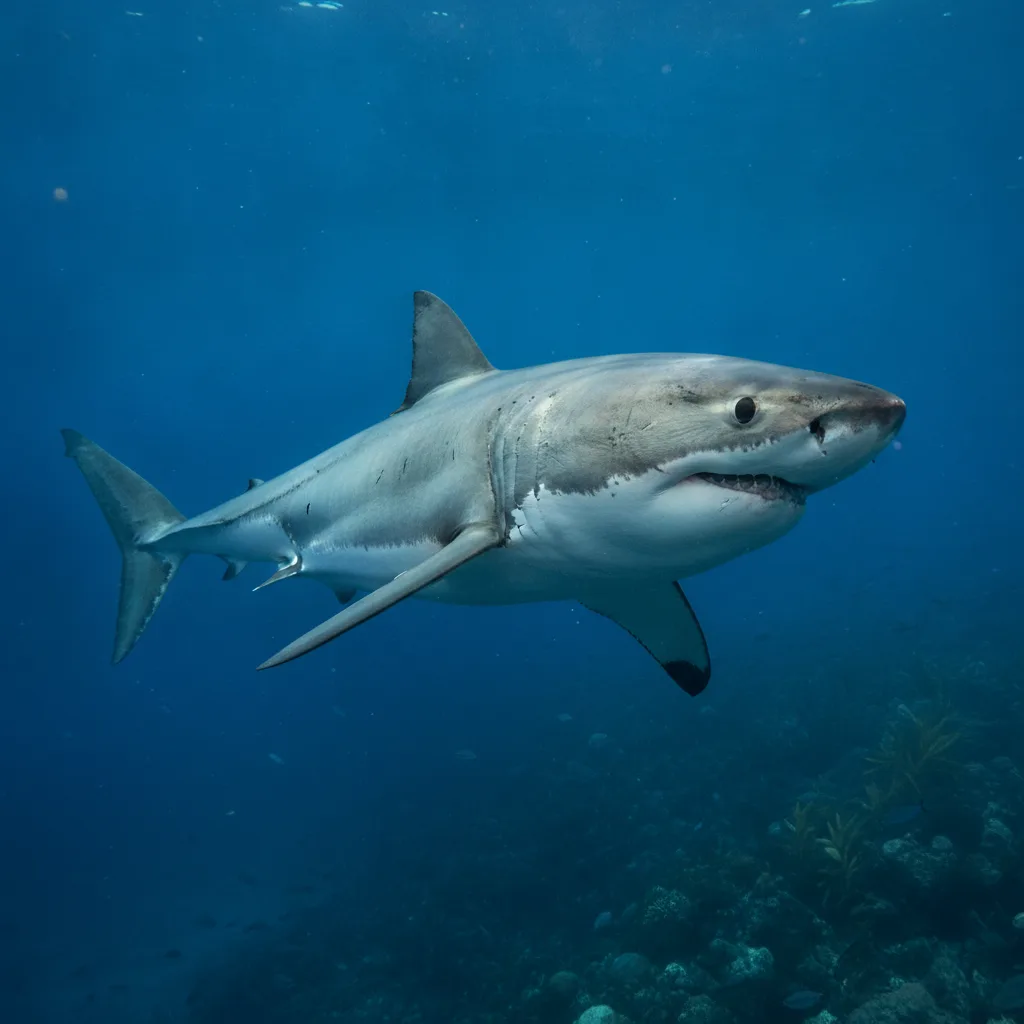
About the great white shark
Great white sharks range through temperate and subtropical coastal waters worldwide, with well-studied populations off South Africa, Australia, California and the northeast United States. They can keep parts of their body warmer than the surrounding sea, and tagged individuals have crossed the Indian Ocean from South Africa to Australia and back. The species is Vulnerable and is protected in many countries.
Five things to know
- Great white sharks are the largest predatory fish on Earth.
- They can detect a single drop of blood in 10 billion drops of water.
- Great whites are endothermic (partial warm-blooded), allowing them to hunt in colder waters.
- They often breach (leap entirely out of the water) when hunting seals.
- The species is listed as Vulnerable globally due to overfishing and accidental bycatch.
Homeschool unit: Sharks homeschool guide — A full shark unit: how great white shark senses, hunts and why sharks matter to the ocean, with activities by grade.