Hands Down Animals · Printable fact sheet
Grizzly Bear
Ursus arctos
Quick facts
| Scientific name | Ursus arctos |
|---|---|
| Size | 1.9–2.5 m (6.2–8.2 ft) in length; shoulder height up to 1.3 m (4.3 ft) |
| Weight | 180–360 kg (females), up to 680 kg (males) in optimal habitats |
| Lifespan | Average 20–25 years in wild, up to 34 years recorded |
| Diet | Omnivorous: eats roots, berries, nuts, salmon, small mammals, carrion, and occasionally large ungulates. |
| Habitat | Montane forests, Alpine meadows, Tundra |
| Where it lives | Alaska, Western Canada, Northern Rockies, Greater Yellowstone Ecosystem |
| IUCN status | Least Concern (globally for Ursus arctos); grizzly populations in the lower 48 USA are listed as Threatened |
| Population | 55,000 - 60,000 |
| Top speed | 56 km/h |
| Family | Ursidae |
About the grizzly bear
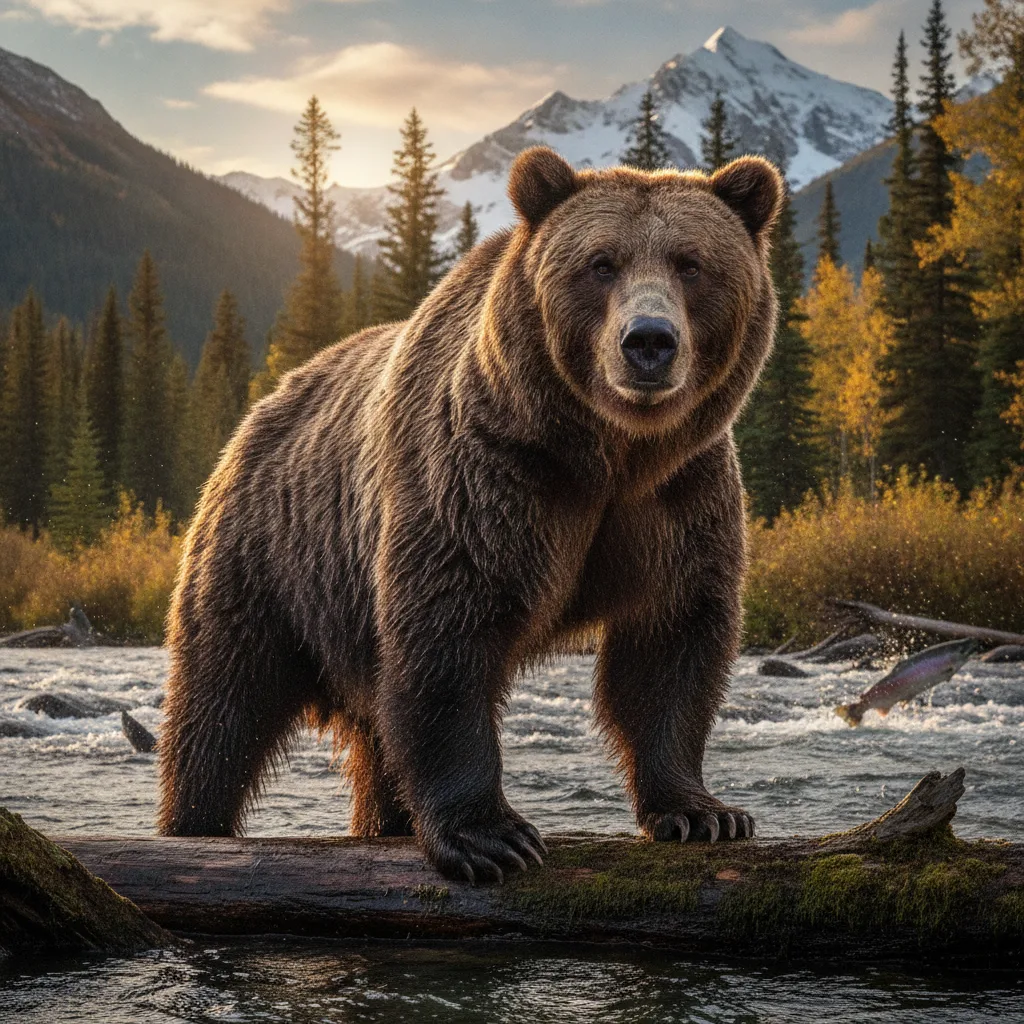
The grizzly is the North American form of the brown bear, found from Alaska and western Canada down into Montana, Wyoming and Idaho. Before winter denning a bear may put on a kilogram or more a day, and coastal animals can eat dozens of salmon in a single day during the run. Brown bears overall are Least Concern, but the lower-48 grizzly population stood at around 2,000 in recent counts after near-eradication in the 20th century.
Five things to know
- Grizzlies are classified as a subspecies of the brown bear, Ursus arctos horribilis.
- They can run up to 56 km/h despite their size.
- Their shoulder muscle hump powers their impressive digging abilities.
- Grizzlies play a key role in dispersing nutrients and seeds in ecosystems.
- They have one of the most varied diets among North American carnivores, eating anything from berries to bison.
Homeschool unit: Animals homeschool guide — Habitats, adaptations and food chains as a graded unit, with the grizzly bear as one of its worked examples.