Grizzly Bear
Ursus arctos
The grizzly is the North American form of the brown bear, found from Alaska and western Canada down into Montana, Wyoming and Idaho. Before winter denning a bear may put on a kilogram or more a day, and coastal animals can eat dozens of salmon in a single day during the run. Brown bears overall are Least Concern, but the lower-48 grizzly population stood at around 2,000 in recent counts after near-eradication in the 20th century.
Quick facts: Size 1.9–2.5 m (6.2–8.2 ft) in length; shoulder height up to 1.3 m (4.3 ft) · Lifespan Average 20–25 years in wild, up to 34 years recorded · IUCN status Least Concern (globally for Ursus arctos); grizzly populations in the lower 48 USA are listed as Threatened
Print the fact sheet — a free one-page PDF for homeschool and classroom use
Grizzly Bear at a glance
| Scientific name | Ursus arctos |
|---|---|
| IUCN status | Least Concern (globally for Ursus arctos); grizzly populations in the lower 48 USA are listed as Threatened |
| Population | 55,000 - 60,000 |
| Population trend | stable |
| Weight | 270–680 kg |
| Length | 2–2.8 m |
| Lifespan | 25–34 years |
| Top speed | 56 km/h |
| Class | Mammalia |
| Order | Carnivora |
| Family | Ursidae |
| Known species | 9 |
Need to know
- Grizzlies are classified as a subspecies of the brown bear, Ursus arctos horribilis.
- They can run up to 56 km/h despite their size.
- Their shoulder muscle hump powers their impressive digging abilities.
- Grizzlies play a key role in dispersing nutrients and seeds in ecosystems.
- They have one of the most varied diets among North American carnivores, eating anything from berries to bison.
- The grizzly population dropped dramatically due to hunting and habitat loss but has since stabilized in some areas.
About the Grizzly Bear
The grizzly bear is one of North America's most formidable mammalian predators, recognized for its impressive size, distinctive physical features, and crucial ecological role. As a subspecies of the brown bear, grizzlies are found primarily in Alaska, Canada, and parts of the northwestern United States. Their habitats once stretched much farther south and east, but human expansion and conflicts led to a steady range reduction over the past two centuries.
Despite their reputation, grizzly bears are omnivores with a highly adaptable diet and complex social behaviors. They are ecologically essential, turning soil, dispersing seeds, and influencing prey populations. Current conservation measures have helped stabilize or restore some grizzly populations, especially in the Greater Yellowstone ecosystem and Alaska, but isolated U.S. populations remain vulnerable.
Today, grizzly bears symbolize wilderness and conservation success, but ongoing efforts are needed to ensure their survival in a world that is still rapidly changing.
Physical characteristics
Size: 1.9–2.5 m (6.2–8.2 ft) in length; shoulder height up to 1.3 m (4.3 ft). Weight: 180–360 kg (females), up to 680 kg (males) in optimal habitats. Lifespan: Average 20–25 years in wild, up to 34 years recorded.
- Pronounced muscular shoulder hump
- Long, curved claws (up to 10 cm)
- Short, rounded ears
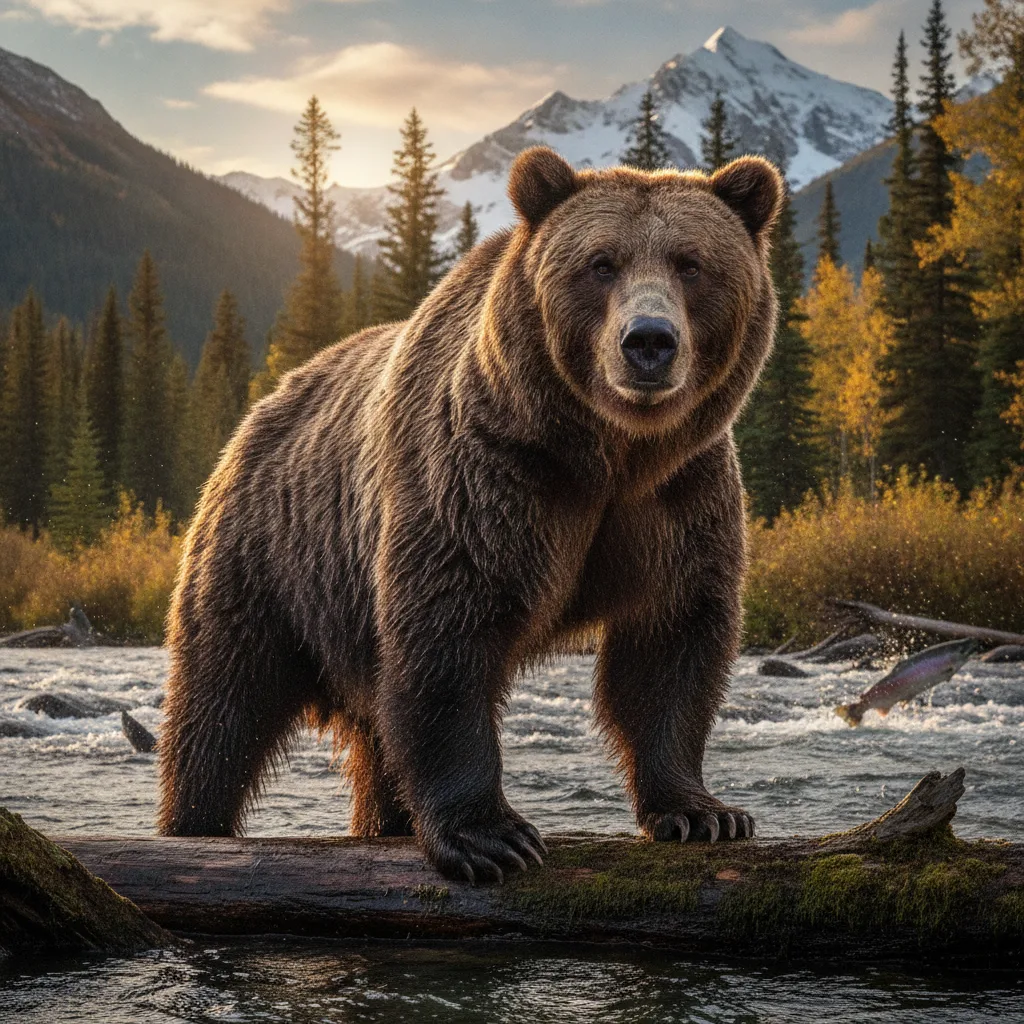
- Dense, often grizzled brown fur
- Large, broad head with dish-shaped face
Notable species
- Grizzly Bear (Ursus arctos horribilis) — Least Concern. Montane forests, alpine meadows, river valleys Regions: Alaska, Western Canada, Northwestern United States, Greater Yellowstone Ecosystem, Northern Rockies.
- Kodiak Bear (Ursus arctos middendorffi) — Least Concern. Coastal forests, tundra, grasslands Regions: Kodiak Archipelago, Southwestern Alaska.
- Eurasian Brown Bear (Ursus arctos arctos) — Least Concern. Forests, tundra, subalpine meadows Regions: Eastern Europe, Scandinavia, Russia, Asia Minor, Siberia.
- California Grizzly Bear (Extinct) (Ursus arctos californicus) — Extinct. Coastal scrub, grasslands, woodlands Regions: California, San Francisco Bay Area, Sierra Nevada.
- Mexican Grizzly Bear (Extinct) (Ursus arctos nelsoni) — Extinct. Montane forests, grasslands Regions: Northern Mexico, Sierra Madre Occidental.
- Kamchatka Brown Bear (Ursus arctos beringianus) — Least Concern. Coastal forests, tundra, mountains Regions: Kamchatka Peninsula, Siberia, Far East Russia.
Habitat and range
Original range: Western North America, down to Mexico and east to the Great Plains; throughout Eurasia for related subspecies.
Current distribution: Primarily Alaska, western Canada, and isolated populations in the northwestern United States; Eurasian brown bear and other subspecies occur throughout parts of Europe and Asia.
Preferred environments: Montane forests, Alpine meadows, Tundra, Riparian zones, Coastal grasslands
Regions: Alaska, Western Canada, Northern Rockies, Greater Yellowstone Ecosystem, Kodiak Archipelago, Kamchatka Peninsula, Siberia, Scandinavia, Eastern Europe
Where to see Grizzly Bear
- Katmai National Park, Alaska — July to September. Watch grizzlies feast on salmon at Brooks Falls
- Yellowstone National Park, USA — Spring and early summer. Look for bears near river valleys and meadows
- Kodiak Island, Alaska — May to October. Observe massive Kodiak bears in coastal habitats
- Banff National Park, Canada — June to August. Best chance to see bears in open meadows and low forests
Behavior and diet
Diet: Omnivorous: eats roots, berries, nuts, salmon, small mammals, carrion, and occasionally large ungulates.
Social structure: Primarily solitary except during mating season, mother-cub groups, or congregating at rich food sources (salmon runs).
Communication: Use vocalizations (woofs, roars, grunts), body postures, scent marking, and claw marks to communicate territory or intent.
- Excavates dens on north-facing slopes for winter hibernation
- Skilled fishing at salmon streams during spawning season
- Capable of standing and walking short distances on hind legs
- Builds day beds in dense brush for resting
Interactions with other animals
- Salmon (prey): Bears catch and consume salmon during spawning runs, crucial for their fat reserves.
- Wolves (competitive): Bears and wolves may compete for carcasses, sometimes chasing each other off kills.
- Moose (predator): Occasionally preys on moose calves, especially in spring.
- Black Bear (competitive): Grizzlies can outcompete black bears for food, occasionally forcing them out of habitats.
Conservation
IUCN Red List status: Least Concern (globally for Ursus arctos); grizzly populations in the lower 48 USA are listed as Threatened
Threats
- Habitat loss and fragmentation
- Human-wildlife conflict (livestock, roads)
- Poaching and illegal killing
- Climate change affecting food sources
Conservation efforts
- Habitat protection and creation of wildlife corridors
- ESA listing and legal protections in the USA
- Bear-proofing trash and food sources
- Community education to reduce human-bear conflict
How to help
- Practice safe food storage in bear country
- Support wildlife corridors and protected area initiatives
- Advocate for science-based bear management policies
- Donate to conservation organizations focusing on large carnivores
Grizzly Bear facts for kids
Grizzly bears are big, powerful animals that live in North American forests, mountains, and meadows. They spend summer eating lots of food before sleeping all winter in a den. Grizzlies are important for nature and are fun to watch from a safe distance!
- Grizzlies can be taller than a person when standing on their back legs.
- They eat both plants and animals—sometimes even fish!
- Baby grizzly bears are called cubs and are very playful.
- Grizzlies have long claws for digging and catching food.
- A grizzly's roar can be heard miles away!
Did you know? Did you know that grizzly bears can run as fast as a car on a city street—even though they are so big and heavy?
Watch & learn
- Grizzly Bears: Power, Survival, and Family in the Wild — BBC Earth. This documentary delves into the extraordinary lives of grizzly bears, from raising cubs to dramatic battles for dominance, with breathtaking cinematography and in-depth narration highlighting their behaviors in North America.
- Living With Grizzly Bears: Coexistence and Conservation — National Geographic. National Geographic explores how humans and grizzly bears interact in wild landscapes, focusing on conservation efforts, close encounters, and the science behind these majestic carnivores.
- Grizzly Bear: The Dominant Carnivore of North America — Smithsonian Channel. Follow Smithsonian's expert filmmakers as they go deep into the carnivorous lifestyle of Ursus arctos, showcasing feeding behavior, territoriality, and every aspect of grizzly bear life.
- Nature’s Giants: Grizzly Bears Up Close — PBS Nature. PBS Nature offers an intimate look into the world of grizzly bears, capturing their play, hunting, and survival against the backdrop of changing wilderness landscapes.
- Grizzly Bear Cubs: Growing Up Wild — BBC Studios. BBC Studios presents the fascinating journey of grizzly bear cubs as they learn vital skills to survive, featuring rare footage and expert commentary on their threats and milestones.
Sources
Facts on this page are checked against these references. Follow them for the primary data.
- IUCN Red List — Conservation status, population trend and range assessment for Ursus arctos
- Encyclopaedia Britannica — Reviewed encyclopaedia entry on the grizzly bear
- National Geographic — Articles, photographs and field reporting on the grizzly bear