Hands Down Animals · Printable fact sheet
Horse
Equus
Quick facts
| Scientific name | Equus |
|---|---|
| Size | 1.4–1.8 m tall at the shoulders, 2.0–2.7 m long |
| Weight | 380–1,000 kg (depending on breed/species) |
| Lifespan | 25–30 years; up to 62 years recorded |
| Diet | Strict herbivore – grazes on grasses, hay, shrubs, and (occasionally) supplemental vegetables/fruits when… |
| Habitat | Grasslands, Savannas, Steppe |
| Where it lives | North America, South America, Europe, Asia |
| IUCN status | Least Concern (domestic Equus ferus caballus); Endangered (Przewalski's horse); Critically Endangered (African Wild Ass); Near Threatened (Plains Zebra) |
| Population | Over 60 million domestic horses; approximately 1,900 wild… |
| Top speed | 70 km/h |
| Family | Equidae |
About the horse
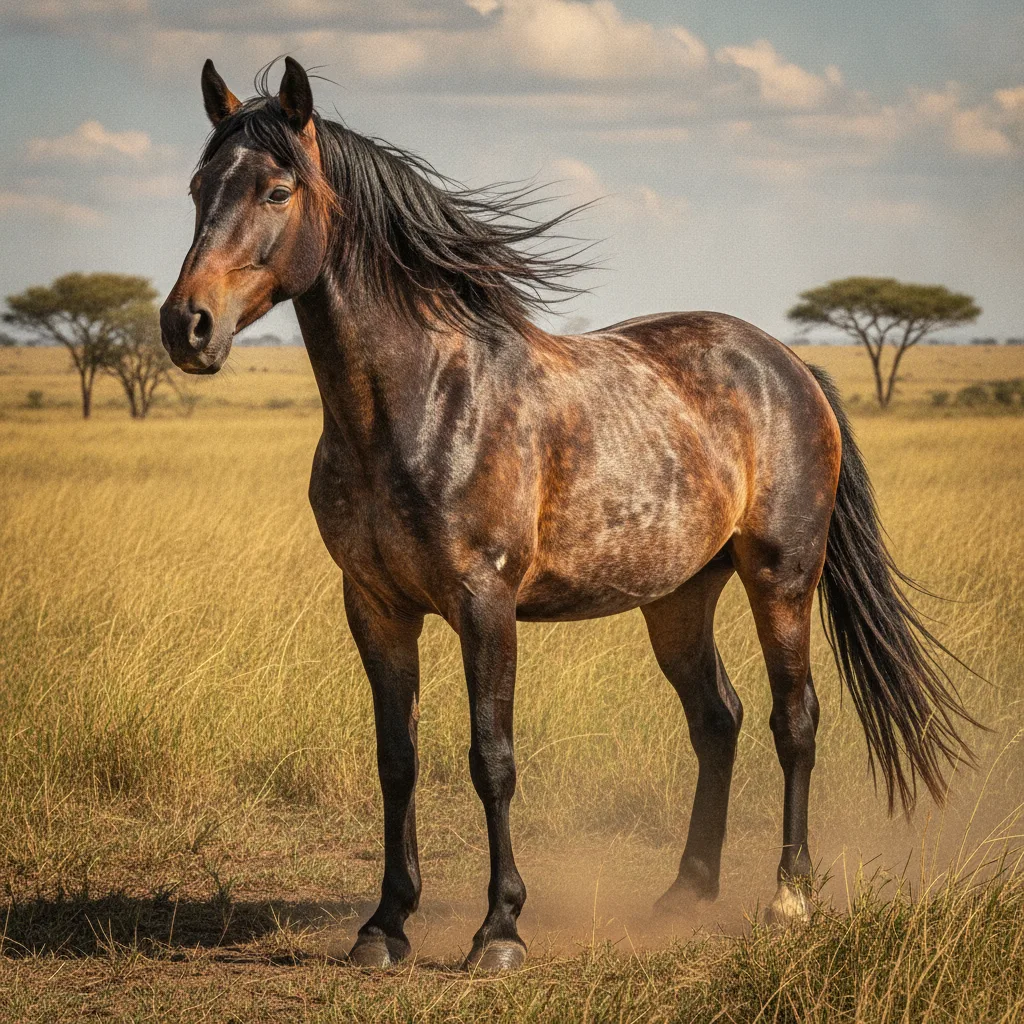
Horses were domesticated on the steppes of western Eurasia at least 4,000 years ago, and they reshaped travel, farming and warfare for millennia. They can sleep standing up thanks to a locking mechanism in their legs, and their eyes — the largest of any land mammal — give almost 360-degree vision. Przewalski's horse, the only wild horse never domesticated, was extinct in the wild by the 1960s and has since been reintroduced to Mongolia; it is listed as Endangered.
Five things to know
- Horses are one of only a few animals successfully domesticated by humans for riding and labor.
- The Przewalski’s horse is the only truly wild subspecies of horse alive today.
- A horse’s gallop can reach up to 70 km/h (43 mph) for short bursts.
- Horses have the largest eyes of any land mammal.
- The modern domestic horse descends from wild populations of Equus ferus.
Homeschool unit: Animals homeschool guide — Habitats, adaptations and food chains as a graded unit, with the horse as one of its worked examples.