Hands Down Animals · Printable fact sheet
Jaguar
Panthera onca
Quick facts
| Scientific name | Panthera onca |
|---|---|
| Size | 1.12–1.85 m body length, 0.45–0.75 m at shoulder |
| Weight | 45–158 kg, with males averaging 100 kg |
| Lifespan | 12–15 years in the wild, up to 20 in captivity |
| Diet | Carnivorous; hunts over 85 species including peccaries, capybaras, tapirs, deer, turtles, caimans, fish, and… |
| Habitat | Tropical rainforests, Flooded wetlands, Gallery forests |
| Where it lives | Amazon Rainforest, Pantanal, Gran Chaco, Atlantic Forest |
| IUCN status | Near Threatened |
| Population | Approx. 64,000 |
| Top speed | 80 km/h |
| Family | Felidae |
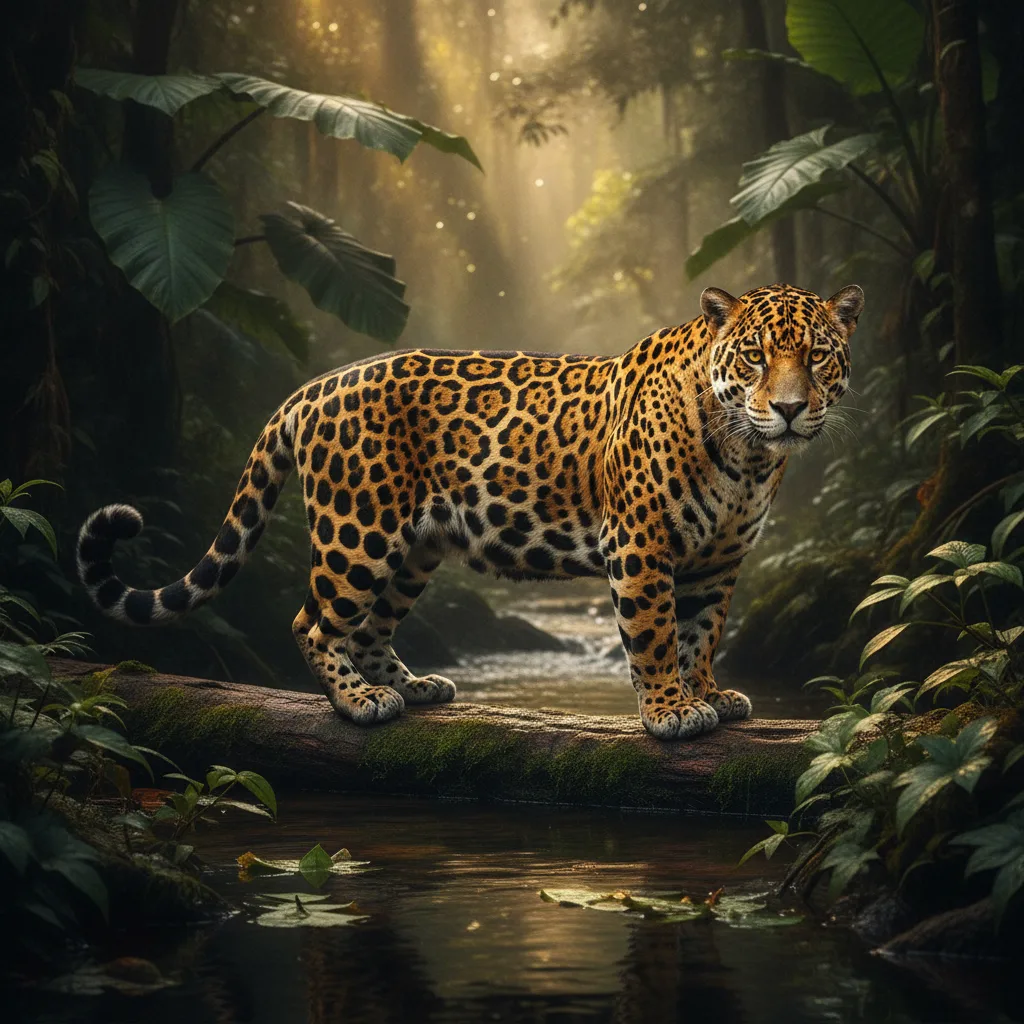
About the jaguar
The jaguar is the largest cat in the Americas and the only living member of the genus Panthera there, ranging from Mexico to northern Argentina with its stronghold in the Amazon basin. Its bite is the strongest of any big cat relative to size, and it often kills by piercing the skull, letting it take caimans and armoured turtles that other predators avoid. Jaguars are listed as Near Threatened and have lost around half of their historic range.
Five things to know
- The jaguar is the largest cat species in the Americas and the third-largest in the world.
- Jaguars have the most powerful bite of any big cat, capable of piercing turtle shells and crushing mammal skulls.
- Their distinctive rosettes differ from those of leopards and can have a central black spot.
- Jaguars are excellent swimmers and often hunt in or near water.
- Historically, the jaguar's range extended up to the southwestern US, but is now substantially reduced.
Homeschool unit: Animals homeschool guide — Habitats, adaptations and food chains as a graded unit, with the jaguar as one of its worked examples.