Hands Down Animals · Printable fact sheet
Komodo Dragon
Varanus komodoensis
Quick facts
| Scientific name | Varanus komodoensis |
|---|---|
| Size | Typically 2 - 3 meters in length |
| Weight | Average 70 kg, with maximums up to 90 kg |
| Lifespan | Average 30 years, maximum 50 years |
| Diet | Carnivorous: primarily Timor deer, wild boar, water buffalo, smaller mammals, birds, and carrion. Juveniles… |
| Habitat | Tropical dry forests, Open savanna, Scrubland |
| Where it lives | Komodo Island, Rinca Island, Gili Motang, Gili Dasami |
| IUCN status | Endangered |
| Population | 3,500 - 5,700 |
| Top speed | 20 km/h |
| Family | Varanidae |
About the komodo dragon
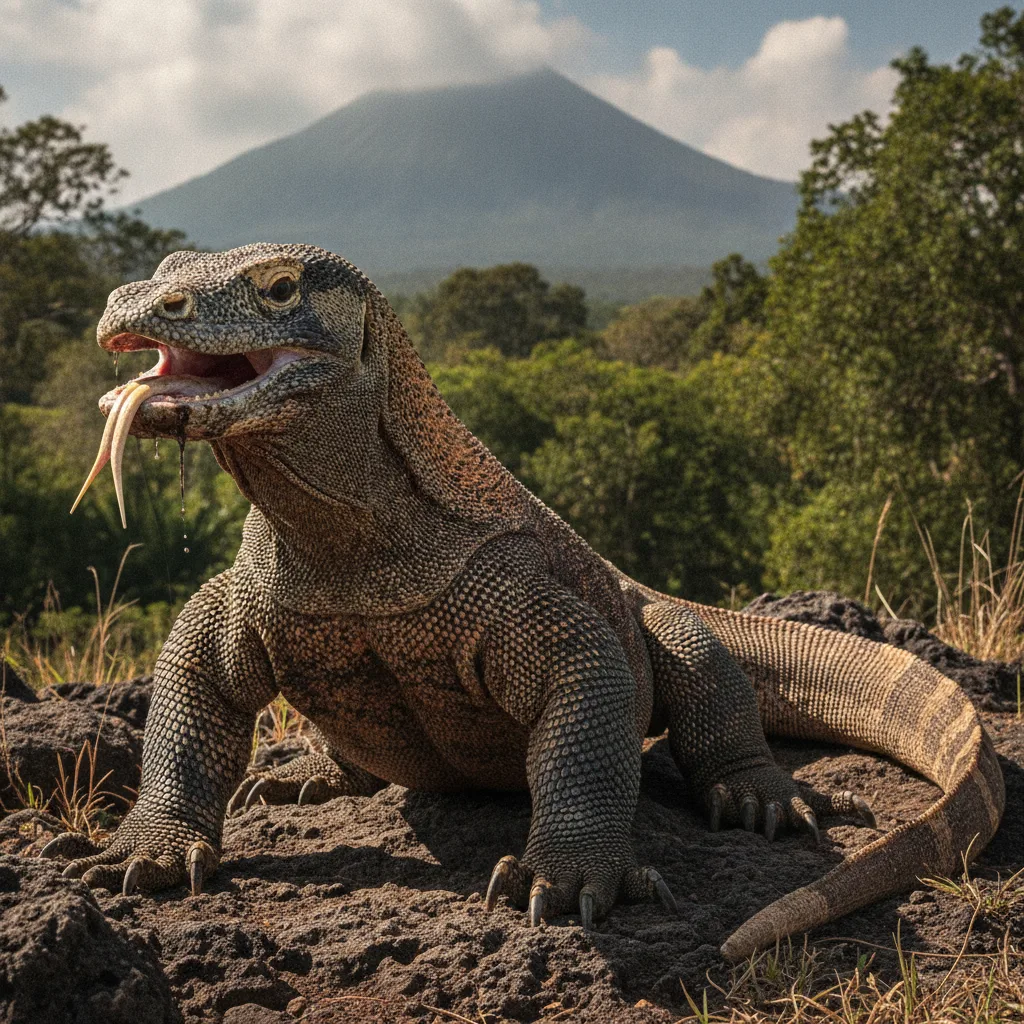
The Komodo dragon is the world's largest lizard, reaching 3 metres and around 70 kilograms, and it lives only on Komodo, Rinca, Flores and a few neighbouring Indonesian islands. It brings down deer and water buffalo with a venomous bite that lowers blood pressure and prevents clotting, then follows the weakening animal by scent. The species was uplisted to Endangered in 2021, with rising sea levels expected to shrink its habitat.
Five things to know
- The Komodo dragon is the largest living lizard, growing over 3 meters in length.
- It has a mildly venomous bite that helps subdue large prey.
- Komodo dragons can consume up to 80% of their body weight in a single meal.
- They are apex predators on their native Indonesian islands.
- Komodo dragons can run up to 20 km/h in short bursts.
Homeschool unit: Dinosaurs homeschool guide — The komodo dragon is the closest thing to a living dinosaur; this unit connects fossils to today's reptiles.