Hands Down Animals · Printable fact sheet
Leopard
Panthera pardus
Quick facts
| Scientific name | Panthera pardus |
|---|---|
| Size | 1.3 to 1.9 m (head and body), 0.5–1.1 m tail |
| Weight | 30–90 kg (males larger; size varies by region) |
| Lifespan | 10–15 years in the wild, up to 23 in captivity |
| Diet | Leopards are obligate carnivores, preying on medium-sized ungulates such as antelope, deer, wild boar… |
| Habitat | Savannas, Rainforests, Dry shrublands |
| Where it lives | West Africa, East Africa, Central Africa, Southern Africa |
| IUCN status | Vulnerable |
| Population | 700,000 - 900,000 |
| Top speed | 58 km/h |
| Family | Felidae |
About the leopard
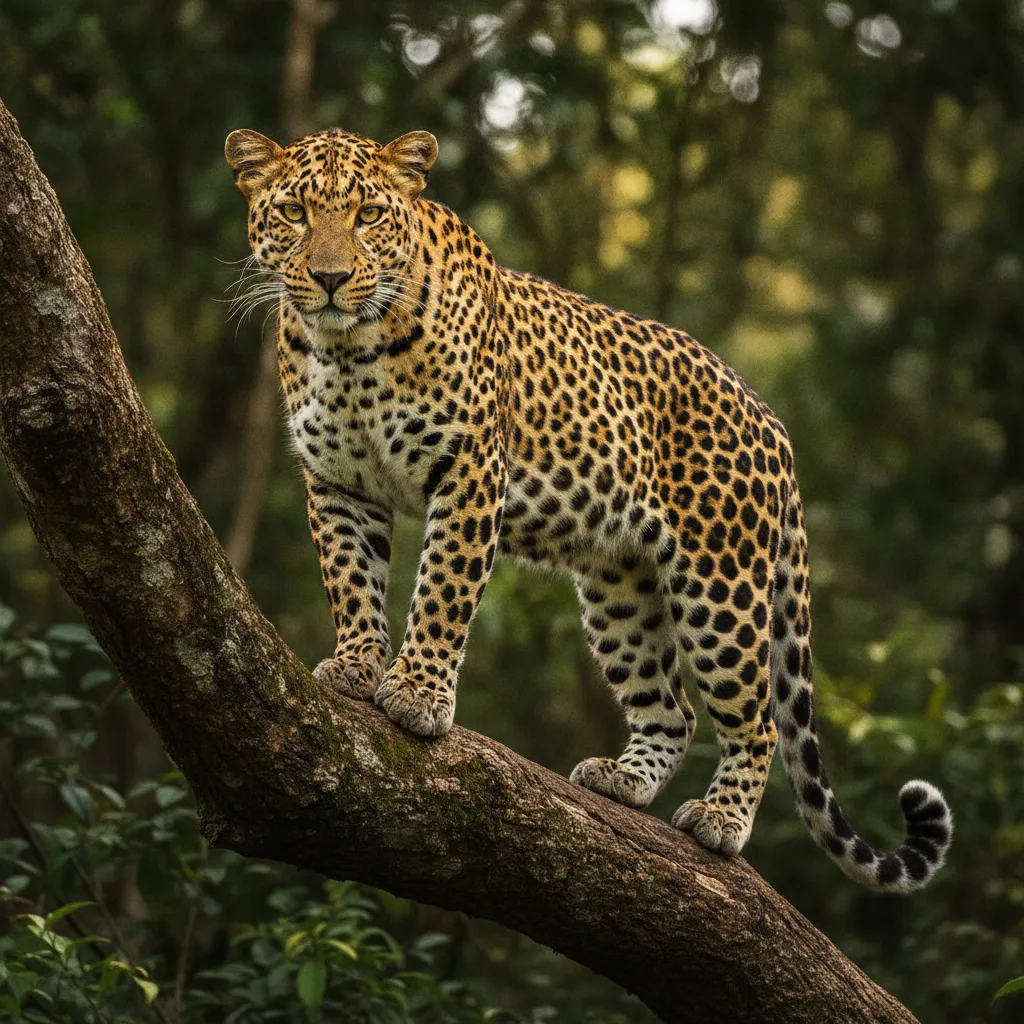
The leopard has the widest range of any wild cat, from sub-Saharan Africa through the Middle East to Russia and Southeast Asia, occupying rainforest, savanna, desert edge and even city outskirts. It is a powerful climber that habitually hauls kills heavier than itself into trees to keep them from lions and hyenas. The species is listed as Vulnerable, and several Asian subspecies are Critically Endangered.
Five things to know
- Leopards are the most widespread of any wild big cat, living across Africa and Asia.
- They are renowned for being able to adapt to a wide range of habitats, from deserts to rainforests.
- Leopards can drag prey up into trees to avoid losing it to scavengers.
- They are solitary hunters and typically only come together to mate.
- The Amur leopard is the rarest big cat in the world, with fewer than 120 adults left.
Homeschool unit: Animals homeschool guide — Habitats, adaptations and food chains as a graded unit, with the leopard as one of its worked examples.