Hands Down Animals · Printable fact sheet
Lion
Panthera leo
Quick facts
| Scientific name | Panthera leo |
|---|---|
| Size | 1.7–2.5 meters body length; 0.9–1.2 meters shoulder height |
| Weight | 120–250 kg (males heavier than females) |
| Lifespan | 10–14 years in the wild, up to 22 years in captivity |
| Diet | Obligate carnivores, primarily hunting medium to large ungulates such as wildebeest, zebra, buffalo… |
| Habitat | Savannah, Grassland, Open woodland |
| Where it lives | East Africa, Southern Africa, West Africa, Central Africa |
| IUCN status | Vulnerable |
| Population | 23,000 - 25,000 |
| Top speed | 80 km/h |
| Family | Felidae |
About the lion
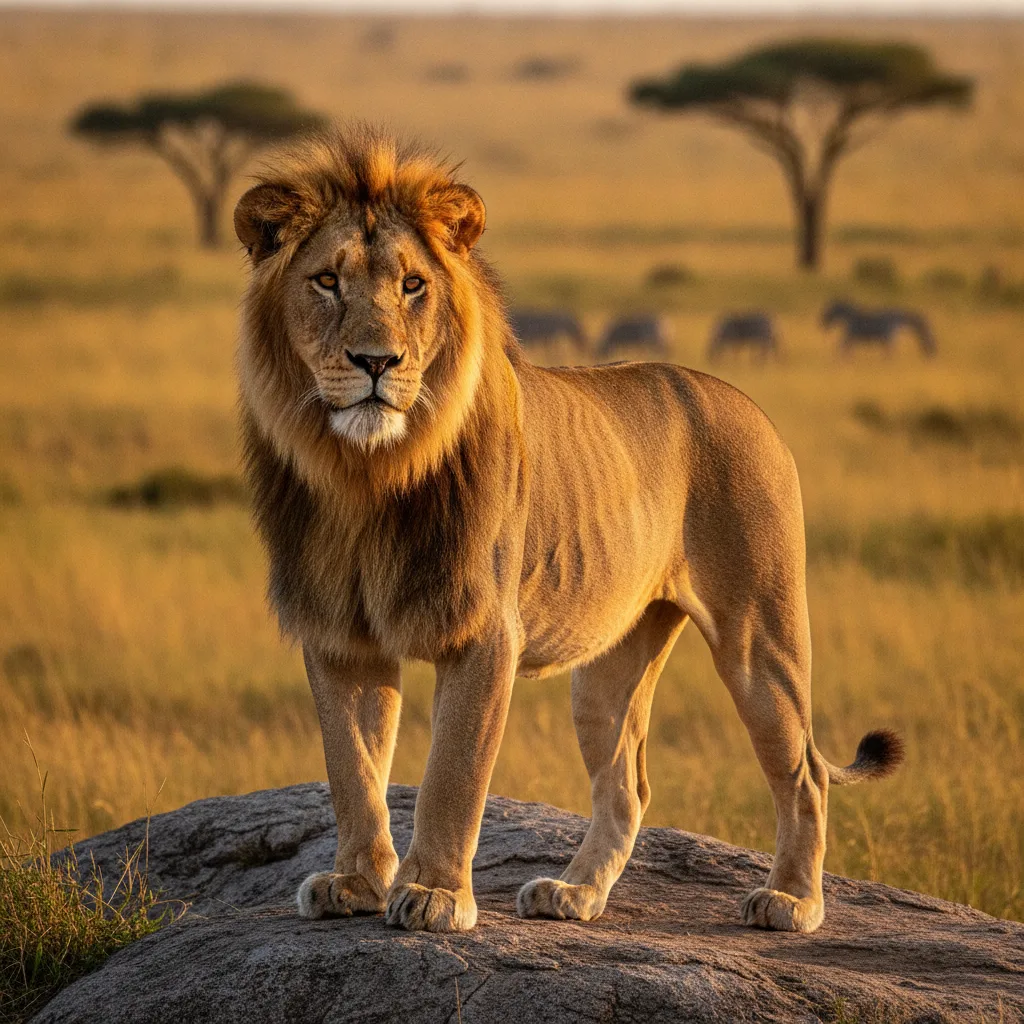
Lions are the only truly social cats, living in prides of related females, their cubs and a coalition of males across the savannas of sub-Saharan Africa, with one small remnant population in India's Gir Forest. A male's roar carries for several kilometres and serves both to mark territory and to gather scattered pride members. The species is listed as Vulnerable by the IUCN after numbers fell by roughly 40% in two decades.
Five things to know
- Lions are the only truly social big cats, living in complex prides.
- A lion's roar can be heard up to 8 kilometers away.
- All modern wild Asiatic lions live in a single forest in India: Gir Forest.
- Male lions grow impressive manes that vary in color and size with age and genetics.
- Lions can sprint up to 80 km/h but only for short distances.
Homeschool unit: Animals homeschool guide — Habitats, adaptations and food chains as a graded unit, with the lion as one of its worked examples.