Hands Down Animals · Printable fact sheet
Manta Ray
Mobula
Quick facts
| Scientific name | Mobula |
|---|---|
| Size | Average 4–5 meters, up to 7 meters (wingspan) |
| Weight | Average 1,200 kg, up to 2,000 kg |
| Lifespan | 25–40 years |
| Diet | Plankton (including copepods, mysids, euphausiids, and fish eggs), tiny fish, and occasionally small… |
| Habitat | Tropical open ocean (epipelagic), Coastal coral and rocky reefs, Offshore upwelling zones |
| Where it lives | Atlantic Ocean, Pacific Ocean, Indian Ocean, Red Sea |
| IUCN status | Endangered (M. birostris), Vulnerable (M. alfredi) |
| Population | Unknown; likely tens of thousands globally |
| Top speed | 24 km/h |
| Family | Mobulidae |
About the manta ray
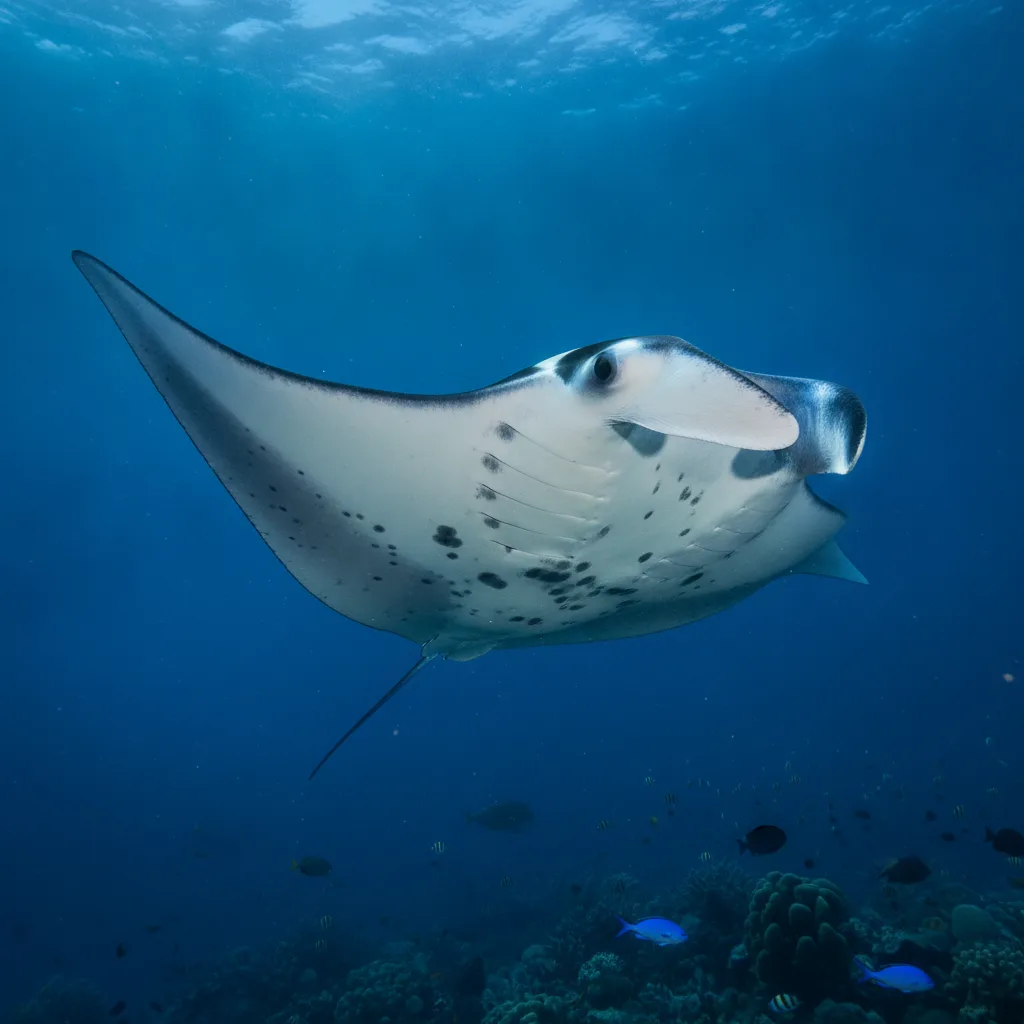
Manta rays are the largest rays, with the oceanic manta spanning up to 7 metres across, and they cruise tropical and subtropical seas filtering plankton through their wide mouths. They have the largest brain of any fish relative to body size, and individuals visit reef 'cleaning stations' where small fish pick off parasites. Both species are threatened by fishing for their gill plates: the oceanic manta is Endangered and the reef manta Vulnerable.
Five things to know
- Manta rays are the largest rays on Earth, with wingspans up to 7 meters.
- They are filter feeders, consuming vast amounts of plankton by swimming with open mouths.
- Giant oceanic mantas can dive over 1,000 meters deep and undertake transoceanic migrations.
- Each manta has a unique ventral spot pattern, like a fingerprint.
- Female mantas give live birth to a single pup after a year-long gestation.
Homeschool unit: Ocean homeschool guide — An ocean unit on marine food webs, tides and conservation, with the manta ray as a case study.