Hands Down Animals · Printable fact sheet
Octopus
Octopodidae
Quick facts
| Scientific name | Octopodidae |
|---|---|
| Size | Average arm span 0.3–3 m depending on species |
| Weight | Most range from 3 kg to over 70 kg for largest species |
| Lifespan | Typically 1–2 years, up to 5 years for large species |
| Diet | Carnivorous—primarily feeds on crustaceans, fish, mollusks, and sometimes other cephalopods. |
| Habitat | Rocky reefs, Seagrass meadows, Coral reefs |
| Where it lives | Atlantic Ocean, Pacific Ocean, Indian Ocean, Mediterranean Sea |
| IUCN status | Mostly 'Least Concern' (varies by species; some Data Deficient) |
| Population | Unknown |
| Top speed | 40 km/h |
| Family | Octopodidae |
About the octopus
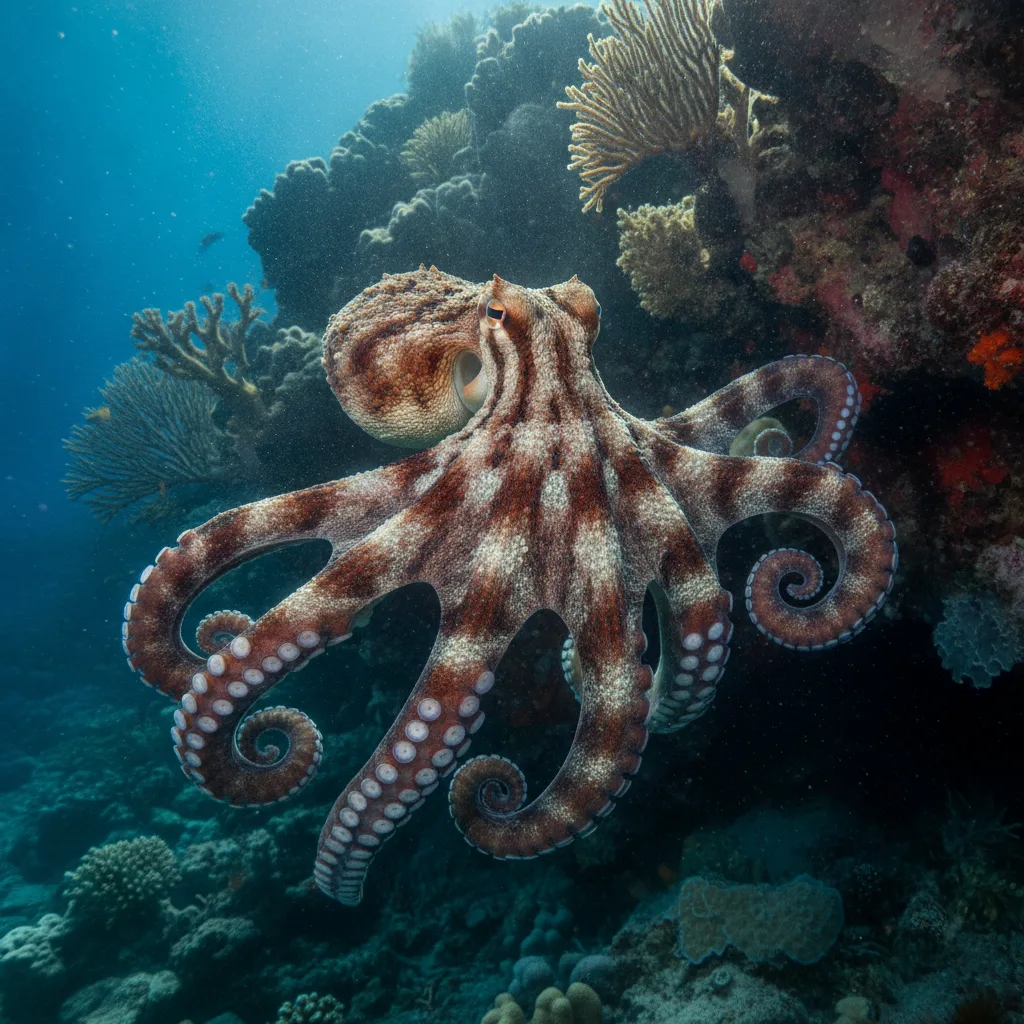
Octopuses are soft-bodied molluscs with eight arms, three hearts and blue, copper-based blood, found in every ocean from tide pools to the deep sea. Two-thirds of their neurons sit in the arms rather than the brain, and specialised skin cells let an octopus change colour and texture in a fraction of a second. Most species live only one to two years, dying soon after breeding once.
Five things to know
- Octopuses have three hearts and blue blood due to a copper-based molecule called hemocyanin.
- They are considered the most intelligent invertebrates, capable of learning and using tools.
- Octopuses can change both color and skin texture instantly for camouflage.
- Many species can squirt ink to deter predators.
- Unlike most animals, octopuses can squeeze through any space larger than their beak.
Homeschool unit: Ocean homeschool guide — An ocean unit on marine food webs, tides and conservation, with the octopus as a case study.