Hands Down Animals · Printable fact sheet
Orangutan
Pongo
Quick facts
| Scientific name | Pongo |
|---|---|
| Size | 1.2–1.5 meters tall |
| Weight | Female: 35–50 kg, Male: 50–120 kg |
| Lifespan | 30–40 years in the wild; up to 50+ years in captivity |
| Diet | Mostly fruit (up to 60–90% of diet), but also leaves, bark, insects, honey, and occasionally bird eggs. |
| Habitat | Lowland tropical rainforest, Swamp forest, Highland and montane rainforest |
| Where it lives | Sumatra, Borneo, Leuser Ecosystem, Batang Toru |
| IUCN status | Critically Endangered |
| Population | 60,000–80,000 |
| Top speed | 4 km/h |
| Family | Hominidae |
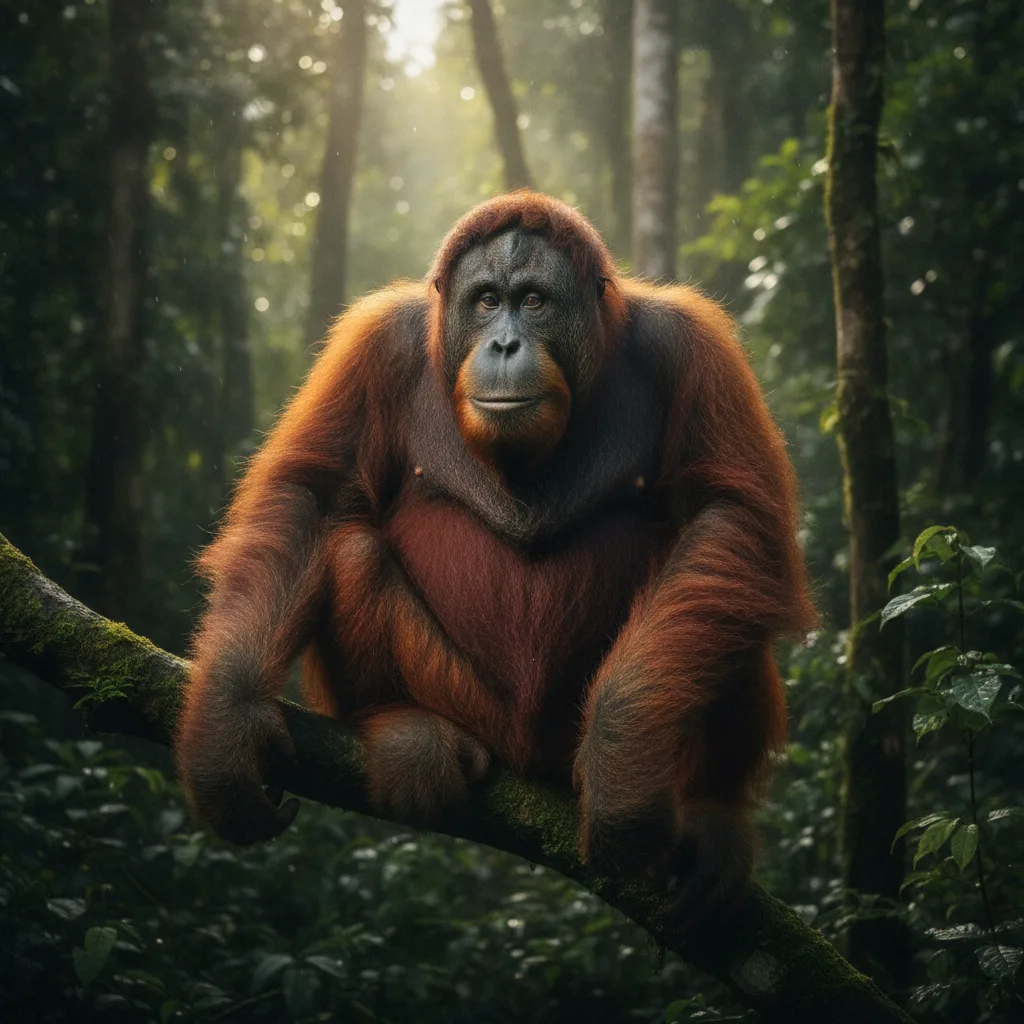
About the orangutan
Orangutans are the only great apes native to Asia, and the three species — Bornean, Sumatran and Tapanuli — live in the rainforests of Borneo and Sumatra. They are the largest tree-dwelling mammals, building a fresh nest of branches to sleep in each night, and mothers nurse their young for up to eight years, longer than any other wild animal. All three species are Critically Endangered, driven by the conversion of forest to oil palm.
Five things to know
- Orangutans are the only great apes found in Asia.
- They spend up to 90% of their lives in trees, making them the largest arboreal mammal.
- Their name means 'person of the forest' in Malay and Indonesian.
- They use tools, such as sticks, to extract insects or honey.
- Orangutans have the longest period of infant dependency of any animal except humans.
Homeschool unit: Animals homeschool guide — Habitats, adaptations and food chains as a graded unit, with the orangutan as one of its worked examples.