Orangutan
Pongo
Orangutans are the only great apes native to Asia, and the three species — Bornean, Sumatran and Tapanuli — live in the rainforests of Borneo and Sumatra. They are the largest tree-dwelling mammals, building a fresh nest of branches to sleep in each night, and mothers nurse their young for up to eight years, longer than any other wild animal. All three species are Critically Endangered, driven by the conversion of forest to oil palm.
Quick facts: Size 1.2–1.5 meters tall · Lifespan 30–40 years in the wild; up to 50+ years in captivity · IUCN status Critically Endangered
Print the fact sheet — a free one-page PDF for homeschool and classroom use
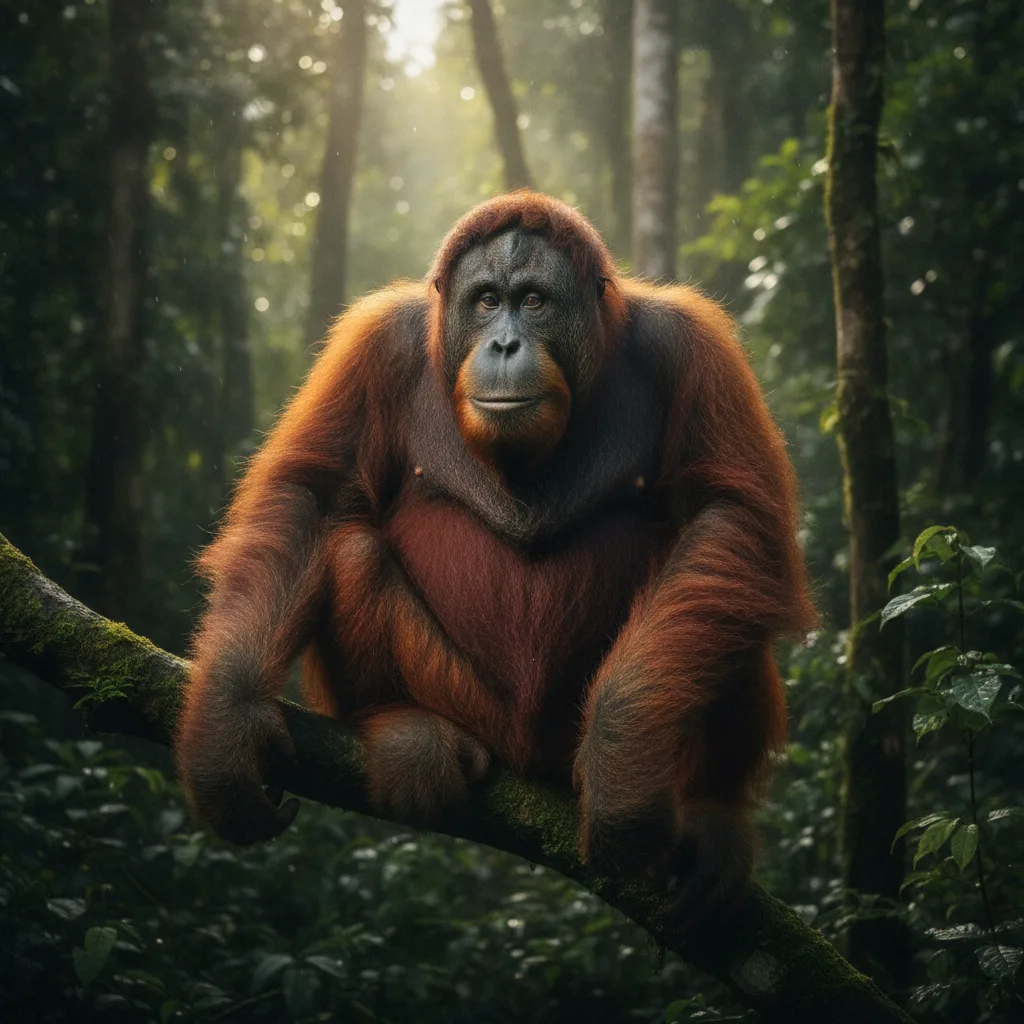
Orangutans at a glance
| Scientific name | Pongo |
|---|---|
| IUCN status | Critically Endangered |
| Population | 60,000–80,000 |
| Population trend | decreasing |
| Weight | 65–120 kg |
| Length | 1.3–1.8 m |
| Lifespan | 35–62 years |
| Top speed | 4 km/h |
| Class | Mammalia |
| Order | Primates |
| Family | Hominidae |
| Known species | 3 |
Need to know
- Orangutans are the only great apes found in Asia.
- They spend up to 90% of their lives in trees, making them the largest arboreal mammal.
- Their name means 'person of the forest' in Malay and Indonesian.
- They use tools, such as sticks, to extract insects or honey.
- Orangutans have the longest period of infant dependency of any animal except humans.
About the Orangutans
Orangutans are iconic great apes native to the rainforests of Southeast Asia, renowned for their intelligence, remarkable arboreal lifestyle, and distinctive red fur. Once widespread across southern Asia, today their populations are restricted to pockets on the islands of Borneo and Sumatra. These solitary, slow-moving apes spend most of their lives in the treetops, skillfully navigating the canopy to find fruit, leaves, and other forest foods.
Orangutans are highly intelligent, with evidence of tool use and cultural behaviors unique to each population. They face critical threats from habitat loss, primarily due to deforestation for palm oil plantations, illegal logging, and poaching. As a result, all three orangutan species are classified as Critically Endangered by the IUCN.
Their long arms, shaggy orange hair, and thoughtful eyes make them unmistakable. Their presence is vital for forest health, as their feeding habits help disperse seeds and maintain ecosystem diversity.
Physical characteristics
Size: 1.2–1.5 meters tall. Weight: Female: 35–50 kg, Male: 50–120 kg. Lifespan: 30–40 years in the wild; up to 50+ years in captivity.
- Long, strong arms much longer than legs
- Sparse, shaggy reddish-orange fur
- Large cheek pads (flanges) in adult males
- Highly flexible hands and feet with opposable thumbs and big toes
- High, prominent mouth region
Notable species
- Bornean orangutan (Pongo pygmaeus) — Critically Endangered. Primary and secondary lowland rainforest, peat swamp forests Regions: Borneo, Kalimantan, Sabah, Sarawak, central and northern Borneo.
- Sumatran orangutan (Pongo abelii) — Critically Endangered. Tropical rainforests, especially in highland and lowland forest regions Regions: Sumatra, Leuser Ecosystem, northern Sumatra, Aceh.
- Tapanuli orangutan (Pongo tapanuliensis) — Critically Endangered. Upland forests (1,000–1,300 m elevation), fragmented tropical highland forest Regions: Batang Toru, South Tapanuli, Sumatra (southern Tip), Bukit Tigapuluh.
Habitat and range
Original range: Southeast Asian rainforests across Sumatra, Java, Borneo, and mainland Southeast Asia
Current distribution: Now restricted to parts of Borneo and northern and central Sumatra
Preferred environments: Lowland tropical rainforest, Swamp forest, Highland and montane rainforest, Peat swamp
Regions: Sumatra, Borneo, Leuser Ecosystem, Batang Toru, Sabah, Sarawak, Kalimantan
Where to see Orangutans
- Gunung Leuser National Park (Sumatra) — May to September. Best sightings on guided treks through the rainforest
- Tanjung Puting National Park (Borneo) — June to September. Orangutan feeding stations and riverboat tours increase sighting odds
- Batang Toru Forest (Northern Sumatra) — March to June. Remote area; sightings rare, but home to the Tapanuli orangutan
- Sepilok Orangutan Rehabilitation Centre (Sabah, Borneo) — March to October. Best spot to see orphaned and rehabilitated wild orangutans up close
Behavior and diet
Diet: Mostly fruit (up to 60–90% of diet), but also leaves, bark, insects, honey, and occasionally bird eggs.
Social structure: Solitary, especially adult males; females live with offspring, and home ranges overlap.
Communication: Vocalizations (long calls, kiss squeaks), facial gestures, branch shaking, and touch.
- Constructing complex nests in trees for sleeping every night
- Using sticks and leaves as tools to extract insects or honey
- Long calls by males that echo for miles through the forest
- Slow, cautious movement through the forest canopy (brachiation and climbing)
Interactions with other animals
- Sumatran tiger (predator): The Sumatran tiger is known to prey on young or isolated orangutans, though predation is rare.
- Hornbills (competitive): Both species may compete for fruiting trees, especially during fruit shortages.
- Fig trees (mutualistic): Orangutans disperse fig seeds through their feces, aiding forest regeneration.
Conservation
IUCN Red List status: Critically Endangered
Threats
- Habitat loss due to deforestation and palm oil plantations
- Illegal logging
- Poaching (for pets and bushmeat)
- Forest fires and climate change
- Fragmentation of populations
Conservation efforts
- Protected reserves and national parks
- Habitat restoration and reforestation
- Orangutan rescue and rehabilitation centers
- Anti-poaching enforcement
- Sustainable palm oil initiatives
How to help
- Support organizations fighting deforestation and protecting orangutan habitat
- Buy products containing certified sustainable palm oil
- Reduce use of wood and paper from unsustainable sources
- Avoid supporting illegal pet trade
- Raise awareness about orangutan conservation threats
Orangutans facts for kids
Orangutans are big apes with orange fur that live high up in the rainforests of Borneo and Sumatra. They are very smart, love to eat fruit, and use their long arms to swing between the trees. Orangutans are in danger, so people all over the world are working to protect them.
- Orangutans can be as tall as a 7-year-old child if they stand up!
- They build a brand-new leafy bed in the trees every night.
- Baby orangutans hold onto their mom for years as they learn about the forest.
- Orangutans are the only great ape species outside Africa.
- If orangutans get scared, they make a funny 'kiss-squeak' sound!
Did you know? Did you know an orangutan’s arms can stretch out longer than their whole body—perfect for tree swinging!
Watch & learn
- Extraordinary Intelligence of Orangutans — BBC Earth. An in-depth look at the cognitive abilities and complex social behaviors of orangutans in the wild, showcasing their tool use and problem-solving skills through stunning footage and expert commentary.
- Orangutans: The Last Forest Guardians — National Geographic Wild. This documentary explores the lives of wild orangutans as they navigate the rainforests of Borneo and Sumatra, highlighting conservation challenges and the remarkable adaptability of the species.
- The Orangutan Jungle School — Smithsonian Channel. Follow young orangutans at a jungle school as they learn survival skills needed to return to the wild, featuring personal stories and a close-up look at rehabilitation efforts and orangutan behavior.
- Orangutans: Masters of the Canopy — PBS Nature. A visually immersive exploration of the life of orangutans high in the forest canopy, this episode covers unique aspects of their biology and ecology as well as urgent conservation issues.
- Orangutan Rescue and Conservation in Borneo — BBC Earth. Experience dramatic rescue operations and hear from dedicated conservationists working to protect orangutans from habitat loss and poaching in Borneo’s endangered forests.
Sources
Facts on this page are checked against these references. Follow them for the primary data.
- IUCN Red List — Conservation status, population trend and range assessment for Pongo
- Encyclopaedia Britannica — Reviewed encyclopaedia entry on the orangutans
- National Geographic — Articles, photographs and field reporting on the orangutans