Hands Down Animals · Printable fact sheet
Penguin
Spheniscidae
Quick facts
| Scientific name | Spheniscidae |
|---|---|
| Size | 30-120 cm depending on species |
| Weight | 1-40 kg depending on species |
| Lifespan | 10-20 years on average; up to 40 years in captivity |
| Diet | Primarily fish, squid, and krill. Diet varies by location and species. |
| Habitat | Coastal pack ice, Subantarctic and Antarctic islands, Rocky seashores |
| Where it lives | Antarctic Peninsula, Ross Sea, Weddell Sea, South Georgia |
| IUCN status | Varies by species: Several Least Concern; some Endangered |
| Population | Over 20,000,000 individuals (all species combined) |
| Top speed | 10 km/h |
| Family | Spheniscidae |
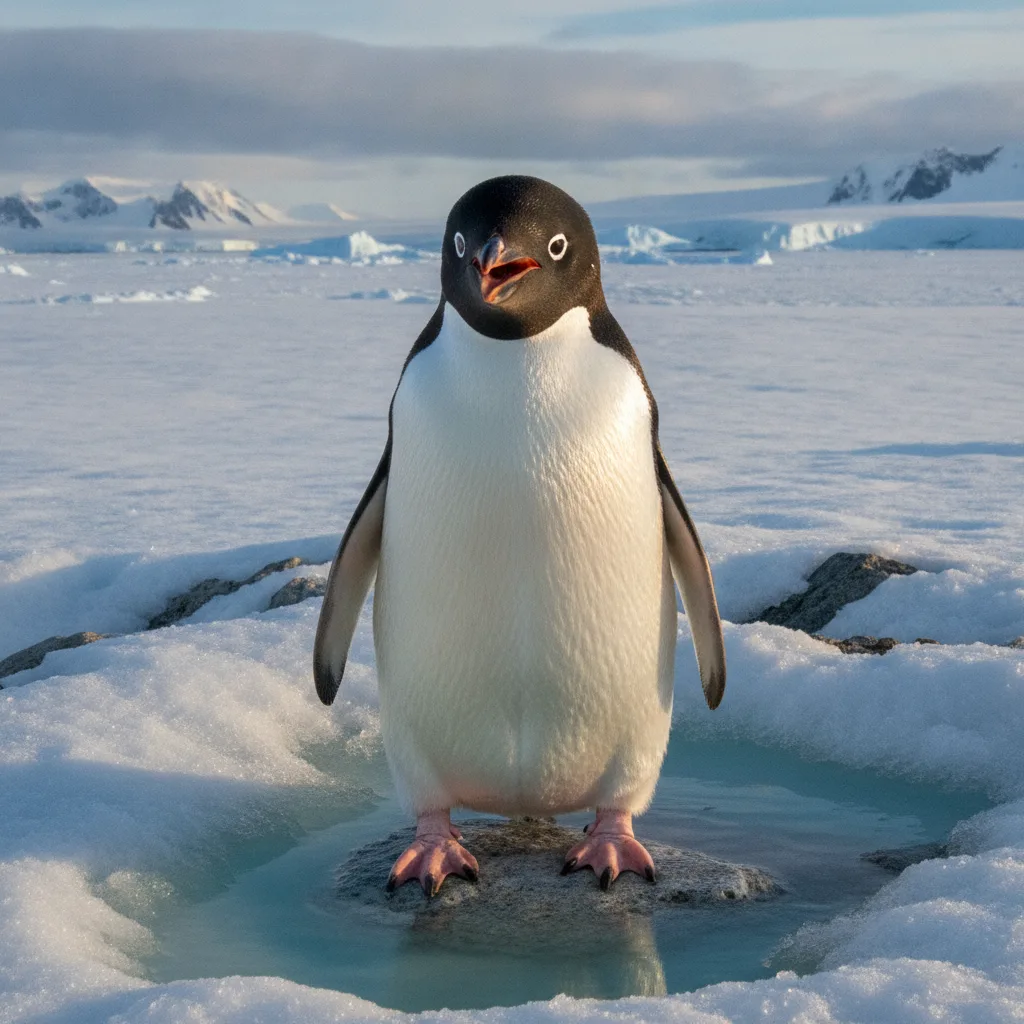
About the penguin
Penguins are flightless seabirds of the Southern Hemisphere, and only the Galápagos penguin lives as far north as the equator. Their wings have become stiff flippers, and emperor penguins dive deeper than 500 metres and hold their breath for over 20 minutes. Of the 18 species, ten are listed as Vulnerable or Endangered, mainly because warming seas are shifting their prey.
Five things to know
- Penguins are only found in the Southern Hemisphere, from Antarctica to near the equator.
- The Emperor Penguin is the tallest and heaviest living penguin species.
- Penguins are superb swimmers, with wings adapted as flippers.
- Penguins are social birds, often nesting and feeding in large colonies.
- Some penguin species, like the Galápagos Penguin, live in warm climates.
Homeschool unit: Birds homeschool guide — Flight, feathers and migration: a bird unit that uses species like the penguin as its worked examples.