Penguin
Spheniscidae
Penguins are flightless seabirds of the Southern Hemisphere, and only the Galápagos penguin lives as far north as the equator. Their wings have become stiff flippers, and emperor penguins dive deeper than 500 metres and hold their breath for over 20 minutes. Of the 18 species, ten are listed as Vulnerable or Endangered, mainly because warming seas are shifting their prey.
Quick facts: Size 30-120 cm depending on species · Lifespan 10-20 years on average; up to 40 years in captivity · IUCN status Varies by species: Several Least Concern; some Endangered
Print the fact sheet — a free one-page PDF for homeschool and classroom use
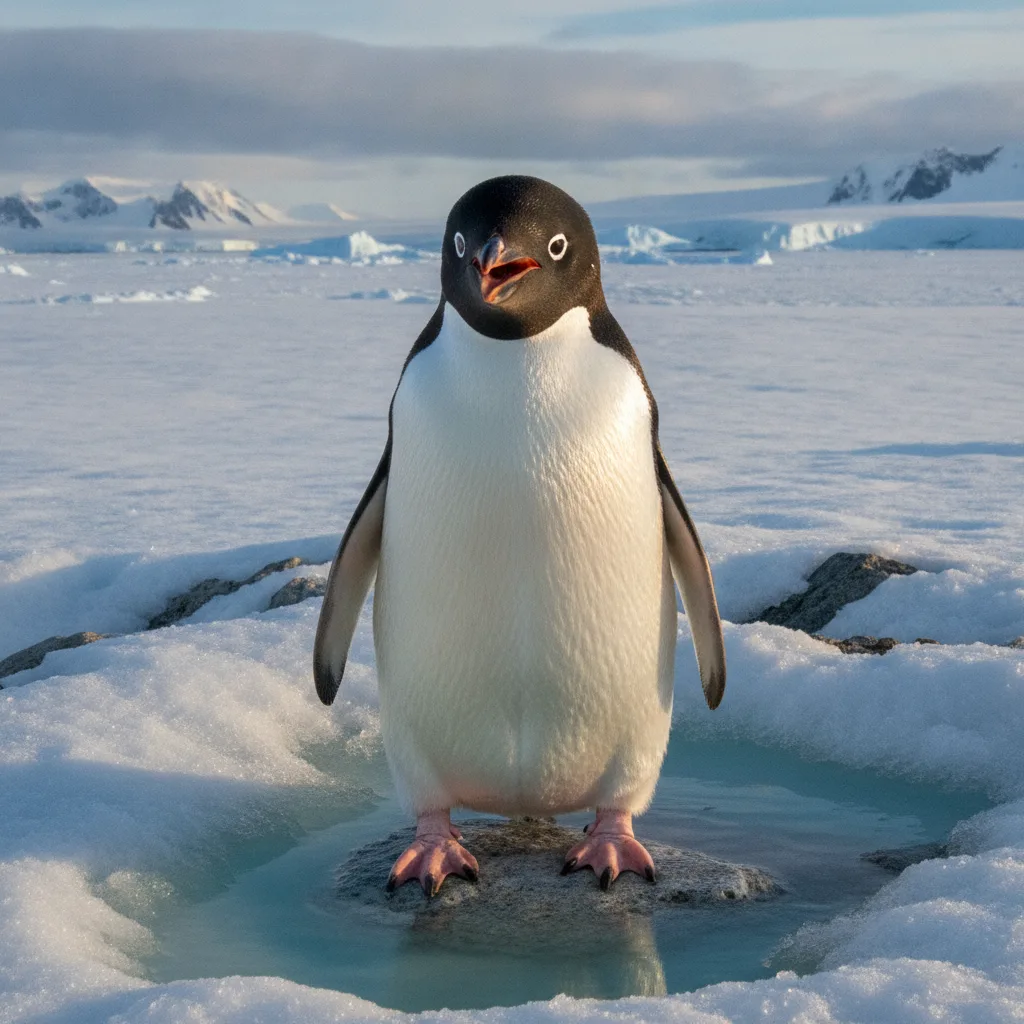
Penguins at a glance
| Scientific name | Spheniscidae |
|---|---|
| IUCN status | Varies by species: Several Least Concern; some Endangered |
| Population | Over 20,000,000 individuals (all species combined) |
| Population trend | decreasing |
| Weight | 9–40 kg |
| Length | 70–120 cm |
| Lifespan | 15–40 years |
| Top speed | 10 km/h |
| Class | Aves |
| Order | Sphenisciformes |
| Family | Spheniscidae |
| Known species | 18 |
Need to know
- Penguins are only found in the Southern Hemisphere, from Antarctica to near the equator.
- The Emperor Penguin is the tallest and heaviest living penguin species.
- Penguins are superb swimmers, with wings adapted as flippers.
- Penguins are social birds, often nesting and feeding in large colonies.
- Some penguin species, like the Galápagos Penguin, live in warm climates.
About the Penguins
Penguins are iconic, flightless seabirds belonging to the family Spheniscidae and are native exclusively to the Southern Hemisphere. Their evolution has crafted them into expert swimmers, with paddle-shaped wings for underwater propulsion and dense waterproof feathers for insulation in cold waters. Penguins display remarkable diversity, inhabiting environments from the frigid ice of Antarctica to the tropical Galápagos Islands.
They are highly social, forming large colonies called rookeries for breeding and molting. While all penguins share a classic black-and-white plumage and upright posture, their body size, coloration, and adaptations vary widely among species. Despite their popularity, many penguin populations are under pressure from environmental changes, overfishing, and human disturbance.
Physical characteristics
Size: 30-120 cm depending on species. Weight: 1-40 kg depending on species. Lifespan: 10-20 years on average; up to 40 years in captivity.
- Flightless with flipper-like wings
- Dense, waterproof feathers
- Counter-shaded black and white body
- Short, wedge-shaped tail
- Bright color patches for some species (yellow/orange)
Notable species
- Emperor Penguin (Aptenodytes forsteri) — Near Threatened. Antarctic pack ice and surrounding frigid seas Regions: Antarctic coastal regions, Ross Sea, Weddell Sea.
- King Penguin (Aptenodytes patagonicus) — Least Concern. Subantarctic island beaches and open areas Regions: Subantarctic islands, Falkland Islands, South Georgia, Crozet Islands.
- Adélie Penguin (Pygoscelis adeliae) — Least Concern. Rocky Antarctic shores, ice-free areas Regions: Antarctic Peninsula, Ross Sea, Weddell Sea, Antarctic coast.
- Chinstrap Penguin (Pygoscelis antarcticus) — Least Concern. Ice-free rocky Antarctic and subantarctic islands Regions: South Shetland Islands, South Orkney Islands, Antarctic Peninsula, Bouvet Island.
- Galápagos Penguin (Spheniscus mendiculus) — Endangered. Rocky coastal areas and lava formations Regions: Galápagos Islands (Isabela, Fernandina), Eastern Pacific Ocean.
- Little Penguin (Eudyptula minor) — Least Concern. Sandy or rocky coastal beaches, burrows Regions: Coastal southern Australia, Tasmania, New Zealand, Bass Strait.
Habitat and range
Original range: Southern hemisphere coastal regions and islands, especially Antarctica and nearby subantarctic islands
Current distribution: Southern Ocean, subantarctic islands, Antarctic mainland, temperate southern coasts, and, uniquely, the Galápagos Islands near the equator
Preferred environments: Coastal pack ice, Subantarctic and Antarctic islands, Rocky seashores, Open sea and productive marine zones, Sandy or vegetated burrows (Little Penguin, etc.)
Regions: Antarctic Peninsula, Ross Sea, Weddell Sea, South Georgia, Falkland Islands, Subantarctic islands, Galápagos Islands, Coastal southern Australia, New Zealand
Where to see Penguins
- Antarctic Peninsula — November to February (Antarctic summer). Accessible via expedition cruises; see Emperor, Adélie, and Gentoo penguins.
- Falkland Islands — October to April. Several penguin species breed here; easy to observe colonies from land.
- Galápagos Islands — June to December. Best time during the cool season when penguins are actively foraging.
- Phillip Island, Australia — Year-round. See the daily 'Penguin Parade' of Little Penguins returning to shore at dusk.
Behavior and diet
Diet: Primarily fish, squid, and krill. Diet varies by location and species.
Social structure: Highly social, nesting and foraging in colonies ranging from hundreds to hundreds of thousands of individuals.
Communication: Use a wide array of vocalizations and visual displays for mate and chick recognition, territory defense, and social interactions.
- Form dense breeding colonies called rookeries
- Fast, agile underwater swimming using flipper wings
- Extreme endurance during fasting and incubation by males (esp. Emperor Penguin)
- Porpoising: leaping from water to breathe while swimming at high speed
Interactions with other animals
- Leopard seal (predator): Leopard seals hunt penguins, especially near the water's edge in Antarctica.
- Orca (killer whale) (predator): Orcas prey on penguins, particularly in Antarctic waters.
- Krill (prey): Penguins depend on krill as a primary food source, especially in the Antarctic ecosystem.
- Skuas (predator): Skuas and other gulls steal penguin eggs and chicks.
Conservation
IUCN Red List status: Varies by species: Several Least Concern; some Endangered
Threats
- Climate change and ocean warming
- Reduced sea ice (especially for Antarctic species)
- Overfishing of key prey (fish, krill)
- Oil spills and marine pollution
- Human disturbance at breeding sites
- Introduced predators on some islands
Conservation efforts
- Marine protected areas in critical breeding and feeding zones
- International agreements on fishing quotas for krill and fish
- Monitoring and research of colonies by organizations like the British Antarctic Survey
- Eradication of invasive predatory species on islands
How to help
- Support responsible ecotourism and avoid disturbing colonies
- Donate to penguin research and conservation charities
- Advocate for climate action to protect penguin habitats
- Reduce seafood consumption or choose sustainably sourced products
- Educate others about penguin conservation needs
Penguins facts for kids
Penguins are fun, flightless birds that 'fly' underwater instead of in the air! They live in big groups, love cold places, and wear a cool 'tuxedo' of black and white feathers.
- Penguins use their wings to swim, not fly.
- The fastest penguin is the Gentoo, reaching speeds of up to 36 km/h!
- Some penguin dads take care of the eggs by balancing them on their feet.
- Little Penguins are sometimes called 'Fairy Penguins' because of their tiny size.
- Penguins can drink salty ocean water and filter it out with a special gland.
Did you know? Did you know? Emperor Penguins are the only birds that breed right on the frozen sea ice of Antarctica—in the freezing dark of winter!
Watch & learn
- Penguins: Spy in the Huddle - Remarkable Undercover Footage — BBC Earth. This acclaimed documentary uses disguised spy cameras to capture never-before-seen footage of wild penguin colonies, offering intimate insights into their parenting and social lives.
- Penguins: Life on the Edge - Survival in Antarctica — National Geographic. National Geographic takes viewers to the harsh Antarctic environment to witness how penguins brave sub-zero conditions and predators to raise their young.
- Smithsonian Channel: The Penguin's World - A Feature Exploration — Smithsonian Channel. Engaging storytelling and breathtaking visuals explore different penguin species, their habitats, and their unique adaptations, from Antarctica to temperate islands.
- Nature: Penguins - Spy in the Huddle | NATURE on PBS — PBS Nature. Featuring innovative camera techniques, this PBS Nature special delves into the secret lives of Emperor, Rockhopper, and Humboldt penguins, revealing their daily struggles and triumphs.
- March of the Penguins Full Documentary - Behind the Scenes and Deep Dive — BBC Studios (or National Geographic). A classic and award-winning feature documentary chronicling the incredible journey of Emperor penguins across the Antarctic landscape during breeding season.
Sources
Facts on this page are checked against these references. Follow them for the primary data.
- IUCN Red List — Conservation status, population trend and range assessment for Spheniscidae
- Encyclopaedia Britannica — Reviewed encyclopaedia entry on the penguins
- National Geographic — Articles, photographs and field reporting on the penguins